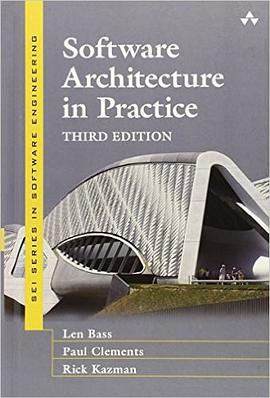

具体描述
The award-winning and highly influential Software Architecture in Practice, Third Edition, has been substantially revised to reflect the latest developments in the field. In a real-world setting, the book once again introduces the concepts and best practices of software architecture-how a software system is structured and how that system's elements are meant to interact. Distinct from the details of implementation, algorithm, and data representation, an architecture holds the key to achieving system quality, is a reusable asset that can be applied to subsequent systems, and is crucial to a software organization's business strategy. The authors have structured this edition around the concept of architecture influence cycles. Each cycle shows how architecture influences, and is influenced by, a particular context in which architecture plays a critical role. Contexts include technical environment, the life cycle of a project, an organization's business profile, and the architect's professional practices. The authors also have greatly expanded their treatment of quality attributes, which remain central to their architecture philosophy-with an entire chapter devoted to each attribute-and broadened their treatment of architectural patterns. If you design, develop, or manage large software systems (or plan to do so), you will find this book to be a valuable resource for getting up to speed on the state of the art. Totally new material covers * Contexts of software architecture: technical, project, business, and professional * Architecture competence: what this means both for individuals and organizations * The origins of business goals and how this affects architecture * Architecturally significant requirements, and how to determine them * Architecture in the life cycle, including generate-and-test as a design philosophy; architecture conformance during implementation; architecture and testing; and architecture and agile development * Architecture and current technologies, such as the cloud, social networks, and end-user devices
作者简介
Len Bass is a Senior Principal Researcher at National ICT Australia Ltd (NICTA). He joined NICTA in 2011 after twenty-five years at the Software Engineering Institute (SEI) at Carnegie Mellon University. He is the coauthor of two award-winning books in software architecture, including Documenting Software Architectures: Views and Beyond, Second Edition (Addison-Wesley, 2011), as well as several other books and numerous papers in computer science and software engineering on a wide range of topics. Len has almost fifty years’ experience in software development and research in multiple domains, such as scientific analysis systems, embedded systems, and information systems.
Paul Clements is the Vice President of Customer Success at BigLever Software, Inc., where he works to spread the adoption of systems and software product line engineering. Prior to this position, he was Senior Member of the Technical Staff at the SEI, where, for 17 years, he lead or co-lead projects in software product line engineering and software architecture documentation and analysis. Other books Paul has coauthored include Documenting Software Architectures: Views and Beyond, Second Edition (Addison-Wesley, 2011) and Evaluating Software Architectures: Methods and Case Studies, (Addison-Wesley, 2002), and Software Product Lines: Practices and Patterns (Addison-Wesley, 2002). In addition, he has also published dozens of papers in software engineering reflecting his long-standing interest in the design and specification of challenging software systems. Paul was a founding member of the IFIP WG2.10 Working Group on Software Architecture.
Rick Kazman is a Professor at the University of Hawaii and a Visiting Scientist (and former Senior Member of the Technical Staff) at the SEI. He is a coauthor of Evaluating Software Architectures: Methods and Case Studies, (Addison-Wesley, 2002). Rick’s primary research interests are software architecture, design and analysis tools, software visualization, and software engineering economics. He is also interested in human-computer interaction and information retrieval. Rick was one of the creators of several highly influential methods and tools for architecture analysis, including the SAAM (Software Architecture Analysis Method), the ATAM (Architecture Tradeoff Analysis Method), the CBAM (Cost-Benefit Analysis Method), and the Dali architecture reverse engineering tool.
目录信息
chapter 1: what is software architecture?
1.1 what software architecture is and what it isn’t
1.2 architectural structures and views
1.3 architectural patterns
1.4 what makes a “good” architecture?
1.5 summary
1.6 for further reading
1.7 discussion questions
chapter 2: why is software architecture important?
2.1 inhibiting or enabling a system’s quality attributes
2.2 reasoning about and managing change
2.3 predicting system qualities
2.4 enhancing communication among stakeholders
2.5 carrying early design decisions
2.6 defining constraints on an implementation
.2.7 influencing the organizational structure
2.8 enabling evolutionary prototyping
2.9 improving cost and schedule estimates
2.10 supplying a transferable, reusable model
2.11 allowing incorporation of independently developedcomponents
2.12 restricting the vocabulary of design alternatives
2.13 providing a basis for training
2.14 summary
2.15 for further reading
2.16 discussion questions
chapter 3: the many contexts of software architecture
3.1 architecture in a technical context
3.2 architecture in a project life-cycle context
3.3 architecture in a business context
3.4 architecture in a professional context
3.5 stakeholders
3.6 how is architecture influenced?
3.7 what do architectures influence?
3.8 summary
3.9 for further reading
3.10 discussion questions
part two: quality attributes
chapter 4: understanding quality attributes
4.1 architecture and requirements
4.2 functionality
4.3 quality attribute considerations
4.4 specifying quality attribute requirements
4.5 achieving quality attributes through tactics
4.6 guiding quality design decisions
4.7 summary
4.8 for further reading
4.9 discussion questions
chapter 5: availability
5.1 availability general scenario
5.2 tactics for availability
5.3 a design checklist for availability
5.4 summary
5.5 for further reading
5.6 discussion questions
chapter 6: interoperability
6.1 interoperability general scenario
6.2 tactics for interoperability
6.3 a design checklist for interoperability
6.4 summary
6.5 for further reading
6.6 discussion questions
chapter 7: modifiability
7.1 modifiability general scenario
7.2 tactics for modifiability
7.3 a design checklist for modifiability
7.4 summary
7.5 for further reading
7.6 discussion questions
chapter 8: performance
8.1 performance general scenario
8.2 tactics for performance
8.3 a design checklist for performance
8.4 summary
8.5 for further reading
8.6 discussion questions
chapter 9: security
9.1 security general scenario
9.2 tactics for security
9.3 a design checklist for security
9.4 summary
9.5 for further reading
9.6 discussion questions
chapter 10: testability
10.1 testability general scenario
10.2 tactics for testability
10.3 a design checklist for testability
10.4 summary
10.5 for further reading
10.6 discussion questions
chapter 11: usability
11.1 usability general scenario
11.2 tactics for usability
11.3 a design checklist for usability
11.4 summary
11.5 for further reading
11.6 discussion questions
chapter 12: other quality attributes
12.1 other important quality attributes
12.2 other categories of quality attributes
12.3 software quality attributes and system qualityattributes
12.4 using standard lists of quality attributes–or not
12.5 dealing with “x-ability”: bringing a new quality attributeinto the fold
12.6 for further reading
12.7 discussion questions
chapter 13: architectural tactics and patterns
13.1 architectural patterns
13.2 overview of the patterns catalog
13.3 relationships between tactics and patterns
13.4 using tactics together
13.5 summary
13.6 for further reading
13.7 discussion questions
chapter 14: quality attribute modeling and analysis
14.1 modeling architectures to enable quality attributeanalysis
14.2 quality attribute checklists
14.3 thought experiments and back-of-the-envelope analysis
14.4 experiments, simulations, and prototypes
14.5 analysis at different stages of the life cycle
14.6 summary
14.7 for further reading
14.8 discussion questions
part three: architecture in the life cycle
chapter 15: architecture in agile projects
15.1 how much architecture?
15.2 agility and architecture methods
15.3 a brief example of agile architecting
15.4 guidelines for the agile architect
15.5 summary
15.6 for further reading
15.7 discussion questions
chapter 16: architecture and requirements
16.1 gathering asrs from requirements documents
16.2 gathering asrs by interviewing stakeholders
16.3 gathering asrs by understanding the business goals
16.4 capturing asrs in a utility tree
16.5 tying the methods together
16.6 summary
16.7 for further reading
16.8 discussion questions
chapter 17: designing an architecture
17.1 design strategy
17.2 the attribute-driven design method
17.3 the steps of add
17.4 summary
17.5 for further reading
17.6 discussion questions
chapter 18: documenting software architectures
18.1 uses and audiences for architecture documentation
18.2 notations for architecture documentation
18.3 views
18.4 choosing the views
18.5 combining views
18.6 building the documentation package
18.7 documenting behavior
18.8 architecture documentation and quality attributes
18.9 documenting architectures that change faster than you candocument them
18.10 documenting architecture in an agile developmentproject
18.11 summary
18.12 for further reading
18.13 discussion questions
chapter 19: architecture, implementation, and testing
19.1 architecture and implementation
19.2 architecture and testing
19.3 summary
19.4 for further reading
19.5 discussion questions
chapter 20: architecture reconstruction and conformance
20.1 architecture reconstruction process
20.2 raw view extraction
20.3 database construction
20.4 view fusion
20.5 architecture analysis: finding violations
20.6 guidelines
20.7 summary
20.8 for further reading
20.9 discussion questions
chapter 21: architecture evaluation
21.1 evaluation factors
21.2 the architecture tradeoff analysis method
21.3 lightweight architecture evaluation
21.4 summary
21.5 for further reading
21.6 discussion questions
chapter 22: management and governance
22.1 planning
22.2 organizing
22.3 implementing
22.4 measuring
22.5 governance
22.6 summary
22.7 for further reading
22.8 discussion questions
part four: architecture and business
chapter 23: economic analysis of architectures
23.1 decision-making context
23.2 the basis for the economic analyses
23.3 putting theory into practice: the cbam
23.4 case study: the nasa ecs project
23.5 summary
23.6 for further reading
23.7 discussion questions
chapter 24: architecture competence
24.1 competence of individuals: duties, skills, and knowledge ofarchitects
24.2 competence of a software architecture organization
24.3 summary
24.4 for further reading
24.5 discussion questions
chapter 25: architecture and software product lines
25.1 an example of product line variability
25.2 what makes a software product line work?
25.3 product line scope
25.4 the quality attribute of variability
25.5 the role of a product line architecture
25.6 variation mechanisms
25.7 evaluating a product line architecture
25.8 key software product line issues
25.9 summary
25.10 for further reading
25.11 discussion questions
part five: the brave new world
chapter 26: architecture in the cloud
26.1 basic cloud definitions
26.2 service models and deployment options
26.3 economic justification
26.4 base mechanisms
26.5 sample technologies
26.6 architecting in a cloud environment
26.7 summary
26.8 for further reading
26.9 discussion questions
chapter 27: architectures for the edge
27.1 the ecosystem of edge-dominant systems
27.2 changes to the software development life cycle
27.3 implications for architecture
27.4 implications of the metropolis model
27.5 summary
27.6 for further reading
27.7 discussion questions
chapter 28: epilogue
references
about the authors
index
· · · · · · (收起)
读后感
用户评价
读完《软件架构 in Practice》这本书,我的内心如同被一股股清泉洗涤,又像在迷雾中找到了指引的方向。在接触这本书之前,我对软件架构的理解,停留在那种“代码能跑就行”、“功能实现就好”的层面。总觉得架构是那些经验丰富的老前辈们才会去操心的事情,跟我们这些一线开发人员似乎有点距离。然而,这本书彻底颠覆了我的这种想法。它没有上来就讲那些晦涩难懂的概念,而是从一个工程师的视角出发,娓娓道来架构在实际项目中的重要性,以及它如何影响到项目的方方面面。我尤其喜欢书中关于“质量属性”的讨论,比如性能、可维护性、安全性等等。以前我只知道“要快”、“要安全”,但不知道如何去衡量,更不知道在设计之初就需要将这些因素考虑进去。书中通过大量的案例分析,展示了不同架构决策对这些质量属性带来的直接影响,让我茅塞顿开。我开始意识到,架构不仅仅是画几张图,写几个模块,而是一个关于权衡、选择和取舍的复杂过程。特别是当团队在面对需求变更、技术升级或者性能瓶颈时,一个好的架构能够起到事半功倍的效果,反之,则可能让项目陷入泥潭,成为技术债的温床。这本书让我深刻理解到,架构设计不是一蹴而就的,而是一个持续演进的过程,需要在项目的生命周期中不断地被审视和调整。书中关于架构师角色的阐述也让我印象深刻,他们不仅需要技术功底,还需要良好的沟通能力和宏观的视野,能够站在整个项目的角度去思考问题。这本书的实践性非常强,它教会我如何去思考问题,如何去做出更明智的决策,而不是给我一堆现成的答案。我会在未来的工作中,不断地去实践书中所学,努力成为一名能够构建出更健壮、更可维护、更具前瞻性的软件系统的工程师。
评分《软件架构 in Practice》这本书,在我看来,是一本能够真正“落地”的著作。它并没有止步于理论的探讨,而是将大量的精力投入到如何在实际项目中应用架构原则。我被书中关于“架构的沟通和文档”的章节深深吸引。我曾在一个大型项目中,因为团队成员对架构理解不一致,导致了大量的沟通障碍和返工。这本书清晰地阐述了,为何架构沟通如此重要,以及如何通过有效的文档和可视化工具,来提升团队的理解和协作。它提供了一些非常实用的方法,比如如何撰写清晰的架构决策记录(ADR),如何使用分层图来展示系统的组织结构等等。这些工具和方法,让我能够更有效地与团队成员沟通我的设计思路,也能更好地理解他们的想法。我尤其欣赏书中对“架构的风险管理”的论述。每一个重大的架构决策都伴随着一定的风险,而如何识别、评估和应对这些风险,是架构师的关键职责之一。这本书提供了一些非常有价值的风险管理策略,让我能够更早地发现潜在的问题,并采取相应的措施来规避或减轻这些风险。这对于我这样一个在项目中承担了部分架构职责的工程师来说,无疑是一笔宝贵的财富。这本书让我意识到,架构设计不仅仅是技术上的挑战,更是关于如何有效地管理信息、降低风险、并确保项目成功的艺术。
评分拿起《软件架构 in Practice》这本书,我并没有期待它能立刻给我带来某种“灵感爆发”。我更倾向于把它看作是一次与经验丰富的架构师的深入交流。这本书的叙事方式非常巧妙,它没有直接灌输概念,而是通过大量的真实案例,让你在解决问题的过程中,自然而然地理解架构的重要性。我尤其对书中关于“架构模式的演进”的章节感到着迷。它不仅仅是罗列各种模式,而是追溯了这些模式的起源,以及它们是如何在实践中被发展和改进的。这让我明白了,架构的知识是不断发展和更新的,我们需要保持学习的热情,才能跟上时代的步伐。书中关于“如何评估和选择架构”的指导,对我来说是如获至宝。在实际工作中,我们经常会面临技术选型和架构决策的挑战。但往往缺乏一个系统性的方法来评估不同的方案。这本书提供了一套清晰的评估框架,让我能够更客观、更全面地分析各种方案的优劣,并做出更明智的选择。我曾因为对某个技术过于乐观,而忽略了其潜在的风险,导致项目后期出现了严重的性能问题。这本书教会我,在做决策时,不能只看优点,更要深入挖掘潜在的缺点和风险。总而言之,这本书不仅仅是一本技术书籍,更是一本思维训练手册。它教会我如何去分析问题,如何去权衡取舍,如何去构建出更具鲁棒性和可持续性的软件系统。
评分我是一名从事多年软件开发的工程师,期间接触过不少关于设计模式、架构风格的书籍。然而,《软件架构 in Practice》这本书,在我看来,是其中最能触及“本质”的一本。它没有被零散的技术点所淹没,而是以一种宏观的视角,审视软件架构在整个软件生命周期中的作用。我最欣赏的是书中对于“架构的抽象层次”的讨论。它清晰地指出了,在不同的抽象层次上,我们关注的重点是不同的。从高层到低层,从概念模型到具体实现,每一个层次都有其独特的挑战和考量。这本书帮助我理解了,为什么有时候一个看似简单的需求,在架构层面会变得异常复杂。它让我明白,架构师需要具备跨越不同抽象层次的能力,能够将宏观的愿景转化为微观的实现。书中关于“架构与组织结构”的关联性分析,也让我耳目一新。我之前总觉得架构是纯粹的技术问题,与团队的组织方式、沟通协作没有太大的关系。但这本书揭示了,两者之间有着深刻的联系,甚至可以说是相互影响的。一个合适的架构,能够促进团队的高效协作,而一个不合理的组织结构,也可能阻碍优秀的架构落地。这让我开始思考,如何在实际工作中,更好地协调技术与组织的关系,以实现更优的软件系统。这本书不仅仅是一本“怎么做”的书,更是一本“为什么这么做”的书。它教会我如何去质疑、去思考、去寻找最适合的解决方案,而不是盲目地照搬。
评分《软件架构 in Practice》这本书,我必须说,它在我心中留下了深刻的印记。它并非一本教你速成架构师的“秘籍”,而是为你铺设了一条通往“理解”的道路。我一直觉得,软件架构的精髓在于“权衡”,而在书中,这一点被淋漓尽致地展现出来。作者并没有给出所谓的“标准答案”,而是引导读者去思考,在不同的场景下,如何权衡各种因素,做出最合适的决策。我印象最深刻的是关于“架构的边界”的讨论。在复杂系统中,如何清晰地定义模块之间的边界,如何设计清晰的接口,这直接关系到系统的可维护性和可扩展性。书中通过大量的例子,展示了模糊边界可能带来的灾难性后果,以及如何通过合理的架构设计来避免这些问题。我曾在一个项目中,因为模块间耦合过紧,导致一次小小的改动,却引发了连锁反应,影响了整个系统的稳定性。这本书让我意识到,架构设计不仅仅是技术的选择,更是关于如何组织和划分工作,如何降低系统复杂度。此外,书中对“架构的非功能性需求”的深入剖析,也让我对“质量属性”有了全新的认识。以往我可能更多地关注于功能实现,而这本书则让我明白了,一个真正优秀的软件系统,不仅仅是能用,更应该是高性能、高可用、易于维护、易于扩展等等。这些非功能性需求,需要在架构设计的初期就予以充分的考虑。这本书让我学会了如何从更广阔的视野来审视软件,如何构建出真正有价值的软件系统。
评分《软件架构 in Practice》这本书,我必须承认,在翻开之前,我心里是抱着一丝怀疑的。毕竟,“实践”这个词,听起来总是那么接地气,但有时候也意味着不那么“高深”。我以为它会是一本充斥着各种模板和清单的书,大概就是告诉你“遇到这种情况,就用那个模式”之类的。然而,事实证明,我的预设是多么的狭隘。这本书的精髓,恰恰在于它对“为什么”的深入探讨。它并没有直接抛出解决方案,而是引导读者去理解问题背后的根源,去剖析不同选择所带来的长远影响。书中对“架构权衡”的描述,让我拍案叫绝。以往我可能更多地关注于单点问题的解决,而忽略了在一个复杂系统中,任何一个决策都可能牵一发而动全身。例如,为了提升性能而牺牲了可读性,或者为了快速开发而降低了安全性,这些短期的收益很可能在日后以更沉重的代价偿还。这本书通过具体的案例,生动地展示了这种“权衡”是如何发生的,以及如何在多种看似冲突的需求之间找到一个最佳的平衡点。我特别欣赏书中关于“系统性思维”的强调。它鼓励我们跳出局部,从全局的角度去审视整个软件系统,理解各个组件之间的相互依赖关系,以及它们如何共同协作来满足业务需求。这本书让我意识到,架构设计不仅仅是一项技术活动,更是一项管理和沟通的艺术。架构师需要能够与不同的利益相关者进行有效的沟通,理解他们的需求和顾虑,并将这些转化为可行的架构方案。我从中学习到,一个优秀的架构,应该是能够清晰地传达其设计意图,并且易于被团队成员理解和接受的。这本书的价值在于,它不仅教授了“做什么”,更教会了“怎么想”,如何培养一种架构师的思维方式。
评分读完《软件架构 in Practice》,我最大的感受是,它彻底改变了我对软件架构的固有认知。过去,我总觉得架构是那些“高大上”的理论,离我们一线开发者有些遥远。但这本书,用极其贴近实际的语言和丰富的案例,将架构的魅力展现在我面前。我特别喜欢书中对“架构的可见性”的强调。在复杂的项目中,信息往往是分散的,工程师们可能只了解自己负责的那一小部分。而一个好的架构,应该能够提供一个清晰的蓝图,让团队中的每个人都能理解系统的整体结构和各个部分之间的关系。书中介绍的各种可视化技术和文档方法,如UML图、架构意图图等,都极大地帮助我理解如何有效地沟通和传达架构设计。我曾在一个项目中,因为团队对整体架构理解不清,导致了大量的返工和扯线,事后回想,如果当时有本书能指引我们,或许就不会如此艰难。这本书对于“架构的生命周期管理”的论述,也让我受益匪浅。它不仅仅关注于架构的设计阶段,更强调了在系统的运行和维护过程中,如何持续地审视和演进架构。如何识别“架构腐蚀”的迹象,以及如何进行“架构的重构”和“架构的现代化升级”,这些都是我们在日常工作中经常会遇到的难题。这本书为我提供了一套系统性的方法论,让我能够更从容地应对这些挑战。我感觉,这本书不仅仅是一本技术读物,更是一本帮助我提升职业素养和解决实际问题的宝典。
评分我一直对软件开发的“大局观”抱有浓厚的兴趣,而《软件架构 in Practice》这本书,恰恰满足了我对这种“大局观”的追求。它没有陷入细枝末节的技术细节,而是将我们带入一个更宏观的视角,去审视软件系统是如何被构建,如何被管理,以及如何被演进的。我印象最深刻的是书中关于“架构的演进与重构”的论述。我们都知道,软件系统是不断变化的,最初的架构设计可能无法满足未来的需求。而如何在一个运行中的系统上,进行平滑的架构演进和重构,是许多团队都面临的难题。这本书提供了一些非常实用的策略和方法,比如如何识别“架构僵化”的迹象,如何进行“渐进式重构”,以及如何在不影响现有功能的情况下,引入新的架构理念。这些内容,对于我在维护和升级一些历史悠久的系统时,提供了极大的帮助。我曾因为一次激进的架构重构,而导致了系统的长时间停机,事后回想,如果当时有这本书的指引,或许会更加谨慎和从容。此外,书中对“架构与业务目标”的关联性分析,也让我受益匪浅。它强调了架构设计不应该仅仅是技术驱动的,更应该与业务目标紧密结合。一个好的架构,应该是能够支撑和促进业务的发展,而不是成为业务发展的阻碍。这本书让我学会了如何更好地理解业务需求,并将它们转化为可行的架构方案,从而构建出真正有价值的软件系统。
评分我一直对软件架构这个领域抱有浓厚的兴趣,但真正能够深入理解并付诸实践的书籍却不多。《软件架构 in Practice》这本书,则是一股清流。它不像一些理论书籍那样枯燥乏味,而是充满了生动的案例和深入的分析,让我在阅读的过程中,仿佛置身于一个真实的软件开发项目之中。我尤其对书中关于“架构风格”的章节印象深刻。过去,我可能对MVC、SOA等架构模式有所耳闻,但对其背后的设计理念和适用场景却知之甚少。这本书详细地解读了各种主流的架构风格,并分析了它们各自的优缺点,以及在不同场景下的适用性。这让我能够更清晰地认识到,没有银弹,只有最适合的。选择哪种架构风格,需要根据项目的具体需求、团队的技能水平以及未来的发展方向来综合考量。书中关于“架构决策记录”(Architecture Decision Record,ADR)的讨论,也给我带来了很大的启发。在实际项目中,我们经常会因为一些重大的架构决策而产生分歧,但往往缺乏一个系统的方式来记录这些决策的背景、理由以及潜在的影响。ADR提供了一种非常有效的方法,可以帮助我们清晰地记录下每一个关键决策,并为未来的回顾和优化提供依据。这不仅有助于团队成员之间的理解和协作,也能够避免重复犯错,降低技术债的积累。总而言之,这本书为我打开了一扇新的大门,让我对软件架构有了更深刻的认识,也为我在未来的工作中,如何设计和演进软件系统提供了宝贵的指导。
评分在信息爆炸的年代,要找到一本既有深度又有广度,同时还能指导实践的软件工程类书籍,实属不易。《软件架构 in Practice》这本书,正是这样一本难得的佳作。我一直觉得,架构是软件的灵魂,而这本书,就是赋予这个灵魂以血肉和筋骨。它没有停留在抽象的概念层面,而是深入到每一个实际应用场景中,去揭示架构的价值和挑战。我特别喜欢书中关于“系统的演进”的论述。很多时候,我们认为架构设计是一次性的工作,一旦确定,就应该一成不变。但现实并非如此,软件系统是活的,它需要随着业务的发展、技术的进步而不断地演进。这本书清晰地阐述了如何在一个不断变化的环境中,保持架构的灵活性和适应性,如何进行“架构重构”和“架构迁移”。这对于我这个在实际项目中摸爬滚打多年的开发者来说,有着极大的现实意义。我们经常会遇到历史遗留的代码,或者因为初期设计不足而导致的问题,而这本书提供了一些非常实用的方法论,来应对这些挑战。书中对“架构非功能性需求”(即质量属性)的细致分析,也让我受益匪浅。性能、可靠性、安全性、可维护性等,这些听起来都很重要,但如何将它们具体化,如何将其融入到架构设计中,却是一门学问。这本书通过大量的实例,将这些抽象的概念变得具象化,让我能够更好地理解如何权衡和取舍,如何设计出满足业务需求的、同时具备良好质量属性的系统。这本书不仅仅是一本技术书籍,更是一本思维方式的启蒙书。
评分制造一堆概念,然后在里面转圈,扯淡,这就是这本书的内容
评分制造一堆概念,然后在里面转圈,扯淡,这就是这本书的内容
评分制造一堆概念,然后在里面转圈,扯淡,这就是这本书的内容
评分every word is 'stop word' to me. fucking useless....
评分every word is 'stop word' to me. fucking useless....