
具体描述
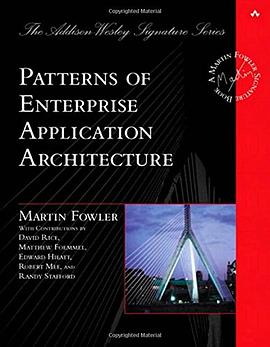
The practice of enterprise application development has benefited from the emergence of many new enabling technologies. Multi-tiered object-oriented platforms, such as Java and .NET, have become commonplace. These new tools and technologies are capable of building powerful applications, but they are not easily implemented. Common failures in enterprise applications often occur because their developers do not understand the architectural lessons that experienced object developers have learned. Patterns of Enterprise Application Architecture is written in direct response to the stiff challenges that face enterprise application developers. The author, noted object-oriented designer Martin Fowler, noticed that despite changes in technology--from Smalltalk to CORBA to Java to .NET--the same basic design ideas can be adapted and applied to solve common problems. With the help of an expert group of contributors, Martin distills over forty recurring solutions into patterns. The result is an indispensable handbook of solutions that are applicable to any enterprise application platform. This book is actually two books in one. The first section is a short tutorial on developing enterprise applications, which you can read from start to finish to understand the scope of the book's lessons. The next section, the bulk of the book, is a detailed reference to the patterns themselves. Each pattern provides usage and implementation information, as well as detailed code examples in Java or C#. The entire book is also richly illustrated with UML diagrams to further explain the concepts. Armed with this book, you will have the knowledge necessary to make important architectural decisions about building an enterprise application and the proven patterns for use when building them. The topics covered include * Dividing an enterprise application into layers * The major approaches to organizing business logic * An in-depth treatment of mapping between objects and relational databases * Using Model-View-Controller to organize a Web presentation * Handling concurrency for data that spans multiple transactions * Designing distributed object interfaces
作者简介
Martin Fowler is an independent consultant who has applied objects to pressing business problems for more than a decade. He has consulted on systems in fields such as health care, financial trading, and corporate finance. His clients include Chrysler, Citibank, UK National Health Service, Andersen Consulting, and Netscape Communications. In addition, Fowler is a regular speaker on objects, the Unified Modeling Language, and patterns.
目录信息
读后感
(打分只针对翻译) 正在读, 强烈建议买原版. 这版的翻译, 只是在“勉强能看”的程度. 很多专业名词的翻译让你云雾缭绕的, 比如把单例翻译成单子,还有什么“现场识别”, 听都没听说过的东西. 而且完全是字面翻译, 丝毫不考虑中文表达习惯和上下文, 经常需要反推英文去...
评分这本书太老了;书中所讨论的问题,现在使用框架技术,都可以解决了。 现在有些指导意义的是,前几章,对于性能评估和分层的概念性的东西。 性能评估 * 响应时间, * 响应性 * 等待时间 * 吞吐率。 * 负载 * 负载敏感度 * 效率 * 系统容量 * 可伸缩性(垂直可伸缩性...
评分这本书的感觉: 醍醐灌顶——>原来如此——>心满意足。。。。 这本书并不是一本简单的技术书就可以归总的了的,这本书涵盖了我做过的所有项目中的优秀设计,让我对于之前关于别人的设计的惊叹转换成原来如此,很多优秀的设计其实我已经见到过了,但是直到看到这本书之前我都不...
评分花了蛮久的时间每天抽出半个小时终于从头到尾读完了。总的来说,这本书写得非常系统,从web层的实现到后端数据源的选择,几乎无所不包。虽然某些内容明显已经有点过时了,但其思考、分析、解决问题的方式还是非常好的。特别是对那些只知道如何使用Spring、Hibernate、Struts架...
评分http://www.china-pub.com/19923 China-pub开始对绝版好书进行冲印刷工作,需要的直接订一下吧,书是不错的
用户评价
我发现,这本书更像是一份历史的沉淀,它记录了软件工程发展过程中,在解决特定问题时所沉淀下来的智慧结晶。尽管一些具体的技术例子可能略显陈旧,比如对特定中间件的引用,但这丝毫没有削弱其核心价值——那些关于结构、抽象和关注点分离的原则是跨越时代的。例如,书中关于如何在多层架构中处理安全性和授权的讨论,即便是在今天前后端分离的架构下,其核心原则依然有效:安全策略应该被集中管理,并且在恰当的边界点进行拦截和验证。阅读这本书,就像是与那些构建了早期大型商业系统的先驱者进行了一次对话。它教会我,架构决策不是一蹴而就的,而是伴随系统成长的持续过程。它让我对“架构债务”有了更深刻的理解,并认识到清晰的架构约定是如何显著降低这种债务的累积速度的。它不仅仅是一本关于“如何写代码”的书,更是一本关于“如何构建可持续的软件组织和系统”的指南。
评分这本书最让我感到震撼的是它对“架构决策”的系统性梳理,它把过去那些散落在无数技术博客和会议演讲中的碎片化经验,整理成了一个具有内在逻辑的体系。在过去,我们组建团队或启动新项目时,架构讨论往往陷入无休止的争论,每个人都带着自己偏爱的“最佳实践”来推销。这本书提供了一个中立的、基于权衡的视角来评估不同的架构选择。比如,当讨论到表示层(Presentation)的设计时,书中没有简单地推荐某个特定的UI技术,而是深入分析了如何隔离用户交互逻辑、如何实现用户界面状态的管理,以及如何保证用户体验的一致性——这才是架构师真正需要关注的。这种“关注点分离”的思想贯穿全书,从最顶层的服务划分到最底层的持久化策略,都在力求保持模块间的低耦合高内聚。它让我明白,架构的本质不是选择最酷的技术,而是管理复杂性,确保系统能够在未来的需求变化中,以最小的代价进行调整和扩展。这本书在某种程度上,提升了我们对“架构工作”本身的理解深度和职业成熟度。
评分从实操层面来看,这本书的指导价值是无可替代的。我负责维护一个运行了近十年的遗留系统,其代码库结构混乱,耦合严重,每次修改都像在拆除地雷。在引入书中描述的某些重构策略后,我们找到了一个清晰的路径来逐步解耦那些僵死的模块。它不仅提供了宏观的蓝图,还细致地讲解了如何利用诸如“服务层”或“领域对象”来包装那些原本混乱的、直接依赖数据库操作的旧代码。这本书的伟大之处在于,它教会我们如何“驯服”现有的复杂系统,而不是一味地主张推倒重写(这在企业界往往不切实际)。书中对数据映射器(Data Mapper)和数据访问对象(DAO)的区分,以及对领域模型和数据模型分离的强调,直接指导了我们后续的ORM选型和数据访问层的设计。它提供了一套标准的语言,让我们的数据库专家和业务逻辑工程师能坐在一起,用相同的术语讨论数据在系统中的流动和转换过程,极大地提高了跨职能沟通的效率。
评分坦白说,这本书的阅读体验并非一帆风顺,它更像是在攀登一座陡峭的山峰,需要投入相当的专注度和背景知识才能领略其精髓。对于初入行的年轻开发者来说,书中涉及的许多术语和概念可能需要反复查阅和对照其他的参考资料。它要求读者已经对面向对象编程的基本原则有扎实的理解,并且对软件生命周期中不同阶段的挑战有所体会。我个人觉得,它更适合作为一本进阶手册,而不是入门教程。书中对事务管理、数据访问策略的探讨,虽然在理论上无可挑剔,但在面对现代微服务架构的分布式事务难题时,读者需要额外花费精力去思考如何将书中的经典模式“翻译”到云原生和事件驱动的语境中。尽管如此,一旦你掌握了书中的核心思想,你就会发现,无论技术框架如何更迭,诸如“数据层应该抽象化”、“业务逻辑需要独立于UI”这些基本的设计哲学是永恒的。它强迫你思考深层次的结构问题,而不是沉迷于当前最时髦的框架特性。这本书的结构编排非常严谨,逻辑推导一步到位,但这种严谨性也带来了一定的阅读门槛,需要耐心和毅力去消化每一个章节的精妙之处。
评分这本书简直是软件架构师的圣经,尤其是对于那些在企业级应用开发中摸爬滚打多年的老兵来说,它提供了一个清晰、坚实的理论框架来指导实践。我记得刚开始接触大型系统设计时,各种技术选型和模块划分简直是令人头疼,试错成本极高。翻阅这本厚重的著作后,很多困惑迎刃而解。它不是那种空泛地谈论“做好设计”的口水书,而是深入剖析了在企业环境中,面对复杂业务逻辑、高并发需求、以及长期维护压力时,哪些设计模式是真正行之有效的“模式”。作者对分层架构的阐述极其到位,清晰地界定了每一层的职责边界,这对于团队协作和后续的重构至关重要。我尤其欣赏它对领域驱动设计(DDD)的强调,虽然DDD本身已经是个热门话题,但书中将其与具体的技术实现细节结合得非常自然,让人能理解“为什么”要这么做,而不是仅仅停留在表面的“怎么做”。对于团队的技术选型讨论,这本书提供的视角能帮助开发者超越眼前的技术栈迷雾,专注于构建稳定、可演进的业务核心。这本书的价值在于它帮助我们构建了一种“共同语言”,让团队成员在讨论架构决策时,能基于成熟的、经过时间检验的原则进行沟通,而不是各自为营的直觉判断。它更像是一份沉淀了无数实战经验的结晶,是架构师书架上不可或缺的基石。
评分解答了我的很多对于best practice的困惑,不过很多的东西还是需要自己在project中去体会。
评分解答了我的很多对于best practice的困惑,不过很多的东西还是需要自己在project中去体会。
评分绝对的好书
评分暂时放下了,其实这类书感觉还是在工程的时候边实践边阅读吧。
评分有必要再读一下