
具体描述
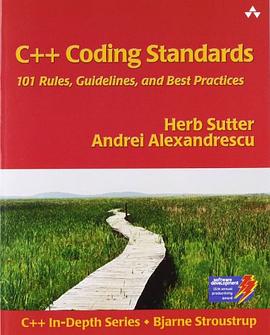
Consistent, high-quality coding standards improve software quality, reduce time-to-market, promote teamwork, eliminate time wasted on inconsequential matters, and simplify maintenance. Now, two of the world's most respected C++ experts distill the rich collective experience of the global C++ community into a set of coding standards that every developer and development team can understand and use as a basis for their own coding standards. The authors cover virtually every facet of C++ programming: design and coding style, functions, operators, class design, inheritance, construction/destruction, copying, assignment, namespaces, modules, templates, genericity, exceptions, STL containers and algorithms, and more. Each standard is described concisely, with practical examples. From type definition to error handling, this book presents C++ best practices, including some that have only recently been identified and standardized-techniques you may not know even if you've used C++ for years. Along the way, you'll find answers to questions like * What's worth standardizing--and what isn't? * What are the best ways to code for scalability?* What are the elements of a rational error handling policy? * How (and why) do you avoid unnecessary initialization, cyclic, and definitional dependencies?* When (and how) should you use static and dynamic polymorphism together?* How do you practice "safe" overriding?* When should you provide a no-fail swap? * Why and how should you prevent exceptions from propagating across module boundaries?* Why shouldn't you write namespace declarations or directives in a header file?* Why should you use STL vector and string instead of arrays?* How do you choose the right STL search or sort algorithm?* What rules should you follow to ensure type-safe code? Whether you're working alone or with others, C++ Coding Standards will help you write cleaner code--and write it faster, with fewer hassles and less frustration.
作者简介
Herb Sutter,ISO C++标准委员会主席,C++ Users Journal杂志特邀编辑和专栏作家;他目前在微软公司领导NET环境下C++浯言扩展的设计工作除本书外.他还撰写了三本广受赞誉的图书:Exceptional C++ Style、Exceptional C++和More Exceptional C++。 .
Andrei Alexandrescu,世界顶级的C++专家.“C++ Users Journal杂志的专栏作家,他的Modem C++ Design—书曾荣获2001年最佳C++图朽称号.书中所开发的Loki已经成为最负盛名的C++程序库之一。
目录信息
读后感
我看过了 我看过了 我看过了 我看过了 我看过了 我看过了 我看过了 我看过了 我看过了 我看过了 我看过了 我看过了 我看过了 我看过了 我看过了 我看过了 我看过了 我看过了 我看过了 我看过了 我看过了 我看过了 我看过了 我看过了 我看过了 我看过了 我看过了 我看过了 我看...
评分名字起的很有吸引力,其实内容很多章节讲的东西,都是<<effective c++>>里面的,我不知道原版书的文采怎么样?所以我不好妄加评论,但这本中文版的译者的翻译水平,我真的不敢苟同,翻译的僵硬,晦涩,缺乏灵活性,估计就是逐字翻译的,唉,浪费了我几十块钱,买了一本多余的书!
评分其实这本书很鸡肋。因为此书是对一条条的规范、原则、实践等的高度提炼,能力到了自然能理解,能力没到看完也不一定能理解,此时你需要类似《Unix编程艺术》的书,当然你仍然需要足够的实践来支持,要不就会像我一样在这里说大话! 如果你是完美主义者,如果你本来就注重思维...
评分光买了书,唉没时间看书啊!我电脑Z差啊,学得头都大了啊!还好,室友告诉我上猎豹网校,看那个视频课程学。嘿嘿,这是个简单容易的办法!这下不再担心买了书,束之高阁了!
评分引用pongba的话:C++中众多的细节虽然在库设计者手里面有其用武之地,但普通程序员则根本无需过多关注,尤其是没有实际动机的。 关注编码实践准则才是真正需要花时间掌握的东西!
用户评价
《C++ Coding Standards》的书名,给我一种“大而全”的感觉,仿佛它要包罗万象,涵盖 C++ 编程中所有可能涉及到的编码规范。我脑海中描绘的这本书,可能就像是一个 C++ 程序员的“百科全书”式的手册,里面详细列举了各种场景下的最佳实践。我尤其期待它能在一些“灰色地带”给出明确的指导。 C++ 是一门功能强大但也极其复杂的语言,很多时候,同一个问题可以有多种解决方案,而选择哪种方案,往往取决于开发者个人的经验和偏好。一个好的编码规范,应该能够为这些“选择困难症”提供一个清晰的指引,帮助开发者做出更优的决策。比如,在模板元编程、宏的使用、或者与 C 语言交互等方面,往往存在一些容易出错的地方,如果这本书能提供一些细致入微的规范和注意事项,那就太有价值了。我还想知道,这本书是否会强调代码的可读性和可维护性在不同项目规模下的优先级变化。对于大型项目,可能需要更严格的规范来保障其长期稳定性;而对于一些小型、快速迭代的项目,可能需要一些更灵活的规范。我希望这本书能够考虑到这些实际情况,提供一些有针对性的建议。总而言之,我期待它能成为一本能够指导我写出更健壮、更易于维护的 C++ 代码的“指南针”。
评分坦白说,《C++ Coding Standards》这个书名,一开始并没有激起我特别大的兴趣。我总觉得“Coding Standards”听起来有点枯燥乏味,就像学校里教的那些死板的规矩一样。我更喜欢那些能够直接解决问题的技术书籍,比如深入讲解某个算法、某个框架的原理,或者提供一套高效的解决方案。然而,随着我开发经验的积累,我开始深刻体会到“规范”的力量。一个良好的编码规范,就像是一套交通规则,它不是为了限制我们的自由,而是为了保障大家能够安全、高效地在代码的道路上行驶。我开始好奇,《C++ Coding Standards》这本书究竟会以怎样的方式来阐述这些“规则”?它是否会提供一些生动的案例,来说明违反规范会带来怎样的严重后果?它是否会深入剖析 C++ 语言本身的特性,并给出针对性的编码建议?我更关心的是,它是否能帮助我理解“为什么”要遵循这些规范,而不是简单地要求我“怎么做”。如果这本书能让我从根本上理解编码规范的重要性,并且教会我如何在实际开发中灵活运用这些规范,那么即使它一开始听起来很“枯燥”,最终也会成为我案头必备的工具书。我希望能从中找到一些能够启发我思考、让我对 C++ 编程有更深层次理解的视角。
评分当我第一次看到《C++ Coding Standards》这个书名的时候,我脑海里立刻浮现出一种“正经”的书籍形象,那种封面可能略显朴素,内容却字字珠玑的硬核技术书。我猜这本书大概会涵盖 C++ 编程的方方面面,从最基础的变量命名、代码格式化,到更高级的内存管理、并发编程中的规范,甚至可能涉及一些设计模式的应用原则。我一直觉得,一个好的程序员,不仅要懂技术,更要懂“写代码”这门艺术。代码不仅仅是机器能读懂的指令,更是人与人之间沟通的桥梁。如果大家写的代码风格迥异,阅读起来就如同看天书一般,不仅效率低下,还容易产生误解,增加 Bug 的引入风险。所以,我希望《C++ Coding Standards》能提供一套系统性的解决方案,帮助开发者建立起一套“通用语言”,让团队协作更加顺畅。想象一下,当一个新的成员加入团队,或者我们需要将一个项目交给其他团队维护时,如果大家遵循着相同的编码标准,那将多么省时省力!我尤其关注这本书在“可维护性”方面的论述。代码的可维护性,是衡量一个项目生命力的重要指标。我希望它能给出一些切实可行的方法,指导我们如何写出易于理解、易于修改、易于扩展的代码,从而降低项目的长期维护成本。这本书,我期待它能成为我提升代码质量、优化开发流程的重要助力。
评分“C++ Coding Standards”——这个书名听起来就充满了“学院派”的味道,一种严谨、一丝不苟的风格扑面而来。我脑海中浮现的画面是,这本书的作者一定是一位在 C++ 领域有着深厚造诣的专家,他通过多年的实践和思考,提炼出了一套行之有效的编码原则。我希望这本书不仅仅是列举一些“好习惯”,而是能深入地分析 C++ 语言本身的特点,以及这些特点如何影响代码的质量和效率。比如,它是否会探讨 C++ 的内存模型,以及在多线程环境下如何编写线程安全的 C++ 代码?它是否会深入讲解 C++ 的 RAII(Resource Acquisition Is Initialization)模式,并提供丰富的示例来展示如何在各种资源管理场景下应用它?我还特别关注书中对于“可移植性”的论述。在 C++ 开发中,我们经常需要在不同的平台和编译器上运行代码,而不同平台之间的差异可能会导致各种意想不到的问题。我希望这本书能提供一些关于如何编写跨平台 C++ 代码的规范,以及如何避免常见的平台相关的陷阱。总的来说,我期待这本书能给我带来一种“醍醐灌顶”的感觉,让我能够从更宏观的视角理解 C++ 编程的精髓,并且能够将这些精髓转化为实际的编码实践,写出更加高质量、更具竞争力的 C++ 代码。
评分这本书的书名相当直白——《C++ Coding Standards》,光看名字我就知道,这绝对不是一本教你如何写出“酷炫”或者“花哨” C++ 代码的书。我想象中的它,更像是那种严谨的“施工指南”,为 C++ 程序员搭建一座稳固、高效、易于维护的“建筑”。作为一个在 C++ 领域摸爬滚打多年的老兵,我深知代码质量的重要性。那些年,我曾见过太多因为缺乏统一规范而导致的项目混乱,维护成本指数级增长,甚至出现难以追踪的 Bug。所以,当我在书架上看到《C++ Coding Standards》时,我的第一反应是“终于来了!”。我期待它能提供一套清晰、可执行的规则,帮助团队成员在编码风格、命名约定、错误处理、资源管理等方面达成共识。我希望它能深入浅出地解释为什么某些标准如此重要,而不仅仅是罗列一堆条条框框。比如,它是否能详细阐述不同命名风格的优劣,以及在特定场景下哪种风格更适合?对于错误处理,它是否会区分异常安全性和其他错误处理策略,并给出最佳实践?资源管理方面,它是否会深入讲解 RAII 原则,并提供各种场景下的具体应用示例?如果这本书能做到这些,那么它将不仅仅是一本“参考书”,更会成为我日常开发中不可或缺的“圣经”。我迫不及待地想翻开它,看看它能否真正帮助我提升代码的健壮性和可读性,让我的项目更加“商业级”。
评分水平不够,examples的论证太弱又不想去满地翻quotation,结果就是不少观点都不明所以。
评分每条建议都值得经常翻看
评分脱离入门必备 之一
评分C++编码经验之谈
评分防身必备