
具体描述
在线阅读本书
Book Description
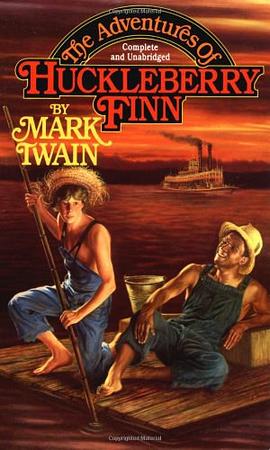
Tor Classics are affordably-priced editions designed to attract the young reader. Original dynamic cover art enthusiastically represents the excitement of each story. Appropriate "reader friendly" type sizes have been chosen for each title--offering clear, accurate, and readable text. All editions are complete and unabridged, and feature Introductions and Afterwords.
This edition of The Adventures of Huckleberry Finn includes a Preface, Biographical Note, and Afterword by Keith Neilson.
Breezy, outrageous, thrilling from first page to last, Huckleberry Finn is the most widely read and universally loved work in American fiction. It is also the most imitated. "All modern American literature," according to Ernest Hemingway, "comes from one book by Mark Twain called Huckleberry Finn."
Book Dimension:
length: (cm)17.5 width:(cm) 10.8
The Adventures of Huckleberry Finn, though rooted in the turbulent Mississippi landscape and a journey down the great river, unfolds as much through its characters’ inner lives as through the vivid external setting. Set in the antebellum South, the novel follows Huck Finn, a spirited boy disillusioned by hypocrisy and moral contradictions, particularly within institutions like family and religion. Escaping from his abusive father, Huck sets out with Jim, an enslaved man seeking freedom, along a river journey that becomes both physical escape and philosophical awakening. The narrative captures the complex dynamics between Huck and Jim—two men bound not by paper but by mutual respect and growing trust. Their passage down the Mississippi exposes stark contrasts: the cruelty of slavery laid bare against moments of tenderness, the rigid moral codes challenged by raw human experience, and the freedom found in fleeting connection rather than fixed identity. Along the way, they encounter a cast shaped by the region’s social tensions—farmers clinging to tradition, corrupt authorities enforcing unjust laws, and riverfront characters whose lives are shaped by poverty and mobility. Mark Twain crafts a prose that balances humor with sharp social critique, using vernacular speech to reflect authentic voices of the time while weaving deeper questions about justice, conscience, and personal growth. The river itself emerges as more than a setting—it embodies change, possibility, and the tension between confinement and liberation. Through Huck’s evolving perspective, readers witness a journey that transcends geography: an exploration of morality shaped by empathy rather than doctrine, and freedom defined not merely by physical movement but by the courage to redefine one’s values. Set against historical realities, the novel remains grounded in human experience—its power lies in the quiet moments between characters, in choices made under pressure, and the slow, often painful birth of conscience. Huck’s internal struggle, his gradual rejection of societal falsehoods, makes this not just a story of escape but one of transformation. The Adventures of Huckleberry Finn endures as a profound meditation on what it means to be free—both externally and within—and how true liberation begins with the willingness to see others not through lenses of prejudice, but with open eyes.