
具体描述
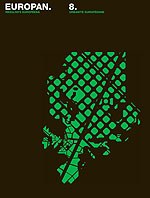
Europan 8 is the most recent session of the competition and ran from March 2005 - February 2006. The competition was participated in by 19 countries, submitting 74 sites across Europe and receiving 1,618 entries in total. CABE, together with its partner organisations, is now working closely with the site sponsors to ensure that the winning schemes are implemented in the UK. CABE also aims to ensure that the lessons learnt from the process are disseminated to a wider audience.
For further information on the Europan competition throughout the rest of Europe, please visit the central Europan website at www.europan-europe.com
Catalogue of Europan 8 results
To mark the eighth round of the competitions, EUROPAN is publishing a catalogue of the projects nominated in the 74 European cities of 19 different countries.
The general theme "European urbanity and strategic projects" must be considered as a common way of experiencing the city and its functions but also as a will to deal with the heterogeneity of its forms. The strategic question would not be that of knowing what type of European city we wish to perpetuate but what European city we want for the future.
This clearly reflects the will to create public spaces around what is, without doubt, the specificity of European cities, to favour encounters among people in places they share.
The catalogue describes the 143 prize-winning projects of the session (61 winners and 82 runners-up) and 82 projects with honorable mention. The latter are divided into five groups of sites classified according to themes:
Urbanizing with infrastructures
Generating the new
Recycling urban fabric
Building with nature
What sort of urbanity for inhabitants?
Each project (two pages per winner and one page per runner-up) is discussed on two levels – the urban design and the architectural project – with a descriptive text explaining the primary concepts.
The catalogue includes a number of articles explaining the European issues and comparing the themes of the prize-winning projects.
In "Urban dynamics of infrastructures", Socrates Stratis, architect, professor (Cyprus) analyses a group of projects that deal with spaces of mobility as driving force of urban development.
In "strategies for creating new", Jens Metz, architect, townplanner (Germany), scrutinises the attitudes of the projects on site in extension or which are being totally renovated.
In "Creating the town with what exists", Cornelius Brekke, architect, townplanner (Norway), analyses different processes to build the city upon the city.
In "Nature and artifice", Frédéric Bonnet, architect, town-planner (France), shows how the question of nature -beyond fashion- is taken into account within the prize-winning projects.
At last, in "Renewal of social housing: suburban village or city district? ", Didier Rebois, architect, General Secretary of Europan, highlights how young architects deal with the question of mutation of planned or spontaneous social housing districts.
The presentation of the winning projects finishes with:
- a presentation of the 82 projects designated noteworthy by the juries
- a rogue’s gallery with the teams’ photos and details
- the details of EUROPAN's national and European structures.
Editions EUROPAN, 2006.
360 colour pages, CD-rom
Edited in four languages: English, French, German, Italian.
On-line price: € 65
( including postage )
作者简介
Europan is a biennial competition for young architects and architecture students, under 40 years of age, to design innovative housing schemes for sites across Europe. The competition encourages architects to address social and economic changes occurring in towns and cities and offers the opportunity for cross-cultural learning and networking for the architects and site promoters involved.
目录信息
读后感
用户评价
这本被誉为“当代思想的试金石”的著作,以其宏大叙事和对人类困境的深刻洞察力,着实让我经历了一场精神上的洗礼。开篇便以一种近乎寓言的笔触,勾勒出一个在技术飞速发展与人性迷失之间挣扎的近未来图景。作者的文字功力毋庸置疑,那些关于记忆的碎片、身份的重构,在他笔下如同精密的仪器,一丝不苟地剖析着现代人的内在结构。我尤其欣赏其中对“连接”与“疏离”这对矛盾体的探讨,那种细致入微的心理刻画,常常让我停下来,反思自己日常生活中那些不经意的互动与抽离。全书的节奏掌控得极佳,高潮迭起却又留有足够的留白,让读者可以自行填充思考的空间。它不提供廉价的答案,更像是一面映照我们自身焦虑的镜子,让我们不得不直面那些潜藏在繁华之下的空虚感。阅读过程中,我感觉自己仿佛置身于一个由文字构建的复杂迷宫,每一次转折都通往新的哲学思辨,那种酣畅淋漓的智力挑战,着实令人回味无穷。这本书的价值,或许不在于它最终指向何方,而在于它如何引导我们去提问。
评分这本书带来的震撼,主要源于它对“时间”这一概念的颠覆性处理。我一直以为自己对时间感有清晰的认知,但阅读此书后,我才意识到我们日常感知到的线性时间是多么的脆弱和人为建构。作者通过一系列跨越世代的事件串联,模糊了过去、现在与未来的界限,让人不禁思考,我们所谓的“历史”是否只是一系列被精心挑选和排序的片段?书中对细节的描摹细致入微,小到一个物件的锈蚀痕迹,大到一个文明的兴衰更迭,都处理得丝丝入扣。我特别喜欢其中穿插的一些近乎诗意的哲学独白,它们像是从历史长河中打捞上来的珍宝,虽然孤立,却闪耀着永恒的光芒,为略显沉重的叙事增添了一抹亮色。这本书需要反复阅读,每一次重读,都会因为阅历的增长而发掘出新的层次和隐藏的象征意义。它不是一本用来“读完”的书,而是一本用来“居住”的书。
评分这是一部充满异域风情和文化张力的作品,它成功地构建了一个极具说服力的架空世界,这个世界并非完全脱离现实,而是现实的某种极端放大与扭曲。作者对不同文化符号的杂糅运用,展现了其深厚的跨学科背景,从古代符号学到现代社会学理论,信手拈来,浑然天成。我特别沉迷于书中描绘的那些仪式和信仰体系,它们构建了一个自洽的逻辑闭环,让读者暂时跳出了日常的框架,体验一种完全不同的存在方式。语言的运用极具音乐感,即便是翻译版本,依然能感受到那种韵律和节奏感,如同聆听一部宏伟的交响乐。这本书的魅力在于它的包容性,它既有对个体命运的细腻关注,又不失对宏大历史进程的把握。读完合上书本时,那种意犹未尽的感觉,仿佛是从一场漫长而奇特的旅行中归来,心境已被彻底刷新。它不仅仅是知识的传递,更是一种精神的洗礼与重塑。
评分老实说,初拿到这本厚重的书稿时,我的期待值其实是比较保守的,毕竟近年来这类探讨宏大主题的作品,往往在深度上有所欠缺,流于表面。然而,这本书彻底颠覆了我的预期。它不是那种让你读起来轻松愉快的消遣读物,更像是一场与作者智力上的“搏斗”。叙事结构上,作者采用了非线性的手法,多重视角不断切换,初读时确实有些令人费解,需要反复咀嚼才能捋清人物关系和时间脉络。但一旦适应了这种独特的节奏,你会发现其精妙之处——它模仿了我们真实世界的认知过程,充满着断裂与重组。最让我印象深刻的是作者对社会权力运作机制的解构,那些看似天衣无缝的体制,在他犀利的分析下,暴露出了层层叠叠的逻辑漏洞和人性弱点。语言风格冷峻而精准,没有一句多余的形容词,每一个词语都像是经过千锤百炼的编码。这本书的阅读体验,更像是在进行一次严谨的学术研讨,它要求读者投入全部的注意力,回报你的则是对现实世界运作逻辑更深一层的理解。
评分坦白讲,这本书的阅读门槛相当高,它毫不留情地将读者抛入一个复杂的思想漩涡中。作者似乎拒绝使用任何约定俗成的叙事惯例,章节之间的过渡往往突兀而跳跃,人物的动机也常是模糊不清的,这使得早期阅读体验充满了挫败感。但如果你能坚持穿过最初的迷雾,你会发现这种“陌生化”的处理恰恰是作者的用意所在——他意图剥离我们对既有经验的依赖,强迫我们用一种全新的、审视的目光去看待世界。书中对于“真实性”与“虚构性”边界的探讨,尤其令人深思。它提出了一个尖锐的问题:在一个信息过载的时代,我们所坚信的“事实”究竟有多大的可信度?我欣赏作者的勇气,敢于触碰那些最令人不安的、关于认知局限性的议题。这本书更像是一次对读者心智边界的试探,它让人在阅读的过程中感到不安、困惑,但最终,正是这种不安驱动我们走向更深刻的洞察。
评分全
评分Magazine.
评分全
评分全
评分Magazine.