
具体描述
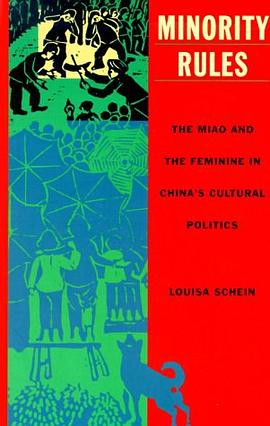
Louisa Schein’s study of cultural production in post-Mao China begins and ends with the Miao, one of China's 56 officially designated minority nationalities. As she points out in her introduction, however, “this book is about China as much as it is about the Miao” (p. 2). Indeed, this book is very much about the complementary and indispensable relation that each bears to the other.
Schein's focus is on cultural production, and much of the text consists of a close examination of representation practices through which “Miao” has emerged as a historical and ethnic identity. The Miao live scattered across seven provinces in southwestern China and four southeast Asian nations, speak dozens of mutually unintelligible dialects and refer to themselves with a variety of names, although “Miao” is not among them. Nevertheless, Miao, originally a derogative imposed by outsiders, has become an official standard and an accepted self-description.
Schein begins by sketching the continuous but unequal relationship between Miao and Han from the late imperial period through the 1990s. Over this period, the Miao have been brought under increasingly tight political, economic, and cultural control by the Chinese state. This trajectory of political and cultural power is reflected in a series of discourses and practices through which the Miao have been constructed as Other. In the 19th century, the Miao were depicted as exotic, dangerous, and promiscuous in popular picture albums. During the Republican period, the Miao were pressured to assimilate, often enduring humiliation and physical coercion. After 1949, a sincere effort to account for ethnic diversity within the new nation-state was first interrupted by the Great Leap Forward and then effectively negated by the conformist pressures of the Cultural Revolution. In the post-Mao era, as markets have overtaken mass movements and top-down policy declarations, new opportunities as well as challenges to Miao cultural agency have emerged.
After the founding of the People's Republic in 1949, China's new leaders sought to realize the state as “a social order of national multiethnicity” (p. 73). Transforming newly fixed ethnic categories into functioning social and political units relied, in part, on the work of young minority men and women who were recruited into training schools called “Nationalities Institutes.” Some were groomed as political cadres and sent back to their communities; those with appropriate talents were trained as artists and performers. Schein's poignant profiles of aging members of this cohort provide valuable insight into the personal and collective struggle entailed in interpreting and accommodating unpredictable shifts in state policy and economic conditions. Once in great demand for their value in promulgating the message of ethnic unity and socialist development, these now-faded stars were highly skilled and well-trained performers. As state-sponsored cultural professionals, they developed highly stylized, sanitized repertoires that combined such elements of traditional Miao culture as courtship songs and shamanic dances with the techniques and aesthetics of ballet and other Western art forms.
With the advent of the post-Mao economic reforms, however, these stylized representations were rejected as artificial and inauthentic by both Chinese consumers and global markets. Although the most successful performers still enjoyed the prestige and privilege of an elite status in their adopted urban milieu, most found themselves eclipsed by rough-hewn rural troupes who were better able to satisfy the fantasies of urban Chinese consumers and foreign tourists.
The marketization of ethnic images entailed the emergence of new forms of exploitation as well as new opportunities for cultural agency. Schein's descriptions make it clear that neither trend dominates the current process. For instance, the commodification of authentic, ethnic, female Miao bodies certainly serves to reify ethnic and gender relationships, reproducing the asymmetries of power among Han and Miao, male and female. Many Miao women are distressed by the indignity of being subject to the yearning, idealizing, and sometimes sexualizing gaze of the consumer. Yet in the interactions between some Miao women and male Han tourists, officials, and other expectant consumers of exotic, Miao femininity, Schein discerns creative attempts to reclaim individual and collective agency. In one of the most insightful passages in the book, she describes how some young Miao women respond to these potentially exploitative situations. When recruited by Han photographers to appear in traditional festival garb, some opt out entirely, whereas others have become habituated to the point that they are able to manipulate the procedure and dictate the terms of remuneration (p. 211). In one case, young women made their own arrangement to sing privately for an amateur Han folklorist, defying (and ultimately drawing a reprimand from) their elders. Here, Schein shows that Miao women have been able to subvert both the expectations of their own communities and the “urban gaze” of Han tourists. By taking control of the commodification process, their actions transcend mere resistance to domination.
In Minority Rules, Louisa Schein skillfully combines theoretical debate with detailed and engaging description in a work that is as intellectually insightful as it is ethnographically informative. As a study of the Miao and of the dialectics of gender, power, and representation in the post-Mao era, Schein's book is an important addition to the ethnography of the minority peoples of southwestern China and should interest all anthropologists of contemporary China. Yet this work ultimately deserves a broader audience; this is a significant contribution to the theory of cultural production.
作者简介
Louisa Schein, Associate Professor of Anthropology at the University of Rutgers, She received her PhD from UC Berkeley.
目录信息
Preface and Acknowledgments
1 Introduction
Part I Nation / Representation
2 Of Origins and Ethnonyms Contested Histories, Productive Ethnologies
3 Making Minzu: The State, the Category, and the Work
4 Internal Orientalism: Gender and the Popularization of China's Others
5 Reconfiguring the Dominant
Part II Identity and Cultural Struggle
6 Songs for Sale: Spectacle from the Mao to Market
7 Scribes, Sartorial Acts, and the State: Calling Culture Back
8 Displacing Subalternity: The Mobile Other
9 Performances of Minzu Modernity
10 Conclusion
Notes
Bibliography
Index
· · · · · · (收起)
读后感
我对书的印象是作者怎么老是跑来跑去的,用这里一张照片,那里一幅油画,到旅游点去碰到几个汉族游客说了几句,参加了几个短暂的活动/仪式,然后就拿来做实证素材了。我不反对这些可以作为材料,但除了一些零碎的仪式过程,在这本书里基本看不到更细致的任何一个苗寨村子或人家...
评分我对书的印象是作者怎么老是跑来跑去的,用这里一张照片,那里一幅油画,到旅游点去碰到几个汉族游客说了几句,参加了几个短暂的活动/仪式,然后就拿来做实证素材了。我不反对这些可以作为材料,但除了一些零碎的仪式过程,在这本书里基本看不到更细致的任何一个苗寨村子或人家...
评分以前写过英文版的book review作业,不过不怎么记得书的内容了,刚好重温一下。关于Hmong/Miao,掐架太多了,到底谁是Hmong,谁是Miao等等,每一期的Hmong Studies上面都有论战,持原生论,持建构论的大有人在。关于苗族起源的问题,我曾经和一个美国苗族青年聊过,他说起他们的...
评分2004年秋季某天,邢老师给过我一篇“中国的社会性别与内部东方主义”,我第一次看到沙因这个名字,也第一次见到“内部东方主义”这种说法。05年搬家的时候,我把复印的文章搞丢了,08年我找到了原文刊载的《社会性别与发展文集》,自己又印了这篇文章。10上半年邢老师去世,下...
评分我对书的印象是作者怎么老是跑来跑去的,用这里一张照片,那里一幅油画,到旅游点去碰到几个汉族游客说了几句,参加了几个短暂的活动/仪式,然后就拿来做实证素材了。我不反对这些可以作为材料,但除了一些零碎的仪式过程,在这本书里基本看不到更细致的任何一个苗寨村子或人家...
用户评价
初读这本书,我最先被吸引的是其独特的结构和叙事视角。作者巧妙地运用了非线性的时间线,将看似无关的故事碎片有机地串联起来,形成了一个宏大的叙事网络。这种编排方式极大地激发了我的阅读兴趣,我需要不断地在不同时间点、不同人物之间穿梭,才能逐渐拼凑出完整的图景。这种“解谜”式的阅读体验,让我在享受故事的同时,也锻炼了自己的逻辑思维能力。而且,书中对每一个角色的塑造都极其饱满,即使是那些戏份不多的配角,也仿佛拥有自己的独立生命和丰富背景。我能够清晰地感受到他们各自的动机、情感和成长轨迹,这使得整个故事充满了层次感和真实感。我特别喜欢作者在描绘角色内心挣扎时所使用的语言,那种对人性复杂性的洞察力,让人不得不为之赞叹。它让我思考,在每一个光鲜的“多数”背后,是否都隐藏着无数个不为人知的“少数”,他们默默地承受着压力,却又在关键时刻发挥着不可替代的作用。这本书拓展了我对“群体”和“个体”关系的认知,它提醒我,尊重和理解差异,才能真正构建一个更加包容和进步的社会。
评分这本书的语言风格给我留下了深刻的印象。作者的文笔洗练而富有张力,能够在短短的篇幅中,构建出饱满的人物形象和跌宕起伏的情节。她善于运用比喻和象征,将抽象的概念具象化,让读者能够更直观地感受到故事的力量。同时,她对细节的把握也极其到位,每一个场景的描写都仿佛历历在目,每一个人物的对话都充满了生活的质感。我特别喜欢作者在叙事节奏上的把控,她能够根据故事的需要,时而舒缓,时而紧凑,让整个阅读过程充满了惊喜。这种精湛的叙事技巧,使得这本书不仅仅是内容的传达,更是一次艺术的享受。它让我看到了文字的魅力,以及如何通过文字去触动人心,传递深刻的思考。
评分这本书带给我的最深刻的感受,是它所传递的那种“无声的力量”。作者并没有刻意去渲染冲突,也没有使用夸张的辞藻,而是通过朴实无华的语言,讲述了那些在平凡生活中默默坚持、不屈不挠的“少数派”。我被书中那些细微之处所打动,比如一个眼神,一次不经意的动作,一个简短的对话,都蕴含着丰富的情感和深刻的意义。这些看似微不足道的细节,却共同汇聚成一股强大的力量,推动着故事向前发展,也触动着我的内心深处。它让我明白,真正的力量并非总是体现在声嘶力竭的呐喊,更多时候,它潜藏在安静的坚持和持久的韧性之中。我开始重新审视自己身边的人,以及那些在社会角落里默默贡献的力量,那些被我们忽视但却至关重要的存在。这本书不仅仅是一本故事集,它更像是一面镜子,映照出我们内心深处对“不同”的恐惧和排斥,也鼓励我们去拥抱和接纳那些与我们不一样的人。
评分这本书最让我印象深刻的是其对于“意义”的追寻。书中描绘的那些“少数派”,他们并非因为追求名利而坚持,更多的是出于一种内心的召唤,一种对某种价值的执着。他们可能在不被理解的环境中默默耕耘,可能面对着巨大的阻力,但他们从未放弃对内心信念的坚守。这种对“意义”的探索,让我不禁联想到自己的人生,思考我所追求的“意义”是什么。作者并没有提供现成的答案,而是通过这些鲜活的故事,引导我去思考这个问题。她所展现的不仅仅是“少数派”的生存状态,更是他们对于生命价值的独特理解。这种对生命意义的深入探讨,让这本书拥有了超越故事本身的深度和广度。它触及了人类最根本的生存困惑,也提供了应对这种困惑的独特视角。
评分当我合上这本书时,一种难以言喻的震撼和启发仍然萦绕在我心头。作者在处理“少数”与“多数”的议题上,展现了惊人的智慧和深度。她没有简单地将两者对立起来,而是细致地剖析了它们之间的相互作用和影响,以及在不同情境下,谁是“少数”,谁又是“多数”的可能性。这种辩证的思考方式,让我对许多固有的观念产生了动摇。我尤其欣赏作者对于历史事件和社会现象的解读,她能够从一个独特的角度切入,揭示出那些被主流叙事所忽略的视角。这种“拨乱反正”式的梳理,不仅让我对过去有了更清晰的认识,也为我理解当下社会提供了新的思路。书中引用的那些旁征博引的资料和生动的案例,更是为她的观点增添了坚实的支撑。这本书不仅仅是一次知识的获取,更是一次思维的洗礼,它让我学会了如何从多个维度去观察和分析问题,从而形成自己独立的判断。
评分我在阅读过程中,最能引起共鸣的是书中关于“失落感”和“归属感”的描写。作者非常细腻地刻画了那些因为与众不同而感到孤立无援的角色,以及他们内心深处对被理解和被接纳的渴望。我能够体会到那种站在人群之外,却又渴望融入的矛盾心情。同时,我也看到了这些“少数派”在彼此之间找到慰藉和力量的动人瞬间。他们虽然人数不多,但却因为共同的经历和信念而形成了紧密的联系。这种“小群体”中的温暖和支持,成为了他们对抗外界压力的重要力量。这本书让我更加理解了人与人之间建立连接的重要性,以及在多元化的社会中,如何去创造和维护这种连接。它不仅仅是对“少数派”的关注,更是对所有渴望被理解、被接纳的人们的一种温柔的抚慰。
评分在阅读过程中,我不断被书中角色的“韧性”所打动。那些“少数派”,他们可能没有显赫的背景,没有强大的靠山,甚至没有得到社会的普遍认可,但他们却凭借着内心的坚韧,一次次地从挫折中站起来,继续前行。这种不屈不挠的精神,让我在面对生活中的困难时,也多了一份勇气和信心。我看到了他们在黑暗中摸索,在质疑中坚持,最终用自己的行动证明了“少数”的力量。这本书让我明白,真正的强大并非来自于外部的赞美,而是来自于内心的坚定。它激励我去发掘自己内在的潜能,去勇敢地面对挑战,去相信“小”也能创造“大”的奇迹。
评分总而言之,这本书以其独特的视角、深刻的洞察和精湛的叙事,为我带来了一次难忘的阅读体验。它不仅仅讲述了“少数派”的故事,更重要的是,它引导我去思考“多数”与“少数”的关系,去理解个体在群体中的价值,去尊重和拥抱差异。这本书让我对世界有了更广阔的认知,也对人性有了更深的理解。我从中汲取了力量,也获得了启发。它让我意识到,在任何一个时代、任何一个社会,那些敢于发出不同声音的人们,往往是推动进步的关键力量。我强烈推荐这本书给所有对人生、对社会、对“自我”的定位感到困惑或好奇的人们,它一定会给你带来意想不到的收获。
评分这本书带给我的另一个重要启示,是关于“创新”与“变革”的思考。许多时候,那些引领时代进步的创新和变革,恰恰来自于那些不被主流所接受的“少数派”。他们敢于挑战传统的思维模式,敢于打破既有的规则,从而为社会带来了新的可能性。书中对这些“少数派”的经历的描绘,让我对“创新”的本质有了更深入的理解。它并非总是惊天动地的壮举,更多时候,它是一种持续的探索和对未知的勇气。这本书让我更加珍视那些敢于“不一样”的思想和行动,并意识到,在一个充满变化的时代,拥抱“少数”的声音,往往能够带来意想不到的突破。
评分这本书的封面设计本身就散发着一种沉静而充满力量的吸引力,深邃的蓝色调搭配着中央那个象征性的、仿佛在黑暗中顽强燃烧的微小光点,瞬间就抓住了我的目光。在拿起它之前,我已经在脑海中勾勒出了无数个关于“少数派”的故事,关于那些不被主流理解、却在自己的领域里默默耕耘的人物。翻开第一页,扑面而来的便是作者那种温和却坚定的叙事风格,她似乎有一种魔力,能够将那些看似琐碎的细节编织成一幅幅生动的画面,让我仿佛置身于故事之中,感受着那些不为人知的挣扎与坚持。我尤其欣赏作者对于人物心理的刻画,那种细腻入微的描写,让我能够体会到书中角色内心的波澜起伏,他们的喜悦、他们的失落、他们的迷茫,以及最终在困境中迸发出的勇气,都仿佛触手可及。这本书不仅仅是关于少数派的成功故事,它更深入地探讨了“少数”与“多数”之间微妙的界限,以及在这个界限模糊的世界里,个体如何找到自己的位置,并坚定地发出自己的声音。读完这本书,我脑海中回响的不仅仅是那些动人的故事,更是一种对生命、对社会、对“自我”的深刻反思,它让我重新审视了那些被忽视的角落,也让我更加珍视那些敢于与众不同的人们。
评分http://books.google.com.hk/books?id=GomyOthrHjUC&printsec=frontcover&dq=Minority+Rules&hl=zh-CN&ei=ZIJ0TLeRG86ecay7pJ8G&sa=X&oi=book_result&ct=result#v=onepage&q&f=false 不仅是representation,还是producer internal colonial / internal orientalist / internal colony / internal orientalism / internal colonialsm
评分culture is a pursuit of our total perfection by means of getting to know, on all matters which most concern us, the best which has been thought and said in the world.
评分GOVT 6827 Culture的题还是用Ethnography好,不过Schein的理论用得有些过,选材可能掺杂了不应该的主观因素。
评分文笔很好。见解很imposing。当然引发的争论也很多。
评分