
具体描述
Book Description
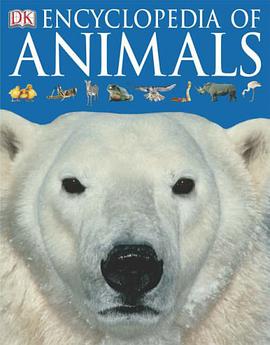
Discover the magical world of animals, from Aardvark through to Zebra. Love animals? Come on a journey through the alphabet and find out all about the 2 million species on Earth. Discover why some birds fly, but others don't. Get close to creep crawlies you never knew existed, from meat eaters (yikes) to ones with lots of legs! Or meet the tiny things you can't see, but live closer to you than you might ever imagine! This work includes six sections on each major animal group including mammals, reptiles, creepy crawlies, birds, amphibians and fish. Stunning up-close photography reveals how all kinds of animals and plants live together. It includes fully cross-referenced topics, perfect for homework or projects.
Amazon.com
Imagine a snake that can change its body shape to "fly" up to 164 feet between trees in the rain forest. Learn why a river that contains rat-tailed maggots and tubifex worms is in trouble. Find out how the male emperor penguin keeps its eggs warm--balanced on top of his feet! No child needs to be told that the animal kingdom is truly extraordinary. But every child will want to discover in greater detail, from A to Z, just how remarkable the critters of the world really are. Dorling Kindersley, masters of pictorial reference guides (Dorling Kindersley Children's Atlas, DK Science Encyclopedia, DK Nature Encyclopedia), bring the animal world vividly to life with their Animal Encyclopedia. Arranged alphabetically, from aardvarks to zebras, this lavishly illustrated guide investigates over 2,000 animal species, using crisp, stunning photographs, artwork, and special features. Each entry includes a fact box that provides quick reference information, such as family name for that group of animals, habitat, food, number of eggs or young, and size. A very useful scale shows a silhouette of the animal next to that of an average size adult human male, to give readers an idea of its size. The "Find Out More" box directs readers to other pages to read about a linked subject. A glossary and an index are provided, as well as an "Animal Life" section, which explains how animals behave and fit into their individual habitats. This wonderful resource for home projects or schoolwork will be an absolute favorite for every member of the family for years to come. (Ages 8 and older)
From Booklist
Reviewed with Kingfisher Illustrated Animal Encyclopedia.
These two single-volume animal encyclopedias are designed for the upper-elementary level and up. In both, the color photographs practically leap off the page and are accompanied by brief descriptions that will activate one's curiosity to look further.
The DK volume begins with a lengthy presentation called "Animal Life" covering such general topics as classification, communication, habitats, and migration. This is followed by "Animal A-Z," where animals are treated in segments of up to three pages. As one expects from DK, the emphasis is on the illustrations, which are accompanied by captions, and short chunks of text and fact boxes that list family, habitation, food, life span, size, and other data. There are almost 150 A-Z entries, many including full-page photographs that show animals in their natural habitats. More than 2,000 species are covered, although the majority are represented only by a photograph. Animals were presumably selected because of their interest to children (and British children at that, because there is a full-page entry for hedgehogs). The text concludes with a glossary and an index.
The Kingfisher volume takes a more scientific approach. Noted naturalist Burnie sets a nice background in his introduction about the characteristics of animals. He includes a couple of pages that depict the classification of animals, followed by two pages that clearly show how all the animals fit into the animal kingdom. Instead of the alphabetical format used in the DK volume, information on animals is arranged by class, from simple animals to mammals. These divisions are further broken down by phylum and subphylum. Within these sections, there is a paragraph devoted to each selected species (more than 2,000 in all) providing scientific name, distribution, and size, as well as a brief description. Sidebars treat topics such as metamorphosis and symbiosis. A glossary and index complete the text.
Photographs and illustrations abound. Each bewitching photo attracts the reader to read the description, and Burnie's descriptions are interesting. He tells us, for example, that most pipe fish swim horizontally, but some swim vertically. The males carry the eggs until they hatch, as do male seahorses. (Could this get a discussion going on the division of labor around a home?) There are several pictures of copulating animals, such as the toads in the section on amphibians. Most adults (parents and teachers) should not find this objectionable and will recognize the natural scientific tone.
In both volumes, the strong visual presentation is likely to attract readers. The DK volume may be more accessible to children in younger grades, while the Kingfisher volume will be appreciated by students who are ready for a more sophisticated approach. Both books are recommended for homes, schools, and public libraries. RBB
From School Library Journal
There is plenty of competition in the single-volume specialty encyclopedia market, but this volume rises to the top for its multidirectional approach and striking illustrations. Prefaced by a selection of prizewinning nature photographs by children and teenagers, the book's first quarter is taken up with a series of topical spreads on physical structures, attack and defense mechanisms, homes, habitats, and the like. An animal A-to-Z follows, introducing about 2000 individual or related species under headings of widely varying scope: "Amphibians," "Cobras," "Humans." Each one-to-three page entry in this section contains brief comments on appearances, variations, behavior, and reproduction, as well as boxed summary facts, cross-references, and a silhouetted human hand or body to show comparative size. The art, a richly informative blend of painted or photographic close-ups, action shots, and isolated portraits, is up to DK's usual standards for sharpness of detail, brilliance of color, and dramatic impact. Where else can viewers see a flamingo's distinctive skull, a (painted) cross-sectional view of a pregnant gorilla, or an owl pellet partially exploded to reveal what its maker had for dinner? The level of specific detail is relatively low, but the cross-references, along with a large index, link related information nicely, and the writing is vivid enough to hold its own against the visuals. Despite the lack of maps, charts (of, for instance, endangered species), or outside resources, this book will reward both browsers and focused inquirers and enhance any reference collection.
John Peters, New York Public Library
About Author
Barbara Taylor has written many science and nature books for children including The Animal Atlas, DK Inside Guides, and the Dorling Kindersley Nature Encyclopedia.
作者简介
目录信息
读后感
用户评价
这本书的封面设计得极为抓人眼球,那种深邃的墨蓝色背景上,错落地点缀着一些光影斑驳的动物剪影,让人一眼望去就仿佛能感受到一片广袤无垠的野外气息。我原本是抱着一种轻松的心态翻开它的,期待着一些轻松愉快的动物趣闻,但很快我就发现,这绝不是一本普通的“图鉴”或者“科普读物”。它的叙事风格非常独特,作者似乎有着一种近乎哲学家的沉静,用词考究,笔触细腻到让人心惊。比如,书中对一种深海鱼类的描述,不是简单地罗列其生理结构,而是花了大量的篇幅去探讨它在极端黑暗环境中生存的“意义”,那种文字的张力,简直就像是把读者直接拉进了那冰冷、高压的海底世界,让你不由自主地思考生命的本质。我特别喜欢它对“物种”这个概念的解构,它似乎在挑战我们对生物分类的传统认知,提供了一种更加动态、更加相互关联的视角来看待自然界的复杂性。读起来,与其说是在获取知识,不如说是在进行一场缓慢而深刻的冥想,需要极大的专注力去跟上作者那跳跃的、充满隐喻的思维脉络。每一次翻页,都像是在揭开一层薄雾,露出了一个更深层次的自然奥秘。
评分说实话,这本书的阅读体验像是一场精神上的马拉松,挑战性非常高,但一旦你适应了那种节奏,它的回馈是惊人的。它的结构并非传统的A到Z的编排,而是更像是一系列散落的、却又暗自交织的叙事片段。作者似乎对“稀有”和“常见”这两个概念有着自己的独特定义,书中对那些被我们视为理所当然的动物,比如家猫或者麻雀,所进行的剖析,比对那些濒危物种的描写还要深入和令人震撼。我记得有一章,作者用了整整三十页的篇幅来描绘一只蚁群的内部运作,那种宏大叙事与微观细节的完美融合,让我对“社会性”这个词有了全新的理解。它摒弃了大量生硬的科学术语,转而使用大量的文学意象来构建场景,这使得即便是最晦涩的生物学概念,也变得鲜活可感。不过,对于那些只想快速查阅某种动物基本信息的读者来说,这本书可能不太友好,因为它更注重“体验”而非“索引”。它要求读者放下既有的知识框架,跟随作者的思路,去感受生命力的原始律动,读完后,你可能会发现自己对窗外飞过的鸟儿都多了一层敬畏之情。
评分这本书的排版和装帧本身就是一件艺术品,它体现了一种对“内容至上”的极致追求,但这种追求反而带来了一种近乎苛刻的阅读体验。纸张的质感非常独特,略带粗粝感,仿佛能感受到从远古土壤中汲取的生命力。然而,插图的运用却极具反差性。它们并非我们常见的那种精确的科学绘图,而是更像是用炭笔或水墨速写而成,线条大胆、构图极富张力,但很多细节的对应性却很模糊。这迫使读者必须将文字的描述与脑海中既有的动物形象进行对抗和重塑。我记得有一段关于南美洲雨林中某种两栖动物的描述,文字描绘得栩栩如生,充满了湿润的热带气息,但我翻遍了相关页面,那张“官方”插图却只留下一团模糊的墨迹,像是一个未完成的梦境。这让我深思,作者是不是在暗示,我们对自然界的认知,永远都只能是碎片化和主观化的?这种“不完整性”的呈现,反而成为了一种强大的驱动力,让人不断地去想象和填充那缺失的部分,其带来的阅读冲击力,远超那些信息完备的工具书。
评分我必须承认,这本书的哲学思辨性远超我的初始预期,它更像是一部关于“存在”的史诗,而非动物志。作者的语言风格极其冷峻,几乎没有多余的情感流露,但正是这种克制,使得每一次情感的爆发都显得异常有力。书中对“捕食与被捕食”这一自然法则的探讨,被提升到了形而上的高度,不再仅仅是生物链上的一个环节,而是一种关于“必然性”与“自由意志”的辩论。例如,在描述一只猎豹追逐羚羊的场景时,作者几乎没有使用任何表示速度或紧张的词汇,而是用一种近乎计算般的精确性,剖析了两者在时间、空间维度上的相互作用,将追逐的过程描绘成宇宙间两种能量的必然交汇。这种独特的叙事角度,要求读者摒弃一切拟人化的倾向,以一种冰冷、客观的“上帝视角”去审视这一切。对于那些习惯于在自然文学中寻找温情或英雄主义的读者来说,这本书无疑会带来一种强烈的疏离感,但对于寻求深度思考的人来说,这无疑是一座宝库,它挑战你对生命权重的既有判断。
评分这本书的知识密度大得惊人,但它的信息传递方式却出人意料地碎片化和跳跃。它没有一个清晰的地理或物种顺序,更像是作者的个人研究笔记被随机地呈现在你面前。可能上一页还在探讨北极熊的脂肪代谢,下一页就突然跳转到了热带珊瑚礁中某种微生物的共生关系,这种看似混乱的排列,实际上隐藏着作者试图建立的某种宏大联系。我花了很长时间才意识到,这些看似不相关的章节,其实是通过某种隐秘的“功能性”或者“环境压力”的相似性被联系起来的。这本书的独特之处在于,它似乎更关心“过程”而非“结果”。比如,它不会详细描述某个物种的演化终点,而是聚焦于那些关键的、导致演化方向转变的“临界点”事件。这种叙事策略极大地锻炼了读者的联想能力和归纳能力,你需要不断地在不同物种、不同生态系统之间建立桥梁。总而言之,它不是一本可以“读完”的书,更像是一本需要“反复参悟”的案头之作,每一次重读,都会因为你自身经验的积累,而发现先前被忽略的、隐藏在文字背后的复杂网络。
评分 评分 评分 评分 评分