具体描述
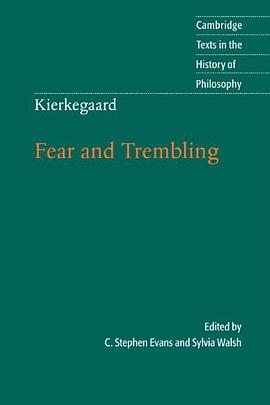
Kierkegaard, described by Wittgenstein as "by far the most profound thinker of the [nineteenth] century," has influenced a wide range of philosophers and theologians. Fear and Trembling, which investigates the nature of faith and its relation to ethics via a discussion of the story of Abraham and Isaac, is one of Kierkegaard's most compelling and popular works. Kierkegaard and Fear and Trembling introduces and assesses:
* Kierkegaard's life and the background to Fear and Trembling
* The ideas and text of Fear and Trembling, possibly his most famous work
* Kierkegaard's continuing importance in philosophy</P>
作者简介
目录信息
读后感
用户评价
The sheer intellectual density of *Fear and Trembling* presented a significant initial hurdle, leaving me feeling like a novice in a profoundly complex philosophical landscape. My prior engagement with religious thought had been largely framed by more systematic and rationalistic approaches, and Kierkegaard’s emphasis on paradox, subjective experience, and existential dread was a radical departure. The central narrative of Abraham’s sacrifice, stripped of its heroic veneer and presented as a moment of profound ethical and spiritual crisis, demanded a re-evaluation of what it truly means to possess faith. The concept of the “knight of faith,” outwardly ordinary yet inwardly engaged in a solitary struggle with the absolute, is a powerful, albeit deeply enigmatic, image that has occupied much of my contemplation. Kierkegaard’s exploration of “anxiety” is not merely a psychological state but a fundamental existential condition, the dizziness of freedom that arises from the awareness of one’s own infinite possibilities and responsibilities. This is the anxiety that grips Abraham, and understanding this specific kind of dread is paramount to grasping the full weight of his situation. The book’s challenge to universal ethical norms, suggesting that there are moments when an individual can be ethically justified in suspending the universal for a higher, personal calling, is a radical proposition that necessitates a deep and often uncomfortable grappling with the foundations of societal morality. My ongoing engagement with this text has been a process of carefully dissecting these intricate arguments, seeking to apprehend the subtle yet profound interplay between faith, reason, and the very essence of the human condition.
评分Upon first encountering *Fear and Trembling*, I was struck by its unique approach to exploring religious experience, one that diverged significantly from the more predictable theological treatises I had previously engaged with. My initial reading was marked by a sense of wrestling with the profound paradoxes Kierkegaard so meticulously articulates, particularly concerning Abraham’s willingness to sacrifice his son. The concept of the “teleological suspension of the ethical” is not merely an abstract philosophical term; it represents a fundamental reorientation of how one understands moral obligation when faced with an absolute divine command. This idea challenged my existing ethical frameworks and prompted a deep, often introspective, consideration of the nature of duty and obedience. Kierkegaard’s portrayal of Abraham as a figure suspended between the universal ethical law and a personal, divine imperative underscores the immense solitude and potential for misunderstanding that can accompany true faith. The repeated examination of “anxiety” within the text, not as a fleeting emotion but as an intrinsic aspect of human existence and the awareness of one’s radical freedom, is a crucial element that I found myself returning to. This is the anxiety that defines the inner life of the knight of faith, a state of being that is both terrifying and essential to spiritual growth. My journey through *Fear and Trembling* has been a continuous process of intellectual engagement, of carefully dissecting Kierkegaard’s intricate arguments in an effort to comprehend the profound and often unsettling truths he uncovers about the human condition and the nature of authentic faith.
评分My initial impressions of *Fear and Trembling* were, to put it mildly, a mixture of admiration for its intellectual rigor and frustration with its apparent opacity. I found myself constantly circling back to the central dilemma of Abraham, attempting to reconcile the ethical imperative to protect one's child with a divine command that seemed to negate that very imperative. The concept of the “knight of faith” emerged as a particularly compelling, albeit mystifying, figure – someone who walks among us, outwardly indistinguishable from ordinary individuals, yet inwardly engaged in a profound and solitary struggle with the absolute. This idea of hidden spiritual intensity, of a life lived in constant tension with the visible world, is a powerful one. Kierkegaard’s exploration of “anxiety” is also a crucial element that I found myself returning to repeatedly. This is not the everyday anxiety of deadlines or social awkwardness, but a profound, existential dread that arises from the awareness of one's own freedom and the infinite possibilities that lie before them. It is the dizziness of potential, and it is this anxiety that defines the inner life of the knight of faith. The book’s questioning of universal ethical norms, suggesting that there are moments when an individual can be ethically justified in suspending the universal for a higher, personal calling, is a radical proposition that challenges the very foundations of societal morality. This challenge is not easily dismissed, and it has been the source of much of my prolonged engagement with the text. It’s a book that doesn’t offer neat conclusions, but rather invites a deep and often uncomfortable contemplation of the human condition and the nature of faith.
评分There are moments when reading Kierkegaard’s *Fear and Trembling* feels like attempting to decipher ancient runes, where the meaning is just beyond reach, shimmering tantalizingly close but ultimately elusive. My prior understanding of religious philosophy was largely rooted in more systematic theological traditions, and Kierkegaard's existential approach, with its focus on paradox and individual subjective experience, was a significant departure. The figure of Abraham, stripped of his patriarchal authority and presented as a solitary, trembling individual facing an incomprehensible divine command, is a far cry from the stoic patriarch often depicted in religious art and sermons. This reimagining of Abraham forces a re-evaluation of what it means to have faith, not as blind obedience or intellectual assent, but as a deeply personal and often agonizing commitment. The repeated delving into the "what if" scenarios, exploring the potential consequences of Abraham's actions from the perspective of the universal ethical, highlights the profound alienation and suffering inherent in the life of faith. It’s this constant oscillation between the divine imperative and the human ethical that constitutes the core of Kierkegaard’s philosophical project in this work, and it’s a delicate balancing act that requires careful attention to his intricate argumentation. The concept of "anxiety" in Kierkegaard is not mere nervousness; it is a fundamental existential condition, the dizziness of freedom, and the awareness of one's own possibility and responsibility. This is the anxiety that grips Abraham, and understanding this specific kind of anxiety is crucial to grasping the full weight of his situation. My own wrestling with these concepts has led me to appreciate the depth and the often-uncomfortable truths that Kierkegaard brings to light about the nature of faith and the individual's relationship with the transcendent.
评分Frankly, my initial dive into *Fear and Trembling* was less of a dive and more of a tentative dip of the toe, followed by a hasty retreat. The language, while undoubtedly powerful, felt like navigating a labyrinth constructed entirely of abstract concepts and deeply embedded religious presuppositions. I remember feeling a desperate need for a guide, someone who could illuminate the path through Kierkegaard's dense prose and clarify the central arguments. The idea of the "teleological suspension of the ethical" itself, a phrase that sounds so academic and dry, actually represents a seismic shift in how one might understand moral obligation, and I struggled to reconcile it with my everyday understanding of right and wrong. Abraham’s willingness to sacrifice Isaac, as presented by Kierkegaard, is not simply a story of obedience, but a profound philosophical problem that challenges the very foundations of communal morality and universal ethical principles. The sheer audacity of Kierkegaard's claim that Abraham's act, while appearing monstrous from a human perspective, was nevertheless justified by a higher, divine authority, left me both bewildered and intrigued. I found myself constantly questioning the implications of such a notion for individual action and societal norms. Is there a point where adherence to divine will supersedes all humanly constructed ethical frameworks? This is the knot that Kierkegaard ties, and it’s a knot that requires considerable effort to unravel. The emphasis on the subjective truth, on the individual’s inwardness and their personal relationship with the absolute, is also a recurring theme that I grappled with. It’s a concept that, while appealing in its focus on individual autonomy, also raises concerns about the potential for radical subjectivism and the erosion of shared values. The book, in its own way, forces you to confront these complexities head-on.
评分It’s safe to say that my initial encounter with *Fear and Trembling* left me feeling somewhat adrift, grappling with concepts that felt both profoundly important and incredibly difficult to articulate. I remember feeling a distinct lack of scaffolding, a sense that I was expected to build a towering intellectual structure with only scattered bricks of understanding. The book’s exploration of the "aesthetic" stage of existence, characterized by the pursuit of pleasure and avoidance of commitment, and its stark contrast with the ethical and religious stages, provided a framework for understanding different modes of living, but it also underscored the immense difficulty of transcending the aesthetic. Kierkegaard’s critique of the comfortable, bourgeois Christianity of his time, which he saw as having diluted the radical demands of true faith, resonated with me, even as I struggled to identify precisely what constituted that “true faith.” The relentless focus on the individual’s interiority, on the subjective experience of faith as a passion, as a leap into the abyss, is a challenging but ultimately rewarding aspect of the text. It’s a perspective that demands a radical shift in how one conceives of religious commitment, moving away from external validation and communal acceptance towards a deeply personal and often solitary encounter with the divine. The very notion of “suffering” in Kierkegaard’s work is not mere hardship, but a necessary component of spiritual growth, a testament to the authenticity of one’s commitment. This is the suffering that Abraham endures, and understanding this dimension is critical to appreciating the full scope of his faith. My ongoing engagement with the book has been a process of piecing together these complex ideas, seeking to grasp the subtle interplay between faith, reason, and the human condition.
评分Kierkegaard's *Fear and Trembling* has always been a text that both deeply fascinates and profoundly intimidates me. I’ve wrestled with its dense philosophical prose, its challenging reinterpretations of biblical narrative, and its relentless exploration of faith, reason, and the individual. My initial encounters with the work were marked by a sense of awe at Kierkegaard's intellectual rigor, but also a persistent feeling of being on the outside looking in, unable to fully grasp the nuances of his argument. It’s a text that demands more than a casual read; it requires a committed engagement, a willingness to confront uncomfortable questions and to sit with ambiguity. The sheer weight of its existential implications – the radical responsibility of the individual before God, the leap of faith as an act that defies all rational justification – often left me feeling intellectually exhausted yet spiritually stirred. I’ve found myself returning to certain passages, rereading them with the hope that a new angle, a fresh perspective, would unlock their secrets. The concept of the knight of faith, suspended between the universal and the particular, sacrificing personal happiness for a divine command, is particularly potent and has been the subject of much contemplation. It’s a testament to Kierkegaard's genius that he can articulate such a radical vision of religious existence in a way that is both intellectually rigorous and emotionally resonant. The paradoxes he presents, particularly the tension between the eternal and the temporal, the absolute duty to God and the inherent absurdity of that duty from a human perspective, are the very heart of the matter, and understanding them feels like unlocking a fundamental truth about the human condition. The psychological depth of Kierkegaard's exploration of anxiety, dread, and despair is also a key element that draws me in. He doesn't shy away from the darker aspects of human experience, but rather uses them as a foundation for understanding the potential for authentic selfhood. This is not a book that offers easy answers; instead, it invites the reader into a profound dialogue with some of the most fundamental questions of life, faith, and existence.
评分When I first opened *Fear and Trembling*, I anticipated a straightforward exposition of a biblical story, perhaps with some theological commentary. What I encountered was something far more profound and, frankly, disorienting. Kierkegaard’s deconstruction of Abraham’s faith is not a simple affirmation but a rigorous examination of the ethical and existential implications of obedience to a divine will that appears to contradict all human moral understanding. The concept of the “teleological suspension of the ethical” is central to this, representing a point where divine command transcends universal ethical principles, leaving the individual in a state of profound isolation and potential condemnation. This idea alone demanded significant intellectual wrestling. I remember feeling a strong pull to understand *why* Abraham is presented as the exemplar of faith, and Kierkegaard’s answer, rooted in Abraham’s unwavering commitment despite the apparent irrationality of his task, offered a new lens through which to view religious devotion. The book is a constant reminder that true faith, in Kierkegaard’s view, is not about intellectual agreement or societal conformity, but a deeply personal, passionate, and often agonizing engagement with the absolute. The exploration of anxiety, not as a symptom of illness but as an intrinsic aspect of human freedom and the awareness of possibility, is also a recurring theme that I found myself reflecting on deeply. This is the anxiety that Abraham must confront, the dizziness of standing alone before the divine. My own reading experience has been a continuous process of unpacking these complex layers, seeking to grasp the radical and often challenging nature of Kierkegaard’s vision of faith.
评分Navigating *Fear and Trembling* for the first time felt akin to undertaking a complex philosophical excavation, unearthing layers of meaning with each reread, yet still sensing the vastness of the unexamined terrain. My prior philosophical training had focused on more system-building thinkers, and Kierkegaard’s fragmented, almost aphoristic style, coupled with his deeply personal and often dramatic prose, presented a unique challenge. The central analogy of Abraham’s sacrifice, meticulously dissected and reinterpreted, serves not merely as a theological case study but as a profound exploration of the individual’s radical responsibility before God. The idea that Abraham, by his act, is elevated to a unique position beyond the comprehension of ordinary ethical understanding, is a notion that requires significant intellectual wrestling. Kierkegaard’s relentless emphasis on subjective truth – the truth that is lived and experienced inwardly by the individual – stands in stark contrast to objective, propositional truth. This distinction is paramount to understanding his critique of a superficial, institutionalized faith. The “leap of faith,” often portrayed as a simple act of belief, is in Kierkegaard’s hands a terrifying and agonizing commitment, a surrender to the absurd that defies all rational explanation. This is the core tension of the book: the absolute duty to God, which necessitates the suspension of all humanly devised ethical frameworks. My own journey through this text has been one of persistent questioning and a gradual appreciation for the immense psychological and philosophical depth Kierkegaard brings to bear on the concept of faith, not as a comfortable assurance, but as a demanding and potentially devastating existential venture.
评分My initial understanding of *Fear and Trembling* was profoundly shaped by a traditional, often sanitized, presentation of biblical narratives. Kierkegaard’s radical reinterpretation of Abraham’s story, however, shattered those preconceptions, forcing me to confront a faith that is not only demanding but potentially antithetical to conventional ethical reasoning. The central paradox of the “teleological suspension of the ethical” – the idea that an individual can, under divine authority, suspend universally binding moral laws – is a concept that took considerable time and repeated engagement to even begin to grasp. It represents a seismic shift in understanding the relationship between faith and ethics, suggesting that the absolute duty to God can, in specific instances, supersede all humanly constructed moral frameworks. This is not a comfortable notion, and it has been the source of much of my sustained reflection on the book. Kierkegaard’s masterful portrayal of Abraham as a solitary figure, wrestling with an incomprehensible command, highlights the profound isolation that can accompany genuine faith. The book consistently returns to the theme of “anxiety,” but here it is presented not as a psychological aberration, but as an inherent aspect of human existence, the dizziness of freedom and the awareness of one’s infinite potential. It is this anxiety that Abraham embodies, and understanding this existential dimension is crucial to appreciating the depth of his commitment. My own journey with *Fear and Trembling* has been one of continuous intellectual and spiritual challenge, a gradual unfolding of the profound and often unsettling truths Kierkegaard uncovers about the nature of faith and the individual's relationship with the transcendent.
评分 评分 评分 评分 评分