
具体描述
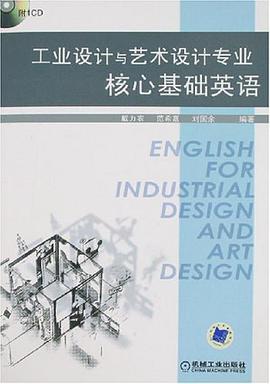
《工业设计与艺术设计专业核心基础英语》是一本设计学科的专业英汉双语书。本书分为三个部分,全面覆盖设计的三个主要方向:室内设计、平面设计和工业设计。每个部分的结构又分为三个方面: 基本理论(介绍各专业方向的基本概念、基本原理、主要思想); 专业知识(以设计专业特有的图解方式直观、简洁地将一些常用讵汇表达出来,使图形与词汇、用法建立视觉联系,便于记忆和学习); 专业表现或案例分析(较全面系统地展示工程图纸、文本制作的英文版本书写方法,使设计师学习后马上能用于实践)。
另附有光盘一张,其中有:各章节的中文导读、相关专业的附录图表及词汇总表。本书有大量图解分析,将专业英语学习与视觉化语言相结合,利于记忆和理解,十分适合设计师的学习。由于取材广泛,本书还具有知识覆盖面广、内容比较新、易学易用的特点。可以作为设计院校的教 本书适合高等院校艺术设计和工业设计专业的师生和相关的设计师使用,对于相关学科的从业人员也有较高的参考价值。
《工业设计与艺术设计专业核心基础英语》一书,旨在为致力于在工业设计和艺术设计领域深造的学生和从业者构建坚实的英语语言基础。本书并非单纯的英语词汇或语法手册,而是将语言学习与专业领域的需求深度融合,旨在帮助读者高效、准确地掌握与设计行业相关的专业术语、表达方式以及沟通技巧,从而在国际化的设计舞台上自信交流。 本书内容围绕着工业设计和艺术设计两个核心专业领域展开,力求覆盖学生在学习、研究、项目合作乃至未来职业生涯中可能遇到的各类英语沟通场景。从基础的专业词汇积累,到复杂的理论概念阐释,再到实践中的设计流程描述,都进行了细致的梳理和讲解。 第一部分:工业设计核心基础英语 工业设计的范畴极其广泛,涉及从产品的功能性、用户体验到生产制造的方方面面。本书在工业设计部分,重点关注以下几个核心模块: 产品开发流程与术语 (Product Development Process and Terminology): 详细介绍从概念生成 (Concept Generation)、市场调研 (Market Research)、用户需求分析 (User Needs Analysis)、草图绘制 (Sketching)、模型制作 (Prototyping)、测试与评估 (Testing and Evaluation) 到最终的生产制造 (Manufacturing) 和产品上市 (Product Launch) 的各个阶段。本书会呈现与这些阶段紧密相关的标准英语表达,例如: Concept Generation: brainstorming, ideation, feasibility study, design brief, target audience, user persona. Prototyping: rapid prototyping, functional prototype, aesthetic model, CAD model, 3D printing, CNC machining. Testing and Evaluation: user testing, usability testing, ergonomic assessment, aesthetic appraisal, performance testing, feedback collection. Manufacturing: mass production, injection molding, assembly line, quality control, sustainable manufacturing, supply chain management. 人机工程学与用户体验 (Ergonomics and User Experience - UX): 强调在设计中以用户为中心的理念,深入讲解人机工程学的基本原则和术语,以及如何用英语描述用户体验。这部分将涵盖: Ergonomics: anthropometry, biomechanics, posture, comfort, safety, usability, accessibility, inclusive design. User Experience (UX): user interface (UI), user journey, interaction design, information architecture, wireframing, user flow, emotional design, satisfaction. 描述性表达: "The handle is designed for a comfortable grip, reducing hand fatigue during prolonged use." "The intuitive interface guides users seamlessly through the task." "We aim to create a delightful and memorable user experience." 材料与制造工艺 (Materials and Manufacturing Processes): 工业设计的实现离不开对材料性能和制造工艺的理解。本书将系统介绍常见的工业设计材料,如塑料 (plastics)、金属 (metals)、木材 (wood)、玻璃 (glass)、陶瓷 (ceramics)、复合材料 (composite materials) 等,以及其相应的英语术语和特性描述。同时,也会涵盖主要的制造工艺,如注塑成型 (injection molding)、压铸 (die casting)、冲压 (stamping)、激光切割 (laser cutting)、3D打印 (3D printing) 等。 材料描述: "Aluminum is lightweight and corrosion-resistant, making it ideal for outdoor furniture." "Polycarbonate offers excellent impact strength and transparency." 工艺描述: "The complex shape is achieved through additive manufacturing, allowing for intricate internal structures." "The seamless finish is a result of advanced CNC machining." 工业设计理论与评论 (Industrial Design Theories and Critiques): 介绍一些重要的工业设计理论和风格,如功能主义 (functionalism)、现代主义 (modernism)、后现代主义 (post-modernism)、极简主义 (minimalism) 等,并提供用英语进行设计分析和评论的框架。 理论讨论: "The Bauhaus movement emphasized the integration of art and industry, prioritizing functionality and mass production." "Minimalist design seeks to achieve simplicity and clarity by reducing elements to their essential forms." 评论性表达: "The product's form follows its function, embodying a classic modernist aesthetic." "The design lacks a clear user benefit and appears overly complex." 第二部分:艺术设计核心基础英语 艺术设计涵盖的领域更为多元,从视觉传达、平面设计到服装设计、空间设计等,都强调创意、美学和文化表达。本书在艺术设计部分,聚焦于以下关键领域: 设计史与理论 (Design History and Theory): 梳理艺术设计发展的重要历史时期、流派和代表人物,例如:装饰艺术 (Art Deco)、风格派 (De Stijl)、孟菲斯设计 (Memphis Design)、后现代设计 (Postmodern Design) 等。同时,介绍与美学、视觉文化相关的理论概念。 历史介绍: "Art Nouveau was characterized by organic, flowing lines and decorative motifs inspired by nature." "The International Typographic Style, also known as Swiss Style, emphasized clarity, readability, and objectivity." 理论阐释: "The Golden Ratio is a mathematical principle often employed in art and design to achieve aesthetic harmony." "Semiotics, the study of signs and symbols, plays a crucial role in visual communication." 视觉传达与图形设计 (Visual Communication and Graphic Design): 重点讲解与图形设计、品牌识别 (Brand Identity)、版式设计 (Typography)、色彩理论 (Color Theory)、图像学 (Iconography) 等相关的英语词汇和表达。 术语: logo, brand mark, typeface, font, layout, grid system, composition, contrast, hierarchy, palette, symbolism. 实践描述: "The brand's visual identity is conveyed through a distinctive color palette and a bold, sans-serif typeface." "The poster uses a strong visual hierarchy to guide the viewer's eye through the information." 媒体与数字设计 (Media and Digital Design): 涵盖数字媒体、网页设计 (Web Design)、用户界面设计 (UI Design)、动画 (Animation)、交互设计 (Interaction Design) 等领域。 技术术语: HTML, CSS, JavaScript, responsive design, pixel, vector, animation keyframes, user interface elements. 设计过程: "We are developing a responsive website that adapts seamlessly to different screen sizes." "The animation uses fluid motion to create a sense of dynamism." 当代艺术与设计趋势 (Contemporary Art and Design Trends): 介绍当前艺术设计领域的热点话题和发展趋势,如可持续设计 (Sustainable Design)、包容性设计 (Inclusive Design)、生成式设计 (Generative Design)、数字艺术 (Digital Art) 等,并鼓励读者用英语进行观点表达和讨论。 趋势讨论: "Sustainable design principles are increasingly integrated into product development to minimize environmental impact." "Generative design leverages AI algorithms to explore a vast range of design possibilities." 观点陈述: "I believe that the future of digital art lies in its interactivity and immersive qualities." "The current trend towards minimalism in interior design reflects a desire for simplicity and tranquility." 第三部分:通用专业技能与沟通 在掌握了专业领域的词汇和概念后,本书还致力于提升读者的通用专业技能,以应对更广泛的沟通需求: 学术写作与研究 (Academic Writing and Research): 指导学生如何撰写设计作品集 (Design Portfolio) 的项目说明 (Project Descriptions)、研究报告 (Research Papers)、论文 (Theses) 等。涵盖学术论文结构、引用规范 (Citation Styles) 和常用学术表达。 论文结构: abstract, introduction, literature review, methodology, results, discussion, conclusion, references. 学术表达: "This study investigates...", "The findings suggest that...", "Further research is needed to..." 演示与演讲技巧 (Presentation and Public Speaking Skills): 教授如何在国际会议、评审会、工作坊等场合进行清晰、有说服力的英语演讲。包括如何组织演讲内容、使用视觉辅助工具 (Visual Aids) 以及自信地回答问题。 演讲结构: opening, body, conclusion. 互动与提问: "Thank you for your attention.", "I'd be happy to answer any questions.", "Could you elaborate on that point?" 设计评论与反馈 (Design Critiques and Feedback): 教授如何用建设性的方式提供和接受设计反馈,包括如何清晰地描述设计问题、提出改进建议以及理解他人的观点。 提供反馈: "One area for improvement could be...", "Consider exploring alternative color schemes.", "The user flow feels a bit convoluted here." 接受反馈: "That's a valid point, I'll definitely consider it.", "Thank you for your insightful feedback." 跨文化沟通 (Cross-cultural Communication): 强调在国际设计合作中理解和尊重不同文化背景的重要性,并提供一些应对跨文化沟通挑战的实用建议。 本书的编写理念是将语言学习视为一种赋能工具,帮助读者更深入地理解设计理论,更有效地表达设计理念,更自信地参与国际合作。通过大量的案例分析、实用练习和模拟对话,读者不仅能够积累丰富的专业英语词汇,更能掌握在真实设计环境中得心应手的沟通能力。本书的目标是让读者在拿起这本书之后,能够更有把握地在国际化的设计视野中学习、创造和交流。
作者简介
目录信息
读后感
评分
评分
评分
评分
评分
用户评价
评分
评分
评分
评分
评分