
具体描述
Russian Cinema provides a lively and informative exploration of the film genres that developed during Russia's tumultuous history, with discussion of the work of Eisenstein, Pudovkin, Mikhalkov, Paradzhanov, Sokurov and others.
The background section assesses the contribution of visual art and music, especially the work of the composers Shostakovich and Prokofev, to Russian cinema. Subsequent chapters explore a variety of topics:
* The literary space - the cinematic rendering of the literary text, from 'Sovietized' versions to bolder and more innovative interpretations, as well as adaptations of foreign classics
* The Russian film comedy looks at this perennially popular genre over the decades, from the 'domestication' of laughter under Stalin to the emergence of satire
* The historical film - how history has been used in film to affirm prevailing ideological norms, from October to Taurus
* Women and Russian film discusses some of the female stars of the Soviet screen (Liubov Orlova, Vera Alentova, Liudmila Gurchenko), as well as films made by male and female directors, such as Askoldov and Kira Muratova
* Film and ideology shows why ideology was an essential component of Soviet films such as The Maxim Trilogy, and how it was later definitively rejected
* The Russian war film looks at Civil War and Second World War films, and the post-Soviet treatment of recent conflicts in Afghanistan and Chechnya
* Private life and public morality explores the evolution of melodramas about youth angst, town and village life, personal relationships, and the emergence of the dominant sub-genre of the 1990s, the gangster thriller
* Autobiography, memory and identity offers a close reading of the work of Andrei Tarkovskii, Russia's greatest post-war director, whose films, including Andrei Rublev and Mirror, place him among the foremost European auteur film-makers
Russian Cinema offers a close analysis of over 300 films illustrated with representative stills throughout. As with other titles in the Inside Film series it includes comprehensive filmographies, a thorough bibliography and an annotated further reading list. The book is a jargon-free, accessible study that will be of interest to undergraduates of film studies, modern languages, Russian language and literature, as well as cineastes, film teachers and researchers.
Dr David Gillespie is Reader in Russian in the Department of European Studies and Modern Languages at the University of Bath.
Series Editor - Alexander Ballinger, McLean Film & Media Ltd.
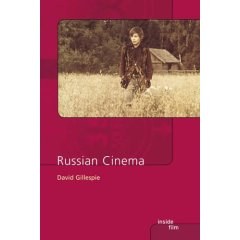
Cover Image: Ignat Daniltsev in Mirror (Andrei Tarkovskii, 1974) reproduced with kind permission of Artificial Eye Film Company Ltd.
作者简介
Dr. David Gillespie is at University of Bath.
目录信息
读后感
As a big fan of Russian, Japanese and French cinema this valuable book helps fill the void, at least in Russian Cinema. Some great names here and lesser known artists. The study of the films are candid and uncompromising...yet Mr. Gillespie gives a very s...
评分As a big fan of Russian, Japanese and French cinema this valuable book helps fill the void, at least in Russian Cinema. Some great names here and lesser known artists. The study of the films are candid and uncompromising...yet Mr. Gillespie gives a very s...
评分As a big fan of Russian, Japanese and French cinema this valuable book helps fill the void, at least in Russian Cinema. Some great names here and lesser known artists. The study of the films are candid and uncompromising...yet Mr. Gillespie gives a very s...
评分As a big fan of Russian, Japanese and French cinema this valuable book helps fill the void, at least in Russian Cinema. Some great names here and lesser known artists. The study of the films are candid and uncompromising...yet Mr. Gillespie gives a very s...
评分As a big fan of Russian, Japanese and French cinema this valuable book helps fill the void, at least in Russian Cinema. Some great names here and lesser known artists. The study of the films are candid and uncompromising...yet Mr. Gillespie gives a very s...
用户评价
这部关于俄罗斯电影的著作,从一个全新的角度切入了苏维埃时期和后苏联时代的影像艺术,让我这个长期关注西方电影的爱好者大开眼界。作者没有落入常见的对政治宣传片的简单批判,而是深入挖掘了那些在审查制度边缘游走的叙事手法和视觉语言的演变。我尤其欣赏他对亚历山大·索科洛夫(Alexander Sokurov)作品的分析,那种近乎哲学的探讨,将电影提升到了形而上学的层面,而不是仅仅停留在对历史事件的复述上。书中对早期无声电影先驱如爱森斯坦的蒙太奇理论的重新解读,也提供了一种既尊重历史又富有现代批判性的视角。阅读过程中,我仿佛跟随一位知识渊博的向导,穿越了那段波澜壮阔的电影史,领略了其中蕴含的深刻人性挣扎与民族精神的复杂性。它不仅仅是一本电影史书籍,更是一部关于视觉艺术如何抵抗、如何反思、如何在巨大社会变革中寻找自身定位的文化考察报告,引人深思,受益匪浅。
评分这本书最让我感到震撼的是它对“主体性”在俄罗斯电影中挣扎的刻画。它清晰地勾勒出,从革命初期对“新人”的塑造,到勃列日涅夫时代对“平凡人”的关注,再到解体后对“边缘人”的聚焦,这种对个体存在意义的追问,是如何贯穿始终的。它不是那种简单的“好人”与“坏人”的故事,而是充满了灰色地带和道德困境,这正是俄罗斯文学和艺术的精髓所在。作者没有回避那个时代电影工业的残酷现实,例如资金短缺、人才流失以及国际发行上的壁垒,反而将这些限制条件视为催生独特艺术形式的必要“压力锅”。这种客观而富有同理心的笔触,使得评价既有学术的严谨性,又充满人文关怀。我读完后,对俄罗斯的民族性格和审美倾向有了更深一层的理解,不再仅仅停留在刻板印象之上。
评分我必须强调,这本书的广度令人印象深刻,它不仅仅聚焦于莫斯科和圣彼得堡的“官方”电影机构,还花费了不少篇幅探讨了加盟共和国,特别是中亚和高加索地区的电影遗产。这部分内容极大地拓宽了我的视野,让我意识到“俄罗斯电影”并非一个单一的文化实体,而是一个由多元民族、语言和历史经验交织而成的复杂场域。书中对那些试图在地方传统与国家意识形态之间寻求平衡的电影人的努力的描绘,充满了张力与悲剧性。此外,对九十年代后,随着好莱坞的强势涌入,俄罗斯电影工业如何进行自我救赎和风格重塑的分析,也写得非常到位。作者巧妙地运用了对比手法,将历史时期的风格差异进行并置,让读者能清晰地看到艺术生命力的顽强。总而言之,这是一部结构严谨、视野开阔,且极具阅读乐趣的电影研究佳作。
评分对于一个对东方电影乃至整个非好莱坞电影体系抱有好奇心的普通观众来说,这本书的阅读门槛似乎略高,但绝对物有所值。它的价值不在于教你如何欣赏“坏”电影,而在于揭示了在特定的地缘政治环境下,创作者是如何运用符号学、色彩理论甚至空间构图来传达那些被直接言说所禁止的意义。我感觉作者本身就是一位非常敏感的导演,他观察事物的方式就是一种电影式的思考。书中对安德烈·塔可夫斯基的深入解读部分,我认为是全书的高光时刻,那种对“时间性”和“记忆”在影像中构建的复杂关系的梳理,精妙绝伦,让我对《镜子》的理解又上了一个台阶。如果说有什么小小的遗憾,那就是某些章节在介绍技术术语时,如果能配上更详尽的图解,或许能让非专业人士更好地理解其精妙之处。
评分坦白讲,我原本以为这会是一本枯燥的学术论文汇编,充满了晦涩难懂的俄语术语和学院派的空洞论证,但事实远非如此。这本书的叙事节奏掌握得极佳,像是在听一位资深影评人娓娓道来那些被历史尘封的幕后故事。它成功地平衡了对电影美学的精湛分析与对社会文化背景的生动描绘。比如,它对1970年代“抒情现实主义”流派的剖析,简直是教科书级别的示范——如何将个体的情感体验融入宏大的集体叙事,同时又不失其诗意的力量。书中的配图和对几部冷门佳作的片段引用,都极其精准地烘托了当时的氛围。我特别喜欢作者对新浪潮运动后,俄罗斯电影如何挣脱意识形态束缚,转向更关注个体生存困境和精神荒漠化的叙述方式,这种深入肌理的观察,远胜于泛泛而谈的概括。读完后,我立刻去补看了几部书中提及的,此前从未听说过的老电影,体验感是直线上升。
评分简明苏联电影史。内容编排非常清晰,概念化的功力值得学习。
评分简明苏联电影史。内容编排非常清晰,概念化的功力值得学习。
评分简明苏联电影史。内容编排非常清晰,概念化的功力值得学习。
评分简明苏联电影史。内容编排非常清晰,概念化的功力值得学习。
评分简明苏联电影史。内容编排非常清晰,概念化的功力值得学习。