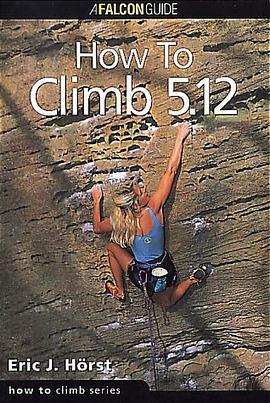

具体描述
In the sport of rock climbing, 5.12 is a magical grade. Looked upon as the "door" to the elite levels of difficulty, 5.12 is thought by many intermediate climbers to be out of their reach-and that's where How to Climb 5.12 comes into play. This book dispels the myth surrounding 5.12 and teaches average climbers that they can achieve heights previously considered the exclusive domain of the full-time climber. How to Climb 5.12 is a performance guidebook that will help climbers attain the most rapid gains in climbing ability possible. It offers streamlined tips and suggestions on critical issues such as cutting-edge strength training, mental training, and climbing strategy. How to Climb 5.12 is the perfect manual to guide you on the road to mastery-and help make the trip as short as possible.
From the Back Cover
This is a 'performance guidebook' to achieving the most rapid gains in climbing ability possible. It offers streamlined, tip-oriented suggestions on all the critical issues including: learning skill fast, cutting edge strength training, mental training, and climbing strategy.
作者简介
An accomplished climber for than 35 years, Eric J. Horst(pronounced Hirst) has ascended cliffs all across the US and Europe. He has established more than 400 first ascents, primarily on his home cliffs in the eastern US.
A student and teacher of climbing performance, Eric has helped train hundreds of climbers, and his training books and concepts have spread to climbers in more than 45 countries. He is widely recognized for his innovative practice methods and training tools, and he has been a training products design consultants for Nicros, Inc. since 1994.
Eric is also the author of Flash Training (Falcon, 1994) and Training for Climbing (Falcon 2003). He has written more than 2 dozen magazine articles on the subject, appeared on numerous TV broadcasts, and his techniques has been featured in such magazines as Climbing, Rock & Ice, Outside, Men's Health, Muscle Media, and Men's Journal.
Eric lives in Lancaster, Pennsylvania, with his wife, Lisa Ann, and his sons, Cameron and Jonathan.
目录信息
读后感
Do you really want to climb 5.12?....I used to think that way, well, now, may be I need to rethink about it. It is a good book anyway, and might works if you do follow the instructions inside. But the thing is how much your normal life has to be sacrificed?...
评分Do you really want to climb 5.12?....I used to think that way, well, now, may be I need to rethink about it. It is a good book anyway, and might works if you do follow the instructions inside. But the thing is how much your normal life has to be sacrificed?...
评分Do you really want to climb 5.12?....I used to think that way, well, now, may be I need to rethink about it. It is a good book anyway, and might works if you do follow the instructions inside. But the thing is how much your normal life has to be sacrificed?...
评分Do you really want to climb 5.12?....I used to think that way, well, now, may be I need to rethink about it. It is a good book anyway, and might works if you do follow the instructions inside. But the thing is how much your normal life has to be sacrificed?...
评分Do you really want to climb 5.12?....I used to think that way, well, now, may be I need to rethink about it. It is a good book anyway, and might works if you do follow the instructions inside. But the thing is how much your normal life has to be sacrificed?...
用户评价
这本攀岩指南简直是为我这种中级攀岩者量身定做的“武功秘籍”。我一直困在 5.10d 的平台期难以突破,市面上那些只谈基础手点和脚点,或者干脆就堆砌专业术语的书籍,对我来说简直是灾难。但是这本书的叙事方式极其平易近人。它没有上来就用一堆让人望而生畏的法语术语轰炸你,而是像一位经验丰富的老友在耳边细细道来。特别是关于“动态发力”与“静态控制”的章节,作者通过一系列生动的比喻,比如把身体想象成一个精密的钟摆系统,而不是蛮力堆砌的杠杆,让我茅塞顿开。我记得书里提到,很多时候我们感觉力竭,不是因为手臂不够强壮,而是核心的锁定不足,导致能量在无效的晃动中流失。这个洞察力改变了我过去训练的侧重点。我开始将更多精力投入到腹部和背部的稳定训练上,而不是仅仅追求前臂的泵感。读完这部分后,我尝试了一条我挂了无数次的 5.11b 路线,居然能以更放松的状态完成,中间几乎没有出现令人沮丧的“挂壁”现象。这本书的价值,就在于它成功地将复杂的生物力学原理,转化成了普通岩友可以理解和实践的技巧。它不是在教你“如何爬得更高”,而是在教你“如何更聪明地爬”。
评分我带着这本书去了一趟攀岩训练营,发现它在团队协作和安全文化方面的论述,是其他同类书籍所缺乏的。作者非常强调“攀岩是伙伴运动,而非个人秀”。他用大量的案例分析了因为沟通不畅或安全绳索管理上的疏忽导致的事故,这些分析冷峻而有力,读来令人不寒而栗。他提出的“双重确认系统”的设计,不仅仅是口头上的确认,更包含了一套非语言的肢体信号系统,以确保在嘈杂或风大的环境下也能准确无误地传递信息。此外,关于如何有效地给攀岩伙伴提供“现场指导”也给出了非常实用的建议。很多人在指导别人时,往往是给出模糊的指令,比如“用点力!”。而这本书提倡的是精准指令:“将你的右脚跟向上抬高五公分,并将重心集中在脚掌内侧三分之一处。”这种精确性,极大地提高了训练效率。这本书让我意识到,成为一个优秀的攀岩者,不仅仅是把自己的路线爬上去,更是要让你的伙伴也安全地完成他们的目标。
评分这本书的结构编排简直是一门艺术。它不像一本枯燥的教科书,而更像一部按部就班的个人成长史诗。它把从初学者到追求更高难度等级的整个过程,划分成了几个清晰的“阶段性挑战”。令我感到惊喜的是,书中关于“装备维护与选择的哲学”那一章。我们都知道装备很重要,但往往只是在商场里挑选最亮眼、最贵的。这本书却教你如何“倾听你的装备”。比如,如何通过鞋底磨损的模式来反推自己发力的习惯性错误,以及如何根据不同岩壁类型(光滑花岗岩 vs. 粗糙石灰岩)来调整鞋子的系带松紧度以优化脚感。这部分内容极其细致,甚至提到了不同品牌镁粉混合比例对吸湿性的微小影响。我照着书里的建议调整了我的脚趾位置和系带方式,感觉脚对岩点反馈的敏感度提升了一个档次。这已经超出了“指南”的范畴,更像是一本“攀岩者生活哲学”的启示录,它教会我们对所依赖的工具保持敬畏和细致入微的关注。
评分这本书最大的亮点在于其对不同岩石类型和气候适应性的宏观视角。我之前总是在固定的室内抱石馆里训练,对室外环境的变化几乎没有准备。书中用了大量的篇幅来对比不同地质构造的攀爬手感,从砂岩的“抓握感”到片麻岩的“摩擦力死板”,分析得入木三分。最让我受益匪浅的是关于“湿度和温度对抓握力的影响”这一章。作者不仅仅是简单地说“湿了会滑”,而是深入解释了水分子如何影响岩石表面的摩擦系数,并提供了一套基于温度和湿度预判的策略调整表。例如,在接近冰点的清晨,应该减少使用小指点和侧拉点,更多地依赖大面积的压点和脚尖发力。这套基于环境科学的攀爬策略,让我上周在一次高海拔多变天气的攀登中,避免了几次可能致命的失误。这本书真正做到了“知天而行”,它提供的知识体系是建立在对自然环境深刻理解之上的,绝非空中楼阁。
评分我必须承认,我最初买这本书是冲着它的封面设计去的,那个用老照片拼贴出来的粗粝质感,一下子抓住了我这个老派攀岩爱好者的心。然而,这本书的深度远超出了我最初的预期。我最欣赏的是它对“心理博弈”和“路线阅读”的深入剖析。攀岩不只是体能的较量,更是一场与自我恐惧的谈判。书中用了大量的篇幅来探讨“首位下降的焦虑”以及如何通过建立一套固定的、仪式化的安全检查流程来驱散这种不必要的心理负担。作者分享了自己在高位路线上的几次濒临崩溃的经历,那些文字非常真诚,没有粉饰太平,读起来让人感同身内。更重要的是,他提供了一套实用的“心锚”训练法,通过在地面练习时反复强化积极的自我对话,从而在关键时刻能够及时切换到“解决问题”的模式,而不是陷入“我做不到”的自我设限。在我最近一次尝试一条高位路线时,我清晰地记起了书中的那句话:“你的每一步动作都已经被你预演过无数次了,现在只是执行而已。”那种瞬间的平静,让我成功地完成了那段原本让我心惊胆战的过顶动作。这本书在精神层面给我的加持,比任何肌酸补剂都要有效。
评分看完的主要想法是……啊我还是不去野攀了吧
评分Chapter 1-3
评分看完的主要想法是……啊我还是不去野攀了吧
评分看完的主要想法是……啊我还是不去野攀了吧
评分Chapter 1-3