
具体描述
ook Description
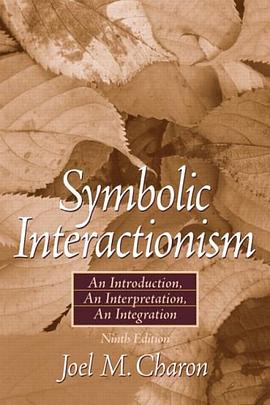
Using a unique step-by-step, integrated approach, Symbolic Interactionism: An Introduction, an Interpretation organizes the basic concepts of symbolic interactionism in such a way that the reader clearly understands the concepts and is able to apply them to their own lives. It emphasizes the active side of human beings—humans as definers and users of the environment, humans as problem solvers and in control of their own actions—and it shows students how society makes us, and how we in turn shape society.
Excerpt. © Reprinted by permission. All rights reserved.
Preface For many students a book entitled "symbolic interactionism" might be too academic, or too much like jargon, or a forbidding mystery. To me, however, it is exactly on the money. That is because this whole book is a description of a social psychology that focuses on the importance of interaction as the basis for what individuals and societies are made of, and that interaction is always symbolic. I like symbolic interactionism because it addresses so many of the issues that are important for those people who wrestle with what the human being is and why the human being acts. It is a unique perspective in that it is part of what we call social science, yet it is very probablistic in its predictions. That is, it does not normally identify a single "cause" when it understands human action. Instead, its studies focus on the history of action, the many decisions and choices people make as they act. Interaction with others is almost always important, but interaction takes us one way, then the other. It treats the human being not as a passive responder to the environment, a being who is conditioned, who is pushed around by environment and biology. Instead, people are active in their environment, determining to a great extent what they do, think, and become. Symbolic interactionism is a context within which we can understand both the uniqueness of humankind and the ways human beings are similar to to other animals. The first edition of this book attempted to fulfill a promise I made to myself in graduate school: to write a clear, organized, and interesting introduction to symbolic interaction, a perspective that seemed to have interesting ideas and studies, but did not seem to hold together. Integration of the ideas became central to this book. I hope you will find this perspective interesting, organized, and useful. This is the ninth edition. Each time I attempt to improve on what I have written before, it brings a certain humility to my work. Each time I revise I wonder hhow in the world I could ever have written what I had previously. The publisher this time chose excellent reviewers, and many of their suggestions were made. I try to update, correct errors and ambiguities, and reorganize chapters so that they make better sense. In this edition I have made changes in almost every chapter, and I have redone large parts of chapters 4 (The Meaning of Symbols), 6 (The Nature of the Self), 9 (Human Action) and 10 (Social Interaction). Because of a suggestion by a reviewer I decided to add interesting and relevant introductions to each chapter, highlighting the importance of what the chapter is. I believe this makes the book far more attractive to the student and is a good pedagogical tool. Always I try to appeal to students who think sociologically and students who are attracted to the world of ideas. This book is an attempt to contribute to the mystery of what human beings are, their essence. I dedicate this book to my wife, Susan, who continues to be my best friend and greatest supporter. Joel M. Charon Professor Emeritus Minnesota State University Moorhead
作者简介
目录信息
读后感
用户评价
这本书的阅读体验就像是戴上了一副新的“社会滤镜”,世界在你眼中瞬间被重新着色和锐化。我过去对于社会偏差、群体归属感这些议题的理解,往往是基于一种“先有规则后有行为”的预设。然而,这本书彻底颠覆了这一认知路径,它展示了规则和规范本身就是人们在持续互动中,为了使得交流得以继续而不得不临时确立的“程序”。这种动态的、程序化的社会秩序观,对我个人生活态度的影响是深远的。它让我学会用一种更加宽容和好奇的态度去面对他人的行为,因为你知道,每一个看似“怪异”或“理所当然”的举动背后,都隐藏着一套尚未被完全揭示的、正在运作中的符号系统和意义交换过程。它教会我的,与其说是社会学理论,不如说是一种观察世界的全新方法论。
评分从学术价值的角度来看,这本书无疑是一座里程碑,它成功地将宏大的社会结构议题,巧妙地锚定在了微观互动的基础之上,从而搭建起了一个连接“大我”与“小我”的坚实桥梁。它成功地挑战了那些过分强调结构决定论的流派,提供了一种更具能动性的视角。然而,它也带来了一个潜在的阅读门槛:对于那些期待一揽子现成答案的读者来说,这本书可能会显得不够“友好”。它更像是一种思维方式的训练,要求读者摒弃简单的因果线性思维,接受世界是由不断协商和解释的复合物构成的现实。我感觉作者在行文中保持了一种冷静而审慎的批判态度,既不盲目吹捧人类互动的和谐性,也不过度夸大冲突的绝对性,而是聚焦于互动过程中那些不断产生的、暂时的“共识”是如何得以维系,这种平衡感非常难得。
评分我必须说,这本书的叙事结构和论证逻辑如同迷宫一般精妙,它没有采用那种线性推进的教科书式写作,反而像是在构建一个多维度的概念网络。初读时,我感觉有点挑战性,因为它要求读者具备高度的专注力和极强的抽象思维能力去跟上作者构建的概念群落。但一旦领悟了其核心的“行动者中心”的立场,那些原本散落的论点便开始相互连接,形成一个严密的认知框架。书中对“自我”概念的探讨尤其令人着迷,它打破了传统心理学中那个固化的、内在的“我”,将其彻底置于社会互动的场域之中。对我而言,这不仅仅是一本理论书,更像是一本关于“如何成为一个社会人”的行为哲学指南。它对社会角色、自我呈现与社会期待之间的微妙拉锯战的刻画,精准得令人感到一丝不安,因为你发现自己的“身份”原来如此脆弱和依赖于他人的即时反馈。
评分这本书的文字风格带着一种近乎诗意的观察力,它似乎拥有能够穿透表象直达本质的“透视眼”。那些关于公共场合中个体如何管理印象的论述,简直可以拿到戏剧舞台上去上演。作者对“情境”的捕捉细腻到令人发指,每一个场景的设定,每一种手势的运用,都被赋予了重大的社会学意义。我特别喜欢它对社会建构主义的实践性论证,它没有停留在理论思辨的层面,而是通过大量的、生动的案例分析(尽管那些案例经过了精心的理论提炼),展现了“意义是如何被制造出来的”。这使得原本可能显得晦涩的哲学思辨变得可触摸、可感知。读这本书的时候,我常常会情不自禁地停下来,在脑海中重演书中所描述的场景,试图从自己的经验中寻找印证。它极大地丰富了我理解日常互动复杂性的工具箱。
评分这部著作简直是社会学领域的“破壁者”,它没有那种高高在上的理论腔调,而是非常贴近我们日常生活的脉络。作者显然花费了大量心血去挖掘那些微小、看似不经意的互动是如何构建出我们所理解的“现实”。我尤其欣赏它对“符号”的解构,它不是把符号看作是固定不变的标签,而是动态流动的媒介,是人们在交往过程中不断协商和赋予意义的过程。读完之后,我开始重新审视自己与他人的每一次眼神交流、每一次措辞选择,它们不再是简单的信息传递,而是一场场复杂的、充满张力的意义构建仪式。它强迫你跳出宏观结构的束缚,去关注那些构成社会图景的最小单位——人与人之间的“面对面”情境。这种视角转换带来的冲击力是巨大的,它让我对社会学的研究范式产生了根本性的反思,那种对经验世界细致入微的描摹,简直让人拍案叫绝。
评分 评分 评分 评分 评分