
具体描述
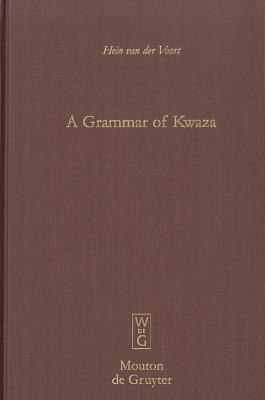
《高扎语语法:理论与实践》 本书深入剖析了高扎语(Kwaza)的语言结构,为语言学家、人类学家以及任何对濒危语言研究感兴趣的读者提供了一个详尽的理论框架和实践指导。高扎语,作为一种独特的南美洲语言,以其复杂的音系、独特的形态特征和精妙的句法构造闻名于世。本书旨在系统地梳理和呈现高扎语的各个语言层面,填补该语言学术研究的空白,并为高扎语的记录、保护和传承贡献力量。 音系部分 meticulously details the phonological inventory of Kwaza. It begins with a comprehensive description of the consonant and vowel systems, paying close attention to features such as place and manner of articulation, voicing, and vowel height and backness. Special emphasis is placed on the phonemic status of sounds that may present challenges to speakers of Indo-European languages, such as glottalized consonants and nasalized vowels, providing articulatory and acoustic descriptions. The book further explores the phonotactic rules governing syllable structure, including permissible consonant clusters and vowel sequences, and examines suprasegmental features like stress and tone, analyzing their phonological function and distribution. The analysis is supported by numerous examples transcribed using the International Phonetic Alphabet (IPA), ensuring accuracy and accessibility for a global audience. 形态学 section offers an in-depth exploration of how meaning is constructed through word formation and inflection in Kwaza. The book systematically categorizes the morphological processes employed, including prefixation, suffixation, infixation, reduplication, and compounding. Each process is illustrated with abundant examples, clearly demonstrating how grammatical categories such as tense, aspect, mood, person, number, gender, and case are marked. The intricate system of verb conjugation, a hallmark of many indigenous languages, is given particular attention, with a detailed examination of the various affixes and their semantic contributions. Noun morphology, including the marking of plurality, possession, and evidentiality, is also thoroughly covered. The complexity of pronominal systems, including personal pronouns, demonstratives, and interrogatives, and their agreement patterns with verbs and nouns, is meticulously laid out. The discussion also delves into the fascinating phenomenon of noun incorporation, where nouns are integrated into the verb stem, and its implications for understanding verb semantics and argument structure. 句法部分 provides a rigorous analysis of sentence structure in Kwaza, from simple clauses to complex syntactic constructions. The book examines word order, identifying the dominant constituent order and exploring variations and their pragmatic implications. It thoroughly investigates the syntax of nominal phrases, including the order of determiners, adjectives, possessors, and the head noun. The verb phrase is equally scrutinized, detailing the placement of adverbs, auxiliaries, and other verbal modifiers. Special attention is paid to the structure of complex sentences, including the formation and function of subordinate clauses (e.g., relative clauses, adverbial clauses, complement clauses) and their conjunctions. The book also explores the grammatical mechanisms for expressing coordination and subordination, as well as the role of discourse particles and connectives in shaping the flow of information. The analysis of grammatical relations, such as subject, object, and oblique arguments, and how they are encoded morphologically and syntactically, is central to this section. Furthermore, the book addresses the fascinating topic of grammatical voice, including active, passive, and other voice-related phenomena, and their impact on argument structure and information packaging. 语义和语用 aspects are also considered, offering insights into how meaning is conveyed beyond the literal interpretation of words and sentences. The book explores lexical semantics, including the semantic fields and categorization of concepts within Kwaza. It also investigates the pragmatics of language use, including politeness strategies, speech acts, and the role of context in determining meaning. The book touches upon the nuances of idiomatic expressions and cultural specificities that are embedded within the language. 文献学和历史背景 chapter provides essential context for understanding Kwaza. It includes a brief history of contact between Kwaza speakers and other linguistic groups, tracing the influences and changes that have occurred over time. The book also discusses the history of linguistic research on Kwaza, acknowledging the contributions of previous scholars and situating this work within the broader field of linguistic anthropology and areal linguistics. The challenges and ethical considerations involved in documenting and working with endangered languages are also addressed, highlighting the importance of community engagement and respect for indigenous knowledge systems. 研究方法和数据来源 section outlines the methodological approaches employed in the creation of this grammar. It details the fieldwork undertaken, including elicitation techniques, naturalistic data collection, and participant observation. The rigorous process of data analysis, including phonological transcription, morphological segmentation, and syntactic parsing, is explained. The book also acknowledges the collaboration with Kwaza community members, emphasizing their vital role in the accuracy and authenticity of the presented grammar. 《高扎语语法:理论与实践》 is a testament to the power and beauty of linguistic diversity. It serves as an invaluable resource for anyone seeking to understand the intricate workings of a lesser-known language. By providing a comprehensive and accessible description of Kwaza’s grammar, this book not only contributes to the scientific study of language but also plays a crucial role in the ongoing efforts to preserve and revitalize this precious linguistic heritage for future generations.
作者简介
目录信息
读后感
评分
评分
评分
评分
评分
用户评价
评分
评分
评分
评分
评分