
具体描述
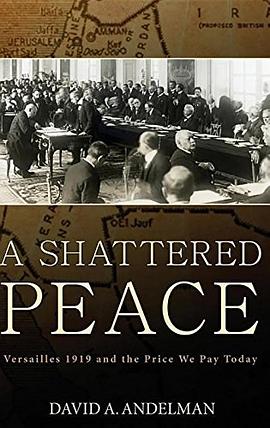
"The peace settlements that followed World War I have recently come back into focus as one of the dominant factors shaping the modern world. The Balkans, the Middle East, Iraq, Turkey and parts of Africa all owe their present-day problems, in part, to these negotiations. David Andelman brings it all back to life – the lofty ideals, the ugly compromises, the larger-than-life personalities who came to Paris in 1919. And he links that far-away diplomatic dance to present day problems that illuminates our troubled times. A tremendous addition to this vitally important subject."
—Ambassador Richard Holbrooke
"The failed peace settlement following the Great War of 1914-1918 had been the subject of many fine books. In many respects, David Andelman’s Shattered Peace is the best of these. It is compact and compellingly written. Moreover, it explains more clearly than any other work how the failure of peacemaking in 1919 shaped later history and, indeed, shapes our own era."
—Prof. Ernest R. May, Charles Warren Professor of American History, Harvard University
"We tend to think of the negotiations at Versailles in 1919 as a bungled business that left the First World War a tangle of loose ends, to be tied up by the victors of World War II. It is the power and fascination of David Andelman’s new book A Shattered Peace that he shows us – with the clarity of a first-rate reporter and the drama and detail at the command of a first-rate novelist – that we are all still enmeshed in those loose ends, the inheritors of a mess left by the hasty, casual dispensation of fragments of nations inhabited by millions of people whose hopes were maimed and whose lives were often forfeit. By focusing not on the giant participants – France, Britain, Italy and the United States – but rather on what seemed to them joke nations and penny-ante fake diplomats, Andelman brings us to Korea, to Vietnam, to the Persian gulf, and to Iraq in our own vexed era. His story is a bitter and bleak one; it is also alive with color, conflict, and interesting (to say the least) people. We could not find a better guide to a time that somehow seems to grow larger and closer even as it reaches beyond living memory."
—Richard Snow, editor in chief, American Heritage
"The peace settlements that followed World War I have recently come back into focus as one of the dominant factors shaping the modern world. The Balkans, the Middle East, Iraq, Turkey and parts of Africa all owe their present-day problems, in part, to these negotiations. David Andelman brings it all back to life - the lofty ideals, the ugly compromises, the larger-than-life personalities who came to Paris in 1919. And he links that far-away diplomatic dance to present day problems that illuminates our troubled times. A tremendous addition to this vitally important subject.
—Ambassador Holbrooke
"The peace conference in Paris at the end of World War I was the first and last moment of pure hope for peace in the history of world affairs. Our President, Woodrow Wilson, was the sorcerer for this hope, and he kindled great expectations in people everywhere. David Andelman, a classic reporter and story teller, tells this fascinating tale of hope falling finally and forever on the shoals of naïveté and hard-headed cynicism."
—Leslie H. Gelb, former columnist for the New York Times, is president emeritus of the Council on Foreign Relations
作者简介
David A. Andelman is the Editor of World Policy Journal, the 25-year-old foreign policy magazine published by the World Policy Institute. Previously, he served as Executive Editor of Forbes.com, the world's largest business and financial website after serving as Business Editor of The New York Daily News. This followed five years he spent as news editor of Bloomberg News and Bloomberg.com. For 12 years he was a domestic and foreign correspondent for The New York Times. He served in various posts in New York and Washington, as Southeast Asia bureau chief, based in Bangkok, then East European bureau chief, based in Belgrade. He then moved to CBS News where he served for seven years as Paris Correspondent, traveling through and reporting from more than 60 countries. He served for two years as Washington Correspondent for CNBC before moving to Bloomberg. He is the author of three books - The Peacemakers, published by Harper & Row; The Fourth World War, published by William Morrow, which he co-authored with the Count de Marenches, long-time head of French intelligence; and A Shattered Peace: Versailles, 1919 and the Price We Pay Today, published by John Wiley & Sons in 2007. Andelman has written for such publications as Harpers, The Atlantic, The New Republic, The New York Times Magazine, Foreign Policy and Foreign Affairs. He is a graduate of Harvard University and the Columbia University Graduate School of Journalism, and is a member of the Century Association, the Council on Foreign Relations, the Grolier Club, the National Press Club and the Overseas Press Club and its board of governors.
目录信息
读后感
用户评价
这本厚重的著作,甫一展开便将我拉入了一个光怪陆离的时代图景之中。作者的叙事手法如同一个技艺精湛的织工,将历史的经线与人性的纬线交织在一起,织就了一幅既宏大又细腻的社会全景图。我尤其欣赏他对人物内心世界的刻画,那些在时代洪流中挣扎、彷徨,却又努力寻找自我立足之地的角色,鲜活得仿佛就坐在我对面低语。他们的每一个选择,每一次犹豫,都清晰地映射出那个特定历史时期特有的困境与张力。读到某些段落时,我甚至能真切地感受到那种扑面而来的压抑感,那是集体无意识对个体精神的巨大挤压。然而,作者并未将笔墨停留在悲观的控诉上,相反,他在最深的绝望中,总能捕捉到一线微弱却坚韧的光芒——那是人性的不屈,是生命力的勃发。这本书的阅读体验是极具沉浸感的,它要求读者放下既有的预设,全心全意地投入到作者构建的这个复杂世界观中去,去体会那种在破碎中寻求重建的艰辛历程。那些对于社会结构、权力运作的深刻洞察,并非枯燥的理论说教,而是通过生动的事件和命运的转折自然而然地流淌出来,让人在不知不觉中提升了对现实世界的理解深度。
评分阅读完最后几章时,我感到一种复杂的情绪涌上心头,那是一种混合了释然、怅惘和对未知世界的深深敬畏。这本书最成功的一点,在于它拒绝给出简单的答案或“大团圆”式的结局。作者似乎在用一种近乎冷酷的客观性,展示了人类社会运转的残酷法则——很多伤痕是无法被轻易抹平的,很多失落是必须被个体承担的。它探讨了“和解”的真正代价,即承认裂痕的存在,而不是假装它们从未发生过。这种对“不完美”的坦诚接纳,让整部作品的格局瞬间拔高,摆脱了传统叙事中非黑即白的窠臼。它更像是一面高精度镜子,反射出我们这个时代潜藏的、关于信任、背叛与重建的永恒命题。读完之后,我发现自己对日常生活中那些看似寻常的互动,都有了更深层次的审视,仿佛作者赋予了我一双能够穿透表象的“透视眼”。这是一部需要反复品读,才能真正体会其深意的“慢热型”杰作。
评分我必须承认,这本书的结构设计充满了极高的实验性。它不拘泥于线性的时间推进,而是频繁地在不同角色的视角之间穿梭,甚至在同一场景下,从完全不同的信息维度进行剖析。起初,我有点像在观看一场多机位同时拍摄的电影,需要不断地在脑海中拼凑出完整的事件全貌。但一旦适应了这种多焦点的叙事节奏,你会发现这恰恰是作者想要传达的核心思想:真相从来都不是单一的,而是由无数个相互矛盾、互为补充的主观经验构筑而成的集合体。每一次视角的转换,都像是为已知的事件增加了一个新的滤镜,揭示了隐藏在表面对话之下的微妙权力关系和未言明的动机。这种叙事上的“去中心化”处理,使得任何单一角色的解读都显得片面和武断。它强迫读者成为一个主动的“意义构建者”,而非被动的接受者,这种参与感,使得阅读过程充满了智力上的刺激和探索的乐趣。它是一次对传统小说叙事边界的有力拓展。
评分这本书的语言风格,简直是一场古典与现代的奇妙碰撞。它时而使用那种富有历史厚重感的、近乎史诗般的长句,每一个词语都仿佛经过了千锤百炼,带着一种庄严的仪式感;而下一秒,笔锋一转,又会爆发出极其尖锐、充满讽刺意味的当代口语,这种强烈的反差,不仅没有造成阅读上的断裂,反而极大地增强了作品的张力和表现力。我个人特别钟爱作者对环境描写的功力,那不仅仅是背景板的勾勒,而是情绪的放大器。当角色身处困境时,天空永远是铅灰色的,空气中弥漫着难以言喻的滞涩感;而当希望乍现时,即便是最微小的光点,作者也能将其描绘得如同神启般壮丽。这种高度情绪化的环境叙事,使得读者很容易与书中的人物产生共情,仿佛我们自己也一同呼吸着那个特定空间里的空气,感受着那份历史的重量。它要求读者具备一定的阅读耐心,但回报给你的,是远超一般文学作品的审美愉悦和精神滋养。
评分坦率地说,初读此书时,我曾被其庞杂的人物关系和略显跳跃的时间线索所困扰。它不像许多流行小说那样,提供一条清晰、笔直的阅读路径,反而更像是一张错综复杂的星图,需要读者不断地对照和梳理才能把握其整体脉络。然而,正是这种“挑战性”,激发了我更深层次的探索欲。当那些看似散乱的线索,如同被无形的力量牵引,最终汇聚成一个令人震撼的巨大画面时,那种豁然开朗的愉悦感是无与伦比的。作者对细节的偏执近乎于苛刻,无论是对某个街区气味的描述,还是对一场政治辩论中细微的面部表情捕捉,都精确到了令人咋舌的地步。这种对“真实感”的极致追求,使得即便故事背景架设在虚构的框架下,其情感内核却具有无可辩驳的说服力。我常常需要停下来,合上书本,去回味那些充满象征意义的物件或对话,它们像一个个微缩的镜头,折射出主题的万千侧面。这本书不是用来消磨时间的,它是用来思辨的,是需要我们拿出笔和纸,画出关系图谱,才能真正领略其精妙构架的“智力探险”。
评分让人有些出乎意料的是本书并未怎么提及巴黎和会,而是粗粗介绍了和会的问题和其所涉及的历史问题。这就造成一个问题,有些故事很有趣,但有些却不那么有意思。而且,用一本不厚的书介绍全球政治史难免有所失真或过于蜻蜓点水,比如介绍中国清廷之处既有许多不实之处。此时,作者又偏要引入个人经历和和会对于现代的意义。眼高手低使得这部作品最终相当的鸡肋。
评分让人有些出乎意料的是本书并未怎么提及巴黎和会,而是粗粗介绍了和会的问题和其所涉及的历史问题。这就造成一个问题,有些故事很有趣,但有些却不那么有意思。而且,用一本不厚的书介绍全球政治史难免有所失真或过于蜻蜓点水,比如介绍中国清廷之处既有许多不实之处。此时,作者又偏要引入个人经历和和会对于现代的意义。眼高手低使得这部作品最终相当的鸡肋。
评分textbook for History of International Relations
评分textbook for History of International Relations
评分textbook for History of International Relations