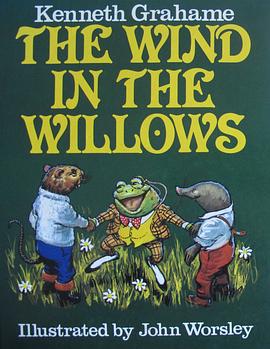

具体描述
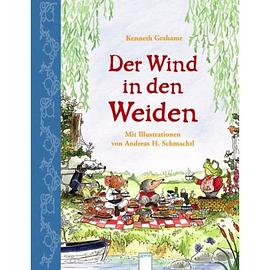
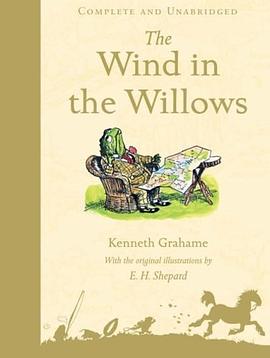
John Worsley(1919-2000),为1969年的《柳林风声》儿童节目绘制插图。历时6个月,550幅插图。本书选取了一部分插图(128幅)
作者简介
John Worsley
07 Oct 2000
War artist who made the dummy prisoner 'Albert RN' that covered up an ingenious escape from a German camp
JOHN WORSLEY, who has died aged 81, was the youngest member of Sir Kenneth Clark's team of official war artists in the Second World War, and the only one to be captured by the enemy; subsequently he created the dummy PoW celebrated in the film Albert RN.
In November 1943, Worsley accompanied a small team of saboteurs to the island of Lussin Piccolo, in the Gulf of Venice, where it was hoped to make contact with some of the Allied prisoners who were on the run following the Italian armistice. It was known that the Germans were planning to occupy the island, but not that they had moved their timetable forward by a week. Worsley's fishing boat sailed right into the midst of the German forces.
He was taken prisoner and sent to Marlag O, near Bremen, which was the only camp in Germany for naval PoWs; on the way the train halted for the night in Berlin, and narrowly survived the first of the 1,000-bomber raids. At first, Worsley was placed in solitary confinement for two months, since his artist's materials convinced the Germans that he was a spy. He improved his lot by trading pornographic drawings in exchange for more rations from his guards. When he was released into the main camp, he began to record life behind the wire.
He sketched portraits of three naval VCs - Beatty, Cameron and Plaice - as well as some scenes of the camp hospital, and even took his pad into escape tunnels. When he ran out of canvas he resorted to painting on the 5ft by 3ft ceiling slats of his hut. His fellow prisoners willingly subscribed old shirts to help clean his brushes, and visiting German admirals came to inspect his work. To keep him warm while he worked, he constructed central heating from empty condensed milk tins stuck together and run from the only stove around the walls.
His most ingenious creation however was Albert, a dummy prisoner. Every Thursday the PoWs were marched half a mile to the showerhouse, and it was here that Albert was assembled. His head was made of painted newspaper, while his eyes were ping-pong balls. These could be made to blink by a sardine-tin pendulum. Other prisoners contributed scraps of hair for his wig. The body was a collapsible wire frame covered by a naval greatcoat.
After their shower, one prisoner, Lieutenant Mewes, hid in the bathhouse and then made his escape. Albert, propped up on either side by PoWs, took Mewes's place in the thrice-daily count of heads, and it was four days before the escapee's absence was discovered. He made it as far as Lübeck before he was recaptured. Albert was then used for another escape, but the prisoners' ruse was rumbled when the escaper was found hiding in a lavatory.
Worsley was a connoisseur of gun-deck language and enjoyed recalling how the commandant of the camp subsequently addressed the PoWs in his fractured English. "You think we Germans know f*** nothing," he told them. "But in fact," he went on confidently, "we know f*** all." It took some time to restore the parade ground to order.
John Godfrey Bernard Worsley was born in Liverpool on February 15 1919. His father, a retired naval officer, emigrated with the family soon afterwards to Kenya, where they took up coffee farming. Young Worsley was sent back to England to be educated at Brighton College and at the 16 went to study Fine Art at Goldsmiths' College, London. He graduated in 1938, and then worked as an illustrator for romance magazines, drawing courting couples.
On the outbreak of war, he joined the Naval Reserve, and for a time was the Navy's only bearded midshipman. He spent three years on escort duty in the North Sea and the Atlantic, sketching his shipmates in his spare moments.
This work, together with a picture of the armed merchant cruiser Laurentic which he drawn while in her lifeboat after she had been torpedoed, brought him to Clark's notice, and in 1943 he became the official Admiralty artist in the Mediterranean. His orders were to "get into the lion's mouth." Worsley had the rapid technique necessary to record action such as the Allied invasion of Italy. At first he worked in paint, but after being dive-bombed at Reggio di Calabria - "I had just got a nice wash going" - he switched to pencil.
After the war, Worsley painted many portraits of the Allied leaders, including Field Marshal Montgomery and the then First Sea Lord, Sir John Cunningham. Sixty-one of his paintings hang in the Imperial War Museum, while another 29 are owned by the National Maritime Museum. Another of his works, the dummy Albert, is in the Naval Museum at Portsmouth; its exploits were turned into a play, and then in 1953 into a film, for which Worsley recreated Albert.
Worsley later painted Edward Heath when he was Leader of the Opposition, but he was best known to the public as a painter of sea scenes. In 1980, he captured the attempt of Lionheart to win the America's Cup, and in 1983 was elected President of the Royal Society of Marine Artists.
But there was a less-well publicised side to Worsley's career. He was an extremely versatile artist, prepared to work in glass, bronze and stone as well as paint, and in the 1970s even made 700 colour drawings for television versions of The Wind in the Willows and Treasure Island. He also drew the illustrations for PC49 in the Eagle comic.
Then, from the late 1960s, Worsley also began to help Scotland Yard as their official police artist, drawing the faces described to him by victims of crime. For Worsley, it was his way of giving something back to society. His first great success was a portrait of one of the men involved in the death of Tommy Steele's manager, Roger Thornley, on Hungerford Bridge in 1974.
Thereafter he made more than 1,000 sketches, which were far more lifelike than police photo-fits. One of his pictures was of the woman who in 1990 snatched a baby from St Thomas's Hospital, London. So accurate was it that the abductor was recognised by a neighbour and apprehended.
John Worsley was an amusing, entertaining man, with an inquiring mind and many friends. He was a member of the Savage Club and devised the menu for their dinners.
He published, in 1993, John Worsley's War.
目录信息
读后感
用户评价
我注意到,这本书的语言有一种独特的魔力,它似乎拥有将无生命的事物赋予灵魂的能力。河水、灌木丛、甚至是老旧的家具,在作者的笔下都仿佛有了呼吸和情感。这使得整个故事的背景,也就是自然界,成为了一个有机的、参与其中的角色,而非仅仅是人物活动的舞台。读着它,你会不由自主地开始留意窗外那些你平时会忽略的细节:阳光穿过树叶投下的斑驳光影,或者雨后泥土散发出的独特气息。这种对细节的关注,体现了一种对生命本身深深的敬畏和热爱。此外,书中反复出现的主题——对“现代性”的警惕,对工业化、速度和过度追求物质的微妙批评——在今天读来,非但没有过时,反而更具现实意义。它不动声色地提醒着我们,在追逐进步的同时,不要遗失了与大地连接的那份质朴和宁静。这是一种深沉的智慧,用最温柔的笔触传达出来,让人在感到被慰藉的同时,也被潜移默化地教育着。
评分从文学传承的角度来看,这部作品的对话艺术达到了教科书般的标准。角色之间的交流充满了机智、幽默和恰到好处的礼仪感,即使是争吵或意见不合,也保持着一种绅士风度下的微妙火花。这种语言上的精致,构建了一个独特的社交圈子,让读者仿佛受邀参加了一场由这些迷人小动物主持的下午茶会。阅读过程中,我经常因为某个角色的某个俏皮的回答或某段充满哲理的闲谈而会心一笑,那种笑声是轻松而舒展的,而非被粗暴的笑点逗乐。特别是当讲述者引用一些看似古老的谚语或对某种生活方式进行略带夸张的赞美时,会让人产生一种强烈的怀旧感,仿佛我们自己也生活在那个似乎永远阳光明媚的“过去”。这部书的价值,就在于它成功地构建了一个自洽的、充满韵律感和美学的世界,一个我们都渴望暂时逃离现实,回去小住一段时间的理想栖所。它带来的阅读满足感是持久而令人回味的。
评分这部作品的结构处理堪称一绝,它巧妙地平衡了田园牧歌式的安逸与偶尔爆发的戏剧性事件。大部分时间里,读者都被安抚在宁静的河畔生活和对美食、舒适居所的赞美中,营造出一种近乎乌托邦式的安宁感。然而,当“蟾蜍先生”因为他的新痴迷——也就是他那辆光荣的汽车——而卷入麻烦时,整个叙事突然注入了紧张感和冒险色彩。这种节奏的转换处理得非常自然,绝不显得突兀,反而像一场精心编排的交响乐中的高潮部分。它不仅提供了必要的叙事动力,更重要的是,它深化了主题:即文明社会(河岸社区的规则与秩序)与个人冲动(蟾蜍对速度与新奇的渴望)之间的永恒张力。这种对生活本质的探讨被包裹在充满想象力的冒险故事之下,使得它既适合儿童的纯真阅读,也为成年人提供了反思的深度。我特别喜欢它对“家”的定义,那不仅仅是一个物理空间,更是建立在信任、理解和共同回忆之上的精神归宿。
评分这本小说的叙事节奏真是让人沉醉,仿佛被一股温和而坚定的力量牵引着,缓缓走进一个充满古老魅力和日常诗意的世界。作者对自然环境的描绘达到了令人惊叹的细腻程度,那种清晨薄雾笼罩着河岸,湿漉漉的青草散发着泥土的芬芳,以及柳树枝条在微风中轻轻拂动的画面感,简直能让人身临其境地感受到空气的湿度和温度。文字的运用充满了古典韵味,遣词造句既典雅又不失亲切,尤其在描绘角色们那种特有的、略带执拗的贵族式优雅时,显得尤为传神。我尤其欣赏它如何将宏大的季节更迭与个体生活中的琐碎忧乐巧妙地编织在一起,让读者在享受一段宁静的阅读旅程时,也能对生命中那些转瞬即逝的美好产生深刻的共鸣。叙事者像一位睿智的老者,以一种不紧不慢、充满慈悲的口吻讲述着这个世界的故事,让人在喧嚣的生活中寻得一处可以停泊心灵的港湾。那种对传统生活方式的眷恋,那种对友谊和家庭的珍视,通过细腻的场景和人物互动,自然而然地渗透出来,无需刻意说教,便已教人受益匪浅。这种阅读体验是治愈性的,它提醒着我们,真正的丰盈往往存在于最简单、最贴近土地的生活之中。
评分老实说,初读时我曾有些担心,这种早期文学作品的语感会不会过于晦涩或拖沓,但很快我的担忧就被打消了。这部作品的魅力在于其惊人的角色塑造能力。每一个主要角色,从那个热爱享乐、有点神经质的鼹鼠,到那位对道路和冒险有着近乎偏执热爱的蟾蜍先生,他们的性格弧光是如此清晰而立体。作者没有将他们塑造成完美无瑕的英雄,恰恰相反,他们都有着各自的缺点和可爱的怪癖。正是这些不完美,使得他们的友谊和冲突显得如此真实可信,也为故事增添了无数幽默和温情。特别是“蟾蜍先生”那些鲁莽而又充满激情的“探险”,简直是全书最精彩的片段之一,它们不仅推动了情节发展,更是对那种不受约束、追求自由精神的精彩诠释。这种将高雅的文学笔触与充满童趣和闹剧色彩的情节结合起来的功力,令人叹服。故事的张力并非来源于外部的巨大冲突,而是源于角色们内心世界对秩序与混乱的不断拉扯和平衡,读起来酣畅淋漓,完全没有现代快餐文学的浮躁感。
评分 评分 评分 评分 评分