
具体描述
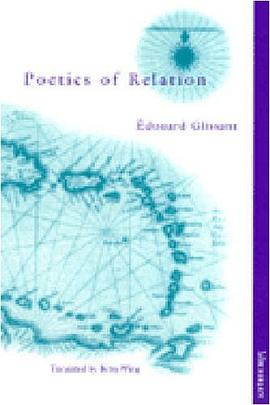
edouard Glissant, long recognized in the French and francophone world as one of the greatest writers and thinkers of our times, is increasingly attracting attention from English-speaking readers. Born in Martinique in 1928, Glissant earned a doctorate from the Sorbonne. When he returned to his native land in the mid-sixties, his writing began to focus on the idea of a "relational poetics," which laid the groundwork for the "creolite" movement, fueled by the understanding that Caribbean culture and identity are the positive products of a complex and multiple set of local historical circumstances. Some of the metaphors of local identity Glissant favored--the hinterland (or lack of it), the maroon (or runaway slave), the creole language--proved lasting and influential. In "Poetics of Relation," Glissant turns the concrete particulars of Caribbean reality into a complex, energetic vision of a world in transformation. He sees the Antilles as enduring suffering imposed by history, yet as a place whose unique interactions will one day produce an emerging global consensus. Arguing that the writer alone can tap the unconscious of a people and apprehend its multiform culture to provide forms of memory capable of transcending "nonhistory," Glissant defines his "poetics of relation"--both aesthetic and political--as a transformative mode of history, capable of enunciating and making concrete a French-Caribbean reality with a self-defined past and future. Glissant's notions of identity as constructed in relation and not in isolation are germane not only to discussions of Caribbean creolization but also to our understanding of U.S. multiculturalism. In Glissant's view, we come to see that relation in all its senses--telling, listening, connecting, and the parallel consciousness of self and surroundings--is the key to transforming mentalities and reshaping societies.This translation of Glissant's work preserves the resonating quality of his prose and makes the richness and ambiguities of his voice accessible to readers in English. "The most important theoretician from the Caribbean writing today. . . . He is central not only to the burgeoning field of Caribbean studies, but also to the newly flourishing literary scene in the French West Indies." --Judith Graves Miller, University of Wisconsin, Madisonedouard Glissant is Distinguished Professor of French at City University of New York, Graduate Center. Betsy Wing's recent translations include Lucie Aubrac's "Outwitting the Gestapo" (with Konrad Bieber), Didier Eribon's "Michel Foucault" and Helene Cixous's "The Book of Promethea."
作者简介
目录信息
读后感
用户评价
这本书的纸张和装帧设计,透露出一种严谨的学术气质,这本身就是阅读体验的一部分。厚重的纸质,严丝合缝的排版,都暗示着内容的重量感。从内容上看,作者对特定哲学流派的批判性继承,展现了他深厚的学养。他并非盲目地追随前人,而是带着一种批判性的继承精神,试图填补现有理论框架中的某些“空白点”。尤其是在处理“能指”与“所指”在复杂语境中的漂移问题时,他的论述极具穿透力。但不得不承认,这本书的节奏把握得并不均衡。有些章节如同急流,信息密度极大,一句话需要读上五六遍才能消化;而另一些章节则如同静水,论证缓慢,几乎是原地打转。这种起伏不定的阅读节奏,使得整体的阅读心流很难保持连贯,时常需要停下来调整呼吸,重新定位自己在文本迷宫中的位置。
评分这本书的开篇就给人一种扑面而来的哲学气息,作者仿佛带着一种近乎冷峻的理性,试图解构我们习以为常的“关系”的本质。他没有满足于对人际交往的肤浅描绘,而是深入到存在论的层面,探讨主体与他者之间那道永恒的鸿沟。我读到一半时,常常需要停下来,反复咀嚼那些晦涩的论断,那些关于“在场”与“缺席”的辩证,着实让人头疼,但随之而来的那种豁然开朗的感觉,又让人欲罢不能。这本书的叙事结构极其精妙,它并非线性推进,更像是一张巨大的思维网,每一个概念都相互咬合,共同支撑起一个宏大的理论体系。阅读过程中,我感觉自己不仅仅是在阅读文字,更像是在参与一场漫长而深刻的智力搏击。作者对语言本身的敏感度极高,他似乎总能找到那个最精准、最不容置疑的词语来锁住一个复杂的思想。然而,这种精准也带来了阅读上的挑战,对于不熟悉相关哲学脉络的读者来说,初次接触可能会感到有些吃力,需要投入极大的专注力。
评分这本书的文字风格,与其说是在“写作”,不如说是在进行一种近乎考古的发掘工作。作者对待每一个术语的态度,都充满了审慎和敬畏。他似乎在努力剥离掉那些被日常语言磨损、失去了原有锋芒的词汇,试图重新呈现其最原始的张力与力量。阅读过程中,我多次被作者那种近乎偏执的细节追求所震撼,他对概念的界定,细致到几乎可以进行微观分析。尤其是在讨论“镜像”与“反身性”的章节,作者构建了一个异常复杂但逻辑严密的论证链条,让人不得不佩服其思想的深度和广度。但坦白说,这种对纯粹理论的固执,有时会让文本显得有些干燥,缺少了生活化的气息,读起来像是在攀登一座纯粹由逻辑构成的冰山,需要极强的毅力才能到达顶峰。它更像是一本需要被“攻克”的书,而不是一本可以轻松“享受”的书籍。
评分这本书的阅读体验,更像是一场与作者的心灵对话,充满了强烈的互动性和反思性。作者的语气是审慎而富有激情的,他似乎一直在向读者发出挑战,要求我们不仅要理解他的观点,更要审视我们自身思想的根基。我特别喜欢他处理“时间性”的方式,他没有将时间视为一个线性的容器,而是将其描绘成一种不断被“重写”和“折叠”的动态过程。这种描述极大地拓宽了我对“当下”的理解。然而,这种高度的主观性和思辨性,也意味着这本书的普适性受到了限制。对于那些寻求实用指导或明确结论的读者来说,这本书无疑会带来挫败感。它很少提供明确的答案,更多的是提出更深刻、更难以回答的问题。它更像一面镜子,映照出我们思维的局限,而不是一幅地图,指引我们到达彼岸。
评分我最初被这本书吸引,是因为它承诺提供一种全新的观察视角,而它确实没有让人失望。作者成功地将一些看似风马牛不相及的领域——比如某种古代仪式、某个晦涩的数学模型——巧妙地编织在一起,构建出一个令人惊叹的知识景观。这种跨学科的联结能力,是这本书最令人称道之处。它迫使读者跳出固有的学科藩篱,以一种更加流动的、整体性的眼光去看待世界。例如,当他将某种结构主义的分析方法,应用于对个体记忆的重构时,那种震撼感是难以言喻的。然而,这种宏大叙事的背后,也带来了一个问题:有时,为了支撑起整个理论的庞大结构,个别论据似乎被过度拉伸了,显得有些单薄。这种为了“大厦”而进行的“材料整合”,在某些章节读起来略显勉强,让人不禁怀疑,是否理论的需要压倒了证据的充分性。
评分补标(migration and translation)
评分“晦涩的权利”,“混沌”,“个体化”以及许多语言都很德勒兹,不过关系诗学跟关系美学貌似没有本质联系;前者貌似更形而上,辩证思考多和一的关系;后者类似是当代艺术关于社会关系的认同转向。意外的是还提了计算机,不过其对爱因斯坦的论述应该是有问题的。
评分Errantry, Exile+ For Opacity
评分补标(migration and translation)
评分补标(migration and translation)