
具体描述
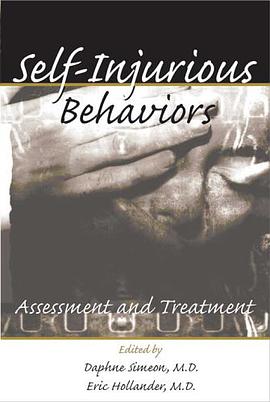
Throughout history, people have invented many different ways to inflict direct and deliberate physical injury on themselvesAwithout an intent to die. Even today, the concept and practice of self-injury is sanctioned by some cultures, although condemned by most. This insightful work fills a gap in the literature on pathologic self-injury. The phenomenon of people physically hurting themselves is heterogeneous in nature, disturbing in its impact on the self and others, frightening in its blatant maladaptiveness, and often indicative of serious developmental disturbances, breaks with reality, or deficits in the regulation of affects, aggressive impulses, or self states. Further complicating our understanding is the large and diverse scope of psychiatric conditions, such as pervasive developmental disorders, TouretteAs syndrome, and psychosis, in which these behaviors occur. This volume presents a comprehensive nosology of self-injurious behaviors, classifying them as stereotypic, major, compulsive, and impulsive (with greater emphasis on the last two categories because they are the most commonly seen). -The chapter on stereotypic self-injurious behaviors (highly repetitive, monotonous behaviors usually devoid of meaning, such as head-banging) focuses on the neurochemical systems underlying the various forms of stereotypic movement disorders with self-injurious behaviors, typically seen in patients with mental retardation and autism, and discusses their psychopharmacological management. -The chapter on psychotic, or major, self-injurious behaviors (severe, life-threatening behaviors, such as castration) presents a multidimensional approach to evaluating and treating patients with psychosis and self-injurious behaviors, including the neuroanatomy and neurobiology of sensory information processing as background for its discussion of neurobiological studies and psychopharmacological treatments. -Chapters on the neurobiology of and psychopharmacology and psychotherapies for compulsive self-injurious behaviors (repetitive, ritualistic behaviors, such as trichotillomania [hair-pulling]) offer much-needed biological research and the first empirical treatment studies on compulsive self-injurious behaviors, and argue that a distinction can indeed be made between compulsive and impulsive self-injurious behaviors. -Chapters on the neurobiology, psychopharmacology, and dialectic behavior and psychodynamic theory and treatment of impulsive self-injurious behaviors (habitual, chronic behaviors, such as skin picking) supplement the few neurobiological studies measuring impulsivity, aggression, dissociation, and suicide and detail the efficacy of various medications and psychotherapies. An eminently practical guide with exhaustive references to the latest data and research findings, this concise volume contains clinical material and therapeutic interventions that can be used right away by clinicians to better understand and treat patients with these complex and disturbing behaviors.
作者简介
目录信息
读后感
用户评价
说实话,拿到这本书时,我对它的期望值其实并不高,毕竟这个主题听起来就非常沉重,担心会陷入枯燥的学术说教。然而,我错了,这本书的叙事节奏把握得极为出色。它不是那种平铺直叙的教科书,反而更像是一部精心编排的心理纪录片。作者似乎有一种魔力,能够将最令人不安的人类体验,转化为引人入胜的故事。最让我震撼的是他对“创伤后应激反应”的描述,不是干巴巴的症状列表,而是通过一系列极具画面感的场景描写,让你切身感受到当事人在极端压力下心理防线的崩溃与重塑过程。这种代入感非常强,读到某些段落时,我甚至需要停下来,喝口水,平复一下呼吸。文风上,作者大量运用了比喻和类比,尤其是在解释一些抽象的心理过程时,这些比喻既形象又精准,大大降低了理解门槛,使得即便是对专业知识不太熟悉的普通读者,也能跟上思路,体会到其中蕴含的深刻洞察。
评分这本书简直是心理学领域的一颗重磅炸弹,我花了整整一个周末才勉强消化完第一遍。作者在构建理论框架时展现出了惊人的深度和广度,他并没有满足于简单地罗列现象,而是深入挖掘了行为背后的认知和情感机制。特别是关于“情绪调节障碍”那一章节,读起来让人醍醐灌顶,那些复杂的神经生物学解释,竟然能被他用如此清晰、富有逻辑性的语言阐述出来,简直像是在解开一个层层包裹的谜团。我特别欣赏他对不同学派观点的平衡处理,既没有过度偏向行为主义的机械论,也没有完全沉溺于精神动力学的晦涩阐释,而是开创性地提出了一种整合性的视角。书中引用的案例分析也极为精妙,那些案例不仅真实可信,而且作者的解读角度非常刁钻,总能从你意想不到的地方切入,揭示出隐藏的行为动机。对于任何想要深入理解人类复杂行为模式的研究者或从业者来说,这本书无疑是案头必备的参考书,它提供了一种全新的、高屋建瓴的分析工具和思维框架。
评分坦白说,这本书的阅读体验是“艰苦卓绝”的,但绝对是“受益匪浅”的。它不是那种可以让你在海边度假时轻松翻阅的读物,它要求你保持高度的专注力,因为作者的每一个论断背后都有扎实的实证数据支撑,如果你跳过任何一个脚注或案例,都可能导致对后续章节理解的偏差。我花了很多时间去查阅书中提到的那些实验设计和统计方法,这种“边读边学”的过程虽然缓慢,但带来的知识积累是极其牢固的。最令我印象深刻的是关于“长期压力对决策能力侵蚀”的研究部分,作者用近乎侦探小说的笔法,层层剥茧地还原了实验过程中的关键变量控制,令人不得不佩服其研究的严谨性。这本书的价值,不在于提供简单的答案,而在于它教会了读者如何提出更深刻、更有针对性的问题。它更像是一把精密的解剖刀,帮助我们剖析那些深藏于行为表象之下的复杂结构。
评分这本书的语言风格非常内敛、沉稳,但字里行间却蕴含着巨大的情感张力。作者的笔触极其细腻,尤其是在描绘那些处于边缘状态的人群时,他展现出了一种超越职业要求的、近乎诗意的同理心。我特别喜欢他引用的那些哲学思考,这些穿插在专业论述之间的哲学思辨,使得整本书的立意得到了提升,不再局限于纯粹的科学范畴,而是上升到了关于“存在的意义”和“人性的韧性”的探讨。例如,其中关于“自我认知扭曲”的讨论,作者将笛卡尔式的怀疑论引入进来,探讨个体如何构建一个既能保护自己又不至于完全脱离现实的叙事结构。这种跨学科的融合,让这本书读起来既有严谨的科学支撑,又不失人文关怀的温度,读完后感觉心灵受到了洗礼,对生命的复杂性有了更深的敬畏。
评分我是一名对人类行为动力学有着长期探索兴趣的爱好者,读过市面上大量关于心理健康的书籍,但很少有能像这本书一样,让我产生如此强烈的“地图被重绘”的感觉。作者的批判性思维在这本书中得到了淋漓尽致的体现。他毫不留情地挑战了许多长期以来被奉为圭臬的传统观点,尤其是关于“内在驱动力”的定义,他提出了一个颠覆性的“环境反馈循环”模型,这个模型极大地拓宽了我对人类意志力的理解边界。书中的图表设计也值得称赞,那些复杂的因果路径图和影响因子矩阵,虽然初看有点令人眼花缭乱,但一旦理解了其逻辑,就会发现它们是梳理复杂关系的绝佳工具。我甚至开始用书中的某些框架去重新审视我过去遇到过的,那些曾经让我困惑不解的社交情境。这本书的价值在于,它不仅提供了知识,更提供了一种“看世界”的全新透镜。
评分 评分 评分 评分 评分