
具体描述
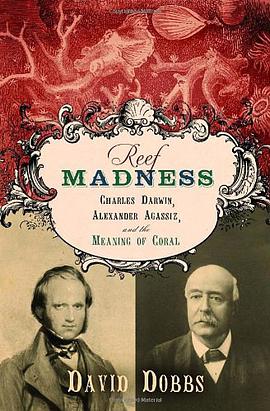
Reef Madness opens up the world of nineteenth-century science and philosophy at a moment when the nature of scientific thought was changing, when what we call “science” (the word did not even exist) was spoken of as “natural philosophy” and was a part of theology, the study of “God’s natural works.”
This is how what is now called science, until then based on the presence and hence the authority of God, moved toward reliance on observable phenomena as evidence of truth. At the book’s center, two of that century’s most bitter debates: one about the theory of natural selection, the other about the origin of coral.
Caught in the grip of these controversies were two men considered to be the gods of the nineteenth-century scientific world: Charles Darwin, the most controversial and ultimately the most influential; and the Swiss-born zoologist Louis Agassiz, almost forgotten today but at the time even more lionized than Darwin.
Agassiz was a paleontologist, the first to classify the fossil fish of the planet, and the first to conceive the idea of the ice age that altered our view of the Earth. He taught at Harvard, founded the Museum of Comparative Zoology, was one of the founders of the Smithsonian and of the National Academy of Sciences, and was considered the greatest lecturer of his time—eloquent, charming, spellbinding. Among his admirers: Emerson, Theodore Roosevelt, William James, and Thoreau. Agassiz believed that nature was so vast, complicated, and elegantly ordered that it could only be the work of God.
We see how this central principle of Agassiz’s was threatened by Darwin’s most central theory—that species change through natural causes, that we exist not because we’re meant to but because we happen to. Agassiz, forced either to disprove Darwin’s principle or give up his own, went to war full tilt against the theory of natural selection. It was a war that, beyond its own drama, had a second important effect on the new world of science.
David Dobbs tells how Agassiz’s son, Alexander, one of the most respected naturalists of his time, who witnessed his father’s rise and tragic defeat yet supported the theory of natural selection over his father’s objections, himself became locked in combat with Darwin.
The subject of contention was the “coral reef problem.” As a young man of twenty-six, Darwin, with only a small amount of data, put forth a theory about the formation of these huge beautiful forms composed of the skeletons of tiny animals that survive in shallow water. It explained how the reefs could rise on foundations that emerged from the Pacific’s greatest depths. This became the subject of Darwin’s first long paper, and it propelled him to the highest circles of British science.
The obsessed younger Agassiz spent the next thirty years in a vain effort to disprove Darwin’s coral theory, traveling 300,000 miles of ocean and looking at every coral mass. In so doing, he laid the groundwork for oceanography, through which, in 1950, the question of the origin of coral was finally resolved.
In Reef Madness , Dobbs looks at the nature of scientific theory. He shows how Darwin was crucially influenced by his encounters with the Agassiz father and son, and how the coral problem prefigured the fierce battle about evolution.
Original, illuminating, and fascinating, Reef Madness uses these large human struggles, which devastated two lives and shaped the thinking of another, to make real the Victorian world of science and to show how it affected the century that followed and continues to this day to affect our own.
作者简介
目录信息
读后感
用户评价
读完最后一页,我几乎是猛地从椅子上弹起来的。这本书的后劲太大了,它不是那种读完就扔在一边的通俗读物,更像是一剂需要时间来消化的烈酒。我最欣赏的是作者在处理复杂人物关系时的那种近乎残忍的真实感。没有绝对的好人,也没有纯粹的恶棍,每个人都有着自己的灰色地带和难以启齿的动机。特别是那个次要角色,那个总是在角落里沉默观察的老妇人,她的每一次出场都像是一次精准的心理侧写,点明了先前所有情节的潜台词。她的寥寥数语,往往比主角大段的内心独白更有力量。叙事结构上,作者采用了非线性叙事,不断地在“现在”和“过去”之间跳跃,这种手法在其他作品中可能显得凌乱,但在本书中却达到了浑然一体的效果。每一次时间线的切换,都像是在拼凑一幅被打碎的巨大马赛克画,直到最后一刻,你才能看到完整的图案——而那个图案,远比你想象的要扭曲和令人心寒。我花了好几天时间,才从那种被情节反复反转的眩晕感中恢复过来,一直在思考,如果我身处那种境地,会做出何种选择。
评分说实话,我带着极高的期待值打开了这本书,但初期体验并不算愉快。开篇部分的情节推进缓慢得令人发指,主角的行动逻辑有时也显得过于理想化,脱离了现实生活的沉重感。我一度想放弃,觉得这不过是又一本故作高深的文艺作品。真正吸引我的是其中对“技术伦理”的探讨。当故事背景逐渐揭示出,那些看似无关紧要的小细节,实际上都指向一个庞大而冰冷的科技网络时,我的兴趣被彻底点燃了。作者没有采用常见的科幻语汇,而是将其融入到一种非常写实、甚至有些枯燥的官僚体系描写中,这种处理方式使得恐怖感更加贴近现实。它让我感到,那些冰冷的算法和规章制度,才是这个时代最可怕的捕食者。书中对“数据隐私”被侵蚀的过程描绘得极为细腻,从最初的无所谓,到后来的无能为力,这种心理转变的过程写得极为可信。我仿佛亲身体验了一把,当个人自由被看不见的锁链捆绑时,那种无声的绝望是何等滋味。
评分这本小说,坦白说,刚翻开前几页时,我有些怀疑。作者的叙事节奏非常缓慢,像是故意要营造一种沉闷的氛围。主角的内心挣扎被描绘得极其细腻,几乎到了有些啰嗦的地步。他对于自己职业的迷茫、对家庭关系的疏离感,每一个细微的情绪波动都被放大检视,初读时会让人觉得拖沓。然而,随着情节的推进,我逐渐理解了这种铺陈的用意。那份缓慢,其实是在为后续的爆发积蓄能量。故事的背景设定在一个略显压抑的近郊小镇,那里的空气似乎都凝固着某种不为人知的秘密。我特别喜欢作者对环境的描写,那种潮湿、阴冷的街道,以及总是在清晨弥漫的薄雾,都成了角色内心困境的绝佳隐喻。当我读到主角发现那封尘封已久的信件时,整本书的基调突然转变,从内向的自我审视,一下子跃升为对外在真相的追寻。那封信的内容,虽然没有直接揭示什么惊天秘密,但其措辞的隐晦和字里行间的未尽之言,比任何直白的控诉都更具冲击力。作者高明之处在于,他没有急于给出答案,而是让读者和主角一同在迷雾中摸索,这种参与感,让阅读体验变得极其充实。
评分这本书的文学性毋庸置疑,它更像是一部深刻的社会剖析,而非单纯的故事讲述。作者对语言的驾驭能力达到了出神入化的地步,他似乎能从日常最平淡的对话中,提炼出人类存在主义层面的困惑。我反复阅读了其中关于“遗忘的重量”那几个段落。他没有使用任何花哨的辞藻,而是用一种近乎冷静的、近乎新闻报道式的口吻,描述了集体记忆是如何被选择性地修改和压制的。这种冷静,反而营造出一种令人毛骨悚然的疏离感。它迫使我反思我们日常接收到的信息有多少是建构的幻象。角色之间的对话充满了张力,他们似乎总是在说一些无关紧要的事情,但字里行间却隐藏着巨大的权力斗争和情感博弈。这种“言外之意”的艺术,是许多现代小说所缺乏的。我尤其赞赏作者对“沉默”的处理,在某些关键场景中,他用大段的留白来代替对话,这种对读者专注力的考验,最终带来了巨大的情感回报。这本书,绝对值得被列入年度最佳书单。
评分这本书最让人拍案叫绝的地方,在于其对“地域性”的刻画,简直是教科书级别的。作者笔下的那个海边小镇,不仅仅是一个故事发生的背景,它本身就是一个有生命的、充满脾气的角色。从咸湿的海风到海岸线上那些布满藤壶的防波堤,每一个细节都散发着浓郁的地方气息。我仿佛能闻到空气中混合着海藻和柴油的味道。故事的核心围绕着当地一个世代相传的“怪谈”展开,但作者没有落入俗套地将其处理成鬼故事,而是巧妙地将其与小镇的经济衰退、年轻人的外流等社会现实紧密结合起来。那个传说,成了小镇居民互相倾轧、逃避现实的集体借口。我特别喜欢作者在描述当地人那种略带排外和固执的性格时所用的幽默感,那种略带嘲讽却又饱含理解的笔调,让人忍俊不禁,又倍感心酸。这本书提供了一种非常独特的阅读体验:你以为你在读一个关于秘密和复仇的故事,实际上,你是在进行一次深入的田野调查,去了解一个被时间遗忘角落里的人性全景。
评分 评分 评分 评分 评分