
具体描述
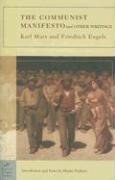
The Communist Manifesto and other Writings , by Karl Marx and Friedrich Engels , is part of the Barnes & Noble Classics series, which offers quality editions at affordable prices to the student and the general reader, including new scholarship, thoughtful design, and pages of carefully crafted extras. Here are some of the remarkable features of Barnes & Noble Classics :
All editions are beautifully designed and are printed to superior specifications; some include illustrations of historical interest. Barnes & Noble Classics pulls together a constellation of influencesbiographical, historical, and literaryto enrich each reader's understanding of these enduring works. Largely ignored when it was first published in 1848, Karl Marx and Friedrich Engels ’s The Communist Manifesto has become one of the most widely read and discussed social and political testaments ever written. Its ideas and concepts have not only become part of the intellectual landscape of Western civilization: They form the basis for a movement that has, for better or worse, radically changed the world. Addressed to the common worker, the Manifesto argues that history is a record of class struggle between the bourgeoisie, or owners, and the proletariat, or workers. In order to succeed, the bourgeoisie must constantly build larger cities, promote new products, and secure cheaper commodities, while eliminating large numbers of workers in order to increase profits without increasing productiona scenario that is perhaps even more prevalent today than in 1848. Calling upon the workers of the world to unite, the Manifesto announces a plan for overthrowing the bourgeoisie and empowering the proletariat. This volume also includes Marx’s The Eighteenth Brumaire of Louis Bonaparte (1852), one of the most brilliant works ever written on the philosophy of history, and Theses on Feuerbach (1845), Marx’s personal notes about new forms of social relations and education. Communist Manifesto translated by Samuel Moore, revised and edited by Friedrich Engels. Martin Puchner is Associate Professor of English and Comparative Literature at Columbia University, as well as the author of Stage Fright: Modernism, Anti-Theatricality, and Drama and Poetry of the Revolution: Marx, Manifestos, and the Avant-Gardes (forthcoming).
作者简介
目录信息
读后感
用户评价
这份文集给我带来的最直接的冲击,是它对“进步”这一概念的颠覆性解读。在主流叙事中,科技发展和经济增长常常被描绘成无可置疑的“好事”,但在这里,作者们却将它们置于一个更广阔的、充满矛盾的框架下进行审视。技术带来的效率提升,往往伴随着社会关系的重塑乃至是人际信任的瓦解。阅读过程中,我不断地在作者的批判性视角与我自身观察到的社会现象之间进行对照。例如,全球化进程中,财富的集中速度与底层民众生活压力加剧的并行不悖,似乎都在验证着书中的某些论断。它教会我们,不能仅仅满足于表面的繁荣,而必须深入探究繁荣背后的结构性代价。这是一种非常“反直觉”但又极其重要的思维训练,它要求读者像侦探一样,去挖掘被光鲜数据所掩盖的真相。
评分读罢这些早期文献,我最大的感受是其文本的强大生命力和惊人的论证逻辑。那些论述,无论你最终是否赞同其结论,其行文的严密性都堪称一绝。特别是对于历史唯物主义的阐释部分,作者们构建了一个极其宏大而又看似自洽的历史发展模型。他们将历史视为一系列阶级斗争的产物,这种解释路径,为理解人类社会的变迁提供了一种强劲的分析工具。这种论述风格是古典的、充满激情的,带有强烈的说服力,仿佛一位雄辩家正在法庭上为你剖析整个世界的运行规律。阅读过程中,我时常停下来,回味那些充满力量感的排比句和充满历史感的词汇运用。它不像现代的学术论文那样小心翼翼,而是以一种斩钉截铁的姿态,向既有的秩序发起挑战。这种自信和气势,本身就是那个时代思想爆发力的体现,即使隔着一百多年的距离,依然能感受到那股扑面而来的、改变世界的决心。
评分这些文字的语言风格是如此的具有煽动性和明确的目的性,读起来不像是在进行一场中立的学术探讨,而更像是一份面向大众、旨在唤醒沉睡者的战斗檄文。它的节奏感很强,从开篇的犀利陈词到中段对现有体制的层层剥皮,再到最后对未来的展望,逻辑链条紧密得令人窒息。你几乎能听到作者们在字里行间激昂的呐喊声。这种近乎文学化的、充满激情的论述方式,使得即使是复杂的社会经济理论,也能以一种非常易于传播和记忆的形式呈现出来。对于不熟悉政治哲学的人来说,它提供了一条直接进入高阶理论讨论的“快捷通道”,因为它压根就没有打算温和地引导你,而是用最强有力的方式,将你拽入这场关于人类命运的大辩论之中。这份力量感,是许多当代严肃著作所缺乏的。
评分老实说,初次接触这些文字时,我曾担心会因为时代的久远而感到晦涩难懂,但令人意外的是,其中对于人类普遍困境的描摹,其普适性远远超出了我的预期。那些关于异化劳动、关于人与自身创造物之间关系的探讨,简直就是对现代“打工人”精神状态的精准刻画。我们每天为了生存而重复机械性的劳动,是否也正在经历着某种形式的自我疏离?这本书提供了一个哲学层面的深刻反思入口。它迫使我们去思考,在日益专业化和分工化的社会里,个体如何保持完整性和自主性。它没有直接提供解决方案,但它清晰地指出了“病灶”所在。那种对人类潜能被压抑的痛惜感,贯穿始终。这不仅仅是经济学的论述,更是一种对人性的深沉关怀,只是这种关怀是以一种极度理性和批判性的方式表达出来的。
评分这本集子实在令人深思,那些文字仿佛穿越了时空,直击现代社会的核心矛盾。我尤其欣赏其中对资本力量的解构,那种锐利和毫不留情的批判,让人不得不审视自己周遭的一切。它不仅仅是历史的文献,更像是一面镜子,映照出我们当前经济体系中那些隐藏的、令人不安的裂痕。读完之后,你会发现自己对“公平”和“剥削”这两个词的理解被彻底颠覆了。作者们那种近乎预言家的洞察力,尤其是在描述技术进步与劳工关系的演变时,至今看来依然令人震撼。比如,他们如何精准地捕捉到资产阶级为了利润最大化,必然会采取的那些手段,那些在今天我们习以为常的商业模式中依然能找到清晰的影子。这本书的价值,在于它提供了一种全新的、宏大的叙事框架来理解社会结构是如何运作的,它强迫你跳出日常的琐碎,去思考那些关于生产资料和权力分配的根本问题。对于任何一个对当代政治经济学抱有好奇心的人来说,这都是一次绕不开的思想洗礼。它不是提供简单的答案,而是抛出了最尖锐、最深刻的问题。
评分 评分 评分 评分 评分