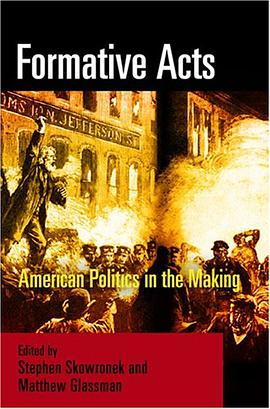
具体描述
Anarchism and the Crisis of Representation: A Deep Dive into the Unraveling of Political Authority This exploration delves into the complex and often contradictory relationship between anarchism and the concept of representation, a cornerstone of modern political thought. While often perceived as diametrically opposed, this work uncovers how anarchist critiques, when examined through the lens of representational systems, reveal profound insights into the very foundations of political authority and legitimacy. We move beyond simplistic definitions and engage with the nuanced evolution of anarchist thought, tracing its intellectual lineage from early critiques of state power to contemporary challenges posed by digital networks and globalized governance. At its core, this book investigates the inherent "crisis of representation" that permeates contemporary political discourse, a crisis that anarchism, in its various forms, has long anticipated and articulated. We begin by dissecting the traditional understanding of representation as the act of speaking or acting on behalf of another. This seemingly straightforward concept, however, becomes increasingly fraught when subjected to anarchist scrutiny. What does it truly mean for one individual or group to represent the interests, desires, and autonomy of another, especially within the hierarchical structures that characterize state and capitalist societies? The work systematically examines how various anarchist thinkers have grappled with this question. From Proudhon's critique of property and his advocacy for mutualism, which sought to dismantle concentrated power through decentralized economic arrangements, to Bakunin's passionate rejection of all forms of imposed authority, including representative democracy, the spectrum of anarchist thought offers a rich tapestry of arguments against formalized representation. We explore how these critiques are not merely abstract philosophical musings, but rather direct responses to the lived experiences of power imbalances and the suppression of individual agency. A significant portion of this book is dedicated to unpacking the anarchist perspective on the state as the ultimate embodiment of representational failure. The state, by its very nature, claims to represent the general will of its citizens, yet anarchists argue this representation is inherently illusory. They posit that the state, in its pursuit of order and control, inevitably prioritizes its own perpetuation and the interests of its ruling elite over the genuine needs and freedoms of the populace. This leads to a system where citizens are purportedly represented, but in reality, their voices are muted, their autonomy circumscribed, and their diverse experiences flattened into a monolithic, imposed identity. Furthermore, we delve into the anarchist critique of parliamentary democracy, often lauded as the pinnacle of representational governance. This analysis highlights how, from an anarchist standpoint, elections and legislative bodies can become mechanisms for the co-option and domestication of dissent. The act of electing representatives, while seemingly granting agency, can also serve to legitimize the very system of domination that anarchists seek to dismantle. The concentration of power within elected officials, the influence of money and lobbying, and the inherent limitations of legislative processes are all scrutinized as evidence of representation's failure to deliver on its promise of genuine popular sovereignty. The book then broadens its scope to consider how the crisis of representation extends beyond the traditional state apparatus. We examine the ways in which economic systems, media landscapes, and even cultural production can operate as forms of misrepresentation, distorting reality and obscuring underlying power dynamics. The commodification of experience, the manipulation of public opinion through mass media, and the homogenization of cultural expression are all analyzed through an anarchist lens as contributing factors to this pervasive crisis. Crucially, this work moves beyond a purely negative critique to explore the anarchist visions for alternative forms of social organization that minimize or eliminate the need for hierarchical representation. Concepts such as direct democracy, federations of autonomous communities, affinity groups, and decentralized networks are presented not as utopian ideals, but as practical strategies for fostering genuine participation and self-governance. The emphasis is on creating systems where individuals directly engage in decision-making processes that affect their lives, fostering a form of "presence" rather than mediated "representation." The contemporary relevance of anarchist thought in understanding the crisis of representation is a central theme. In an era marked by political polarization, widespread distrust in institutions, and the rise of populist movements that often exploit or manipulate representational rhetoric, the anarchist critique offers a compelling framework for analysis. We explore how the perceived failures of traditional representative systems create fertile ground for alternative modes of political engagement, both constructive and potentially destructive, and how anarchist principles can illuminate the underlying dynamics at play. Ultimately, this book aims to demonstrate that the anarchist critique of representation is not a rejection of collective action or organized society, but rather a profound interrogation of how we organize and who truly benefits from existing structures. By understanding the multifaceted crisis of representation through the prism of anarchist thought, readers can gain a deeper appreciation for the challenges of achieving genuine self-governance, participatory democracy, and the realization of individual and collective freedom in the face of entrenched power. It is an invitation to reconsider the very nature of political legitimacy and to explore more authentic pathways towards a society where individuals are not represented, but are instead the direct architects of their own lives and communities.