
具体描述
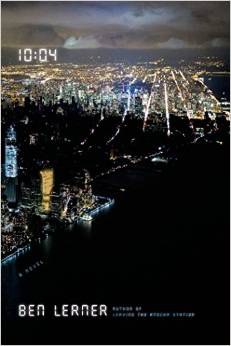
In the last year, the narrator of 10:04 has enjoyed unlikely literary success, has been diagnosed with a potentially fatal medical condition, and has been asked by his best friend to help her conceive a child. In a New York of increasingly frequent superstorms and social unrest, he must reckon with his own mortality and the prospect of fatherhood in a city that might soon be underwater.
A writer whose work Jonathan Franzen has called “hilarious . . . cracklingly intelligent . . . and original in every sentence,” Lerner captures what it’s like to be alive now, during the twilight of an empire, when the difficulty of imagining a future is changing our relationship to both the present and the past.
Review
Praise for 10:04
“At 240 pages, his new novel does not announce itself as a magnum opus. But given Lerner’s considerable humor, rigorous intelligence, and shred breed of conscience—his bighearted spirit and formal achievement—it is. A generous, provocative, ambitious Chinese box of a novel, 10:04 is a near-perfect piece of literature, affirmative of both life and art, written with the full force of Lerner’s intellectual, aesthetic, and empathetic powers, which are as considerable as they are vitalizing." —Maggie Nelson, The Los Angeles Review of Books
“This masterful, at times dizzying novel reevaluates not just what fiction can do but what is is . . . Hilarious and incisive, Lerner’s [10:04] would succeed without the layers of fiction (on reality on fiction). But with that narrative device, the book achieves brilliance, at once a study of how fiction functions and an expansive catalog of life.” —Tiffany Gilbert, Time Out New York [Five-star review]
“A brilliant novel . . . As promising a second effort as Atocha Station was a debut.” —Juliet Lapidos, The New Republic
“Reading Ben Lerner gives me the tingle at the base of my spine that happens whenever I encounter a writer of true originality. He is a courageous, immensely intelligent artist who panders to no one and yet is a delight to read. Anyone interested in serious contemporary literature should read Ben Lerner, and 10:04 is the perfect place to start.” —Jeffrey Eugenides, author of The Marriage Plot
“Ben Lerner is a brilliant novelist, and one unafraid to make of the novel something truly new. 10:04 is a work of endless wit, pleasure, relevance, and vitality.” —Rachel Kushner, author of The Flamethrowers
Praise for Leaving the Atocha Station
“A work so luminously original in style and form as to seem like a premonition, a comet from the future.” —Geoff Dyer, The Observer
“Lerner’s writing [is] beautiful, funny, and revelatory.” —Deb Olin Unferth, Bookforum
“[A] subtle, sinuous, and very funny first novel . . . There are wonderful sentences and jokes on almost every page.” —James Wood, The New Yorker
“One of the funniest (and truest) novels . . . by a writer of his generation.” —Lorin Stein, The New York Review of Books
“Flip, hip, smart, and very funny . . . Reading it was unlike any other novel-reading experience I’ve had for a long time.” —Maureen Corrigan, NPR’s Fresh Air with Terry Gross
“Remarkable . . . a bildungsroman and meditation and slacker tale fused by a precise, reflective and darkly comic voice.” —Gary Sernovitz, The New York Times Book Review
“The overall narrative is structured round [these] subtle, delicate moments: performances, as Adam would call them, of intense experience. They’re comic in that obviously, Adam is an appalling poseur. But they’re also beautiful and touching and precise.” —Jenny Turner, The Guardian
“Leaving the Atocha Station is a marvelous novel, not least because of the magical way that it reverses the postmodernist spell, transmuting a fraudulent figure into a fully dimensional and compelling character.” —Sam Sacks, The Wall Street Journal
“An extraordinary novel about the intersections of art and reality in contemporary life.” —John Ashbery
“Utterly charming. Lerner’s self-hating, lying, overmedicated, brilliant fool of a hero is a memorable character, and his voice speaks with a music distinctly and hilariously all his own.” —Paul Auster
“Last night I started Ben Lerner’s novel Leaving the Atocha Station. By page three it was clear I was either staying up all night or putting the novel away until the weekend. I’m still angry with myself for having slept.” —Stacy Schiff
“A character-driven ‘page-turner’ and a concisely definitive study of the ‘actual’ versus the ‘virtual’ as applied to relationships, language, poetry, experience.” —Tao Lin, The Believer
“Ben Lerner’s Leaving the Atocha Station is a slightly deranged, philosophically inclined monologue in the Continental tradition running from Büchner’s Lenz to Thomas Bernhard and Javier Marías. The adoption of this mode by a young American narrator—solipsistic, overmedicated, feckless yet ambitious—ends up feeling like the most natural thing in the world.” —Benjamin Kunkel, New Statesman’s Books of the Year 2011
作者简介
Ben Lerner was born in Topeka, Kansas, in 1979. He has been a Fulbright Fellow, a finalist for the National Book Award for Poetry, a Howard Foundation Fellow, and a Guggenheim Fellow. His first novel, Leaving the Atocha Station, won the 2012 Believer Book Award, and excerpts from 10:04 have been awarded The Paris Review’s Terry Southern Prize. He has published three poetry collections: The Lichtenberg Figures, Angle of Yaw, and Mean Free Path. Lerner is a professor of English at Brooklyn College.
目录信息
读后感
用户评价
语言风格的变化多端,是阅读过程中不断带来的惊喜。你会发现,在描述宏大场景时,作者会启用一种宏伟、几乎带有史诗感的句式,那样的文字充满了力量和磅礴的气势;然而,当镜头转向内心的独白时,笔锋又会瞬间变得极其私密和脆弱,句子变得短促、破碎,充满了感性的色彩。这种风格上的灵活切换,完美地契合了故事情绪的起伏。有时,我会因为某一个形容词的选择而驻足,心想“天哪,竟然能这样形容一个感觉!”那种精准度,仿佛作者拥有将无形的情感固化为有形物体的魔力。整本书读下来,就像是在聆听一场精心编排的交响乐,每一个音符——每一个词汇——都有其不可替代的音高和作用。
评分这本书的封面设计简直是一场视觉盛宴,那种深邃的蓝色调配合着烫金的字体,在书架上一下子就能抓住我的眼球。我拿到手的时候,那种纸张的质感就让我对里面的内容充满了期待,厚实的触感和微微带着油墨香的味道,让人忍不住想要立刻翻开。光是摩挲着封面上的纹理,我就能感受到设计者在其中倾注的心思,它不仅仅是一个容器,更像是一件艺术品。我花了好一会儿才舍得把它放下来,反复端详着封面上那个微妙的排版布局,每一个留白都处理得恰到好处,仿佛在无声地诉说着某种深沉的、尚未揭晓的故事。初读者的直觉告诉我,这本书的作者在呈现故事的“外衣”上,就已经展现出了非凡的品味和对细节的极致追求,这让我对故事本身的叙事功力和意境营造更加充满了信心。这本书的物理形态本身,就已经提供了一种沉浸式的阅读前奏,它成功地建立了一种高级而神秘的氛围,让人完全被这种精心雕琢的仪式感所吸引。
评分人物的塑造是这本书最令人称道之处,没有一个是扁平的符号,他们都是充满矛盾与成长的复合体。特别是几个配角的刻画,简直是神来之笔,他们虽然戏份可能不如主角突出,但其复杂的心路历程和出人意料的抉择,却为整个故事增添了无数层次的张力。我看到一些人物在面对困境时,那种挣扎、自我怀疑到最终做出艰难决定的过程,真实得让人心痛。作者高明的地方在于,他没有简单地将人物定义为“好人”或“坏人”,而是展示了人性中那些灰色地带,那些我们每个人都可能在内心深处藏匿的犹豫和欲望。每一次对话都充满了潜台词,角色的沉默往往比他们的言语更具杀伤力和信息量,这迫使我必须停下来,反复琢磨他们话语背后的真实意图。
评分这本书的后半部分处理得极其巧妙,它拒绝给出任何简单明了的答案或俗套的团圆结局。相反,它将所有的线索都抛给了读者,要求我们自己去拼凑、去消化。这种开放式的收尾,不是作者的逃避,而是一种深刻的信任,他相信读者已经通过前面的阅读积累了足够的理解力,能够独自面对故事遗留下来的哲学命题。读完最后一页,我感到一阵强烈的失重感,仿佛被猛地从那个构建精妙的世界中抽离出来,留下的不是情节的完结,而是一连串关于“存在”、“选择”和“时间本质”的沉思。这本书的真正魅力,或许就在于它在合上书本后,依然在你的脑海中继续上演,那种挥之不去的余韵,才是衡量一部优秀作品的真正标尺。
评分故事的开篇如同清晨薄雾中缓缓拉开的帷幕,那种叙事节奏的把握简直是教科书级别的。作者并没有急于抛出惊天动地的事件,而是极其耐心地,用一种近乎诗意的笔触,勾勒出主人公日常生活的细微脉络。我特别喜欢他处理时间流动的方式,它不是线性的、机械的推进,而是像一条蜿蜒的河流,时而湍急,时而回旋,总是在不经意间带出一段被遗忘的回忆或是对未来的隐晦预示。这种慢热的处理方式,对于习惯了快节奏叙事的读者来说,或许需要一点适应,但一旦你沉浸进去,就会发现这种细腻入微的观察力,如何将平凡的生活场景提升到了一种哲学思辨的高度。每一个场景的切换,都伴随着对光线、声音乃至空气湿度的精准捕捉,仿佛我不是在阅读文字,而是亲身站在那个时空节点,用全身的感官去体验那里的每一秒钟。
评分(MA reading list) multiple authorship and multiple temporality, definitely reference to Benjamin 后半部不如前半部对这两个概念的拿捏
评分活吃章鱼,人工授精,《回到未来》,贾德极简主义,黑山派诗歌,客体主义诗歌。诗人不可能独立于时间。
评分self-indulgent masculinity meets self-indulgent NY-centricism.the author is undoubtedly brilliant, if you understand the limits of his work.I realized how male writers make the whole world revolve around them, a big ego in the center of everything, and female writers construct a world made of interpersonal relationships, fragile as they all are.
评分我发现27页真的是我的极限,这本书成为我今年第二本看不下去决定弃掉的书,看到27页我真的顶不顺了!无聊到死!有个人的评价太贴切了:one-character-rambles-about-his-plotless-life。
评分self-indulgent masculinity meets self-indulgent NY-centricism.the author is undoubtedly brilliant, if you understand the limits of his work.I realized how male writers make the whole world revolve around them, a big ego in the center of everything, and female writers construct a world made of interpersonal relationships, fragile as they all are.