
具体描述
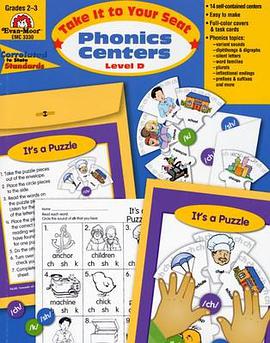
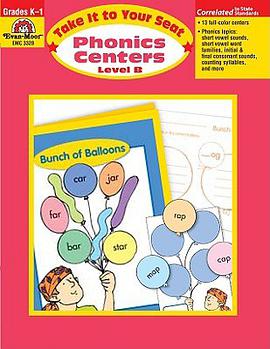
Phonics Foundations: Mastering Early Reading Skills This comprehensive guide is designed to empower kindergarten and first-grade educators with a rich array of engaging and effective phonics centers. Moving beyond rote memorization, this resource champions a hands-on, interactive approach to phonics instruction, fostering a deep understanding of letter-sound relationships and paving the way for confident reading and spelling. The core philosophy centers on the belief that children learn best through active participation and exploration, and each phonics center has been meticulously crafted to spark curiosity and promote genuine engagement. Building Blocks of Literacy: A Phonics-First Approach At the heart of early literacy development lies phonics. Understanding how letters represent sounds is the fundamental key that unlocks the world of reading. This resource recognizes that mastering phonics is not a singular event, but rather a progressive journey. It meticulously breaks down the complex process of phonics acquisition into manageable, developmentally appropriate stages, ensuring that young learners build a strong foundation one skill at a time. From recognizing individual letters and their most common sounds to decoding simple words and progressing towards more complex phonetic patterns, this guide provides a roadmap for educators to navigate this crucial developmental period. The Power of Phonics Centers: Engaging, Effective, and Fun! Traditional, teacher-led phonics instruction, while valuable, can sometimes struggle to maintain the rapt attention of young learners. Phonics centers offer a dynamic alternative, transforming abstract phonetic concepts into tangible, exciting activities. These centers are more than just "stations"; they are carefully curated learning environments designed to stimulate multiple senses and cater to diverse learning styles. By providing opportunities for independent exploration, collaborative learning, and small-group instruction, phonics centers empower students to take ownership of their learning and develop a genuine love for reading. Key Phonetic Skills Addressed: This resource dives deep into the essential phonics skills that are critical for emergent readers. Each skill is addressed through a variety of engaging activities, ensuring that students encounter the concepts in multiple ways. Letter Recognition and Formation: The journey begins with the very building blocks of written language. Activities focus on both recognizing uppercase and lowercase letters and developing the fine motor skills necessary for correct letter formation. This includes tracing, writing in sensory materials, and matching games that reinforce visual discrimination. Initial Sound Identification: Understanding that words begin with specific sounds is a crucial step. Centers are designed to help children isolate and identify the beginning sounds of words through picture sorts, sound-matching games, and auditory discrimination exercises. For example, a child might be asked to find all the pictures that start with the /b/ sound, linking the letter 'b' to its corresponding sound. Medial and Final Sound Identification: As children progress, they learn to identify sounds within words. Activities will help them pinpoint the middle (medial) and ending (final) sounds of CVC (consonant-vowel-consonant) words. This might involve activities like "Elkonin boxes" or "sound-out" games where children segment words into individual sounds. Short Vowel Sounds: The five short vowel sounds (/a/, /e/, /i/, /o/, /u/) are foundational for decoding many early words. Centers will provide ample practice in recognizing and distinguishing these sounds, as well as blending them with consonants to form words. This includes activities like word families, vowel sound sorts, and word building exercises. Consonant Blends and Digraphs: Moving beyond single consonant sounds, children will explore consonant blends (e.g., bl, tr, st) where two or three consonants are blended together to create a distinct sound, and consonant digraphs (e.g., sh, ch, th, wh) where two consonants combine to make a single new sound. Centers will offer opportunities to identify, read, and spell words containing these patterns through word sorts, picture-matching, and interactive games. Long Vowel Sounds and Vowel Teams: The complexity increases as children learn about long vowel sounds, which are often represented by vowel-consonant-e (VCe) patterns (e.g., bake, kite) or vowel teams (e.g., ai, ea, ou). This resource provides targeted activities to help students decode and understand these patterns, ensuring they can tackle a wider range of words. R-Controlled Vowels: Sounds like "ar," "or," "ir," "er," and "ur" present unique challenges. Dedicated centers will focus on mastering these sounds through engaging activities that help children recognize and apply these patterns in reading and spelling. Diphthongs and Other Vowel Digraphs: Diphthongs (e.g., ou, oi, ow) and other less common vowel digraphs are introduced to further expand students' decoding abilities. Activities will focus on recognizing these sound combinations and their corresponding spellings. Syllabication: Understanding how to break words into syllables is a crucial strategy for decoding longer words. This resource will introduce basic syllabication rules and provide activities that help children segment words into manageable parts. Sight Words/High-Frequency Words: While phonics provides the tools for decoding, many common words need to be recognized instantly. This guide integrates strategies for learning high-frequency words through engaging activities that promote memorization and automaticity, often alongside phonics instruction. Designing Effective Phonics Centers: A Practical Guide for Educators This resource goes beyond simply listing activities; it provides a framework for educators to create and implement successful phonics centers. Center Organization and Management: Practical advice is offered on how to set up and manage phonics centers efficiently in the classroom. This includes considerations for materials, organization, rotation schedules, and maintaining a positive and productive learning environment. Differentiation and Scaffolding: Recognizing that students learn at different paces, the guide emphasizes the importance of differentiation. It offers strategies for adapting activities to meet the needs of diverse learners, providing additional support for struggling students and enrichment for those ready for a challenge. This might involve offering varying levels of difficulty within an activity or providing different types of support materials. Assessment and Progress Monitoring: Understanding how students are progressing is vital. This resource includes suggestions for informal and formal assessment methods to monitor students' mastery of phonics skills. This allows educators to identify areas where students may need further instruction and to celebrate their achievements. Materials and Resources: The guide provides a comprehensive list of suggested materials, ranging from readily available classroom supplies to printable resources that can be easily incorporated. The focus is on using engaging and tactile materials that encourage hands-on learning. This might include letter tiles, magnetic letters, manipulatives, picture cards, sound boxes, and various writing tools. Integrating Phonics with Reading and Writing: Phonics instruction should not exist in a vacuum. This resource highlights how phonics skills can be seamlessly integrated into broader reading and writing activities. Students are encouraged to apply their phonics knowledge when reading decodable texts, writing their own stories, and engaging in other literacy tasks. Beyond the Basics: Fostering a Lifelong Love of Reading This resource is committed to nurturing not only competent readers but also enthusiastic ones. The emphasis is on making phonics learning enjoyable and relevant. By providing a rich and varied experience, educators can help children develop a positive association with reading and a desire to explore the written word. The goal is to equip them with the foundational skills they need to become confident, independent readers who can unlock the vast world of literature and information. Through engaging activities, clear instruction, and a focus on individualized progress, this guide empowers educators to build strong phonics foundations that will serve their students throughout their academic journeys and beyond. The carefully designed centers encourage active learning, critical thinking, and a genuine sense of accomplishment as children master each new phonetic concept.
作者简介
目录信息
读后感
评分
评分
评分
评分
评分
用户评价
评分
评分
评分
评分
评分