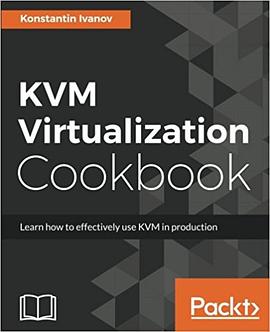

具体描述
Key Features
Build, manage and scale virtual machines with practical step-by-step examplesLeverage the libvirt user-space tools and libraries to manage the life-cycle of KVM instancesDeploy and scale applications inside KVM virtual machines with OpenStack
Book Description
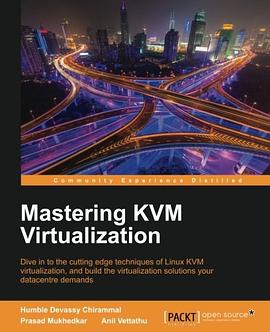
Virtualization technologies such as KVM allow for better control over the available server resources, by deploying multiple virtual instances on the same physical host, or clusters of compute resources. With KVM it is possible to run various workloads in isolation with the hypervisor layer providing better tenant isolation and higher degree of security.
This book will provide a deep dive into deploying KVM virtual machines using qemu and libvirt and will demonstrate practical examples on how to run, scale, monitor, migrate and backup such instances. You will also discover real production ready recipes on deploying KVM instances with OpenStack and how to programatically manage the life cycle of KVM virtual machines using Python. You will learn numerous tips and techniques which will help you deploy & plan the KVM infrastructure. Next, you will be introduced to the working of libvirt libraries and the iPython development environment.
Finally, you will be able to tune your Linux kernel for high throughput and better performance. By the end of this book, you will gain all the knowledge needed to be an expert in working with the KVM virtualization infrastructure.
What you will learn
Deploy different workloads in isolation with KVM virtualization and better utilize the available compute resourcesExplore the benefits of running applications with KVM and learn to prevent the "bad-neighbor" effectLeveraging various networking technologies in the context of virtualization with Open vSwitch and the Linux bridge.Create KVM instances using Python and inspect running KVM instancesUnderstand Kernel Tuning for enhanced KVM performance and better memory utilization
About the Author
Konstantin Ivanov is a Linux systems engineer, an open source developer, and a technology blogger who has been designing, configuring, deploying, and administering large-scale, highly available Linux environments for more than 15 years.
His interests include large distributed systems and task automation, along with solving technical challenges involving multiple technology stacks.
Konstantin received two master of science in computer science degrees from universities in Bulgaria and the United States, specializing in system and network security and software engineering.
In his spare time, he loves writing technology blogs and spending time with his two boys.
Table of Contents
Getting Started with QEMU and KVM Using libvirt to Manage KVM KVM Networking with libvirt Migrating KVM Instances Monitoring and Backup of KVM Virtual Machines Deploying KVM Instances with OpenStack Using Python to Build and Manage KVM Instances Kernel Tuning for KVM Performance
作者简介
Konstantin Ivanov is a Linux systems engineer, an open source developer, and a technology blogger who has been designing, configuring, deploying, and administering large-scale, highly available Linux environments for more than 15 years. His interests include large distributed systems and task automation, along with solving technical challenges involving multiple technology stacks. Konstantin received two MS in Computer Science from universities in Bulgaria and the United States, specializing in system and network security and software engineering. In his spare time, he loves writing technology blogs and spending time with his two boys.
目录信息
读后感
用户评价
这本书的装帧设计相当引人注目,封面的设计风格简洁却又不失专业感,那种深邃的蓝色调仿佛立刻将人带入了一个充满技术挑战与机遇的虚拟化世界。拿到手里掂量了一下,厚度适中,纸张的质感也让人感到舒适,印刷清晰度极高,即便是复杂的命令行和代码块也毫无模糊不清之感,这对我们这些需要长时间盯着屏幕和纸质文档的技术人员来说,无疑是一个巨大的加分项。内页的排版布局非常合理,章节之间的过渡自然流畅,大量的图示和流程图穿插其中,极大地辅助了理解。我尤其欣赏它在内容组织上的细致考量,每一个步骤都被拆解得非常精细,即便是初次接触虚拟化技术的人,也能根据指引一步步操作下去,而不会感到无所适从。这种对用户体验的极致追求,使得阅读过程本身成为一种享受,而不是一种负担。
评分从实用性的角度来看,这本书的价值几乎是立竿见影的。我过去在处理某些特定的跨平台迁移问题时,总是需要花费大量时间在论坛上搜索零散的解决方案,而这本书似乎将这些“隐晦的知识点”都系统化地整理了出来。其中关于故障排除和灾难恢复的章节,简直是一本宝典。作者对各种常见错误的描述精确且到位,提供的排查步骤逻辑严密,往往能帮助我迅速定位问题所在,避免了在黑暗中摸索的窘境。这种“手册式”的实用价值,使得它不仅仅是一本学习资料,更成为了我工作台上随时可以查阅的参考工具。它的指导性强到让你觉得,只要跟着书上的步骤走,任何看似复杂的任务都能迎刃而解,极大地增强了操作的信心。
评分这本书的结构安排,体现出一种深思熟虑的进阶逻辑。它不是那种堆砌知识点的百科全书,而更像是一位经验丰富的导师,带着你从最基础的安装配置开始,逐步深入到高级的集群管理、存储虚拟化以及网络拓扑的定制化配置。每完成一个小节的学习,都会有一种扎实的进步感,这对于保持持续学习的动力至关重要。我特别欣赏它在处理版本兼容性和前沿技术集成方面的谨慎态度,它在确保基础知识牢固的同时,也适当地引入了最新的社区发展趋势,确保读者学到的知识不会很快过时。翻阅过程中,我几次停下来,思考作者是如何在有限的篇幅内,如此高效且全面地覆盖如此广泛的技术栈的,这需要极高的提炼和组织能力。
评分这本书的语言风格展现出一种恰到好处的平衡——既有技术文档的严谨精准,又不失一种对技术探索的热情。它没有使用过于花哨的辞藻来粉饰内容,而是用最直接、最清晰的方式传达信息,这种朴实的风格,反而更容易赢得技术人员的信任。阅读过程中,我能感受到作者不仅仅是在传授技术操作,更是在分享一种解决问题的思维模式。书中大量的实战案例,仿佛是作者自己从无数次失败和成功中提炼出来的精华,带着一种沉淀下来的智慧。它教会我的,不仅仅是如何输入特定的命令,更重要的是理解“为什么”要这么做,以及在不同场景下应该如何灵活变通,这才是真正有深度的技术书籍所具备的特质。
评分坦白说,我最初接触这类技术书籍时,往往会因为概念的抽象和步骤的繁琐而感到气馁,但这本书在这方面做得非常出色。它似乎有一种魔力,能将那些晦涩难懂的虚拟化核心概念,用一种近乎平实的语言娓娓道来,让你在不知不觉中领悟了背后的原理。我发现,作者在解释诸如内存管理、I/O 虚拟化这些棘手问题时,并非直接抛出复杂的理论公式,而是通过一系列精心设计的、具有实际操作意义的案例场景来铺垫,这种“先做后学”的教学模式,极大地提高了学习效率和兴趣。特别是那些涉及性能调优的部分,作者提供的不仅仅是理论上的建议,更有大量基于真实生产环境的经验总结,这些“干货”的价值是无可估量的,对于日常运维工作中的疑难杂症,提供了立竿见影的解决方案。
评分该早出几年的,也不会走这么多弯路 libvirt 用户绝好的入门书籍。
评分该早出几年的,也不会走这么多弯路 libvirt 用户绝好的入门书籍。
评分该早出几年的,也不会走这么多弯路 libvirt 用户绝好的入门书籍。
评分该早出几年的,也不会走这么多弯路 libvirt 用户绝好的入门书籍。
评分该早出几年的,也不会走这么多弯路 libvirt 用户绝好的入门书籍。