
具体描述
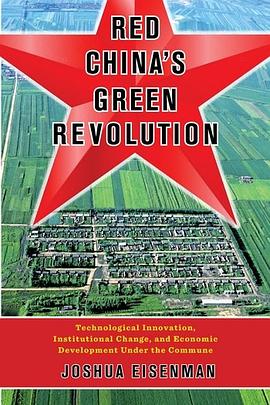
China’s dismantling of the Mao-era rural commune system and return to individual household farming under Deng Xiaoping has been seen as a successful turn away from a misguided social experiment and a rejection of the disastrous policies that produced widespread famine. In this revisionist study, Joshua Eisenman marshals previously inaccessible data to overturn this narrative, showing that the commune modernized agriculture, increased productivity, and spurred an agricultural green revolution that laid the foundation for China’s future rapid growth.
Red China’s Green Revolution tells the story of the commune’s origins, evolution, and downfall, demonstrating its role in China’s economic ascendance. After 1970, the commune emerged as a hybrid institution, including both collective and private elements, with a high degree of local control over economic decision but almost no say over political ones. It had an integrated agricultural research and extension system that promoted agricultural modernization and collectively owned local enterprises and small factories that spread rural industrialization. The commune transmitted Mao’s collectivist ideology and enforced collective isolation so it could overwork and underpay its households. Eisenman argues that the commune was eliminated not because it was unproductive, but because it was politically undesirable: it was the post-Mao leadership led by Deng Xiaoping—not rural residents—who chose to abandon the commune in order to consolidate their control over China. Based on detailed and systematic national, provincial, and county-level data, as well as interviews with agricultural experts and former commune members, Red China’s Green Revolution is a comprehensive historical and social scientific analysis that fundamentally challenges our understanding of recent Chinese economic history.
作者简介
Joshua Eisenman is assistant professor at the Lyndon Baines Johnson School of Public Affairs at the University of Texas at Austin and senior fellow for China studies at the American Foreign Policy Council. He is coauthor of China and Africa: A Century of Engagement (2012) and coeditor of China Steps Out: Beijing’s Major Power Engagement with the Developing World (2018).
目录信息
读后感
用户评价
这部作品的结构设计堪称教科书级别的范例,它没有采用线性的时间推进,而是以一系列高度聚焦的主题切片,像手术刀般精准地剖开了特定历史事件的肌理。这种非线性的叙事方式,初看可能略显跳跃,但一旦适应了作者的节奏,你会发现其逻辑链条异常严密。每一章都像是一个独立的微型研究,但它们通过无形的、深刻的理论框架紧密相连。我尤其欣赏它在论证过程中对一手资料的运用,那些引用的书信、会议纪要片段,都带着泥土的芬芳和时间的重量,极大地增强了文本的说服力。它成功地将宏观经济政策的制定与微观层面的具体执行之间的“最后一公里”的断裂和衔接,展现得淋漓尽致,显示出作者深厚的历史学功底和敏锐的社会洞察力。
评分这本书的叙事视角真是令人耳目一新,它仿佛拉开了一张巨大的历史织锦,让我得以窥见那些在宏大叙事下常常被忽略的、关于社会结构变迁的细微纹理。作者似乎拥有魔力,能够将枯燥的统计数据和档案记录,转化为鲜活的个体故事。我特别喜欢其中对基层干部心态变化的描绘,那种身处政策风暴眼中的犹豫、挣扎与最终的坚决,被刻画得入木三分。书中对特定时期内农村地区人际关系网络如何受到新旧意识形态冲突的冲击,有着非常深入的探讨,这种细节的把控,让整个论述的厚度大大增加。它不仅仅是在讲述“什么发生了”,更是在追问“为什么会以这种方式发生”,并且清晰地展现了权力、资源与地方文化在历史进程中的复杂互动。读完后,我对那个特定历史阶段的理解,不再是平面化的口号堆砌,而是立体而充满张力的多维度图像。
评分这本书的图表和地图简直是点睛之笔,它们的作用远超一般插图的辅助性质,简直就是叙事本身的一部分。作者似乎深知,要理解空间和地理要素如何塑造历史进程,仅仅依靠文字描述是远远不够的。那些精细绘制的区域发展对比图、人口迁移网络图,提供了直观且无可辩驳的视觉证据,有力地支撑了其核心论点。每次当我被冗长的文本段落稍稍带离注意力时,回头看一眼那些清晰的图示,立刻就能重新聚焦于作者想要强调的地理和空间层面的权力分布差异。这种多模态的表达方式,极大地提升了信息传递的效率和深度,使得复杂的地缘政治和经济差异变得异常清晰可辨。
评分从文化批判的角度来看,这本书提供了一个极其犀利的反思视角。它毫不留情地揭示了某些被官方意识形态浪漫化的“进步”背后所隐藏的代价和牺牲。作者的笔触是冷峻而客观的,他似乎在扮演一个局外人的角色,冷静地审视着历史的荒谬与人性的脆弱。我读到某些章节时,感到一种深刻的无力感,因为书中呈现的并非简单的善恶对立,而是复杂的系统性失灵。它对于权力运作逻辑的分析尤为精妙,那种自上而下的驱动力如何与地方原有的文化惯性发生摩擦、融合,并最终产生出意料之外的后果,被作者剖析得丝丝入扣,让人不得不重新审视我们对“变革”二字的传统理解。
评分说实话,这本书的语言风格非常具有挑战性,它不是那种迎合大众的通俗读物,而更像是一篇篇经过精心打磨的学术论文的集合体,充满了复杂的句式和专业术语。对于非专业背景的读者来说,初读时需要极大的耐心和反复琢磨。然而,一旦跨过了最初的门槛,那种智力上的回报是巨大的。作者在构建其理论模型时,展现出令人惊叹的严谨性,他巧妙地引入了几个具有开创性的概念框架来解释某些看似矛盾的社会现象。这种对概念的精雕细琢,使得整本书在理论贡献上站得住脚。它迫使读者停下来,不仅仅接受结论,更要审视作者是如何一步步从观察走向推论的,这是一种非常扎实的学术体验。
评分well
评分well
评分well
评分well
评分well