
具体描述
Since the second half of the last century art historians, realizing that the image of Rembrandta (TM)s work had become blurred with time, have attempted to redefine the artista (TM)s significance both as a source of inspiration to other artists and as a great artist in his own right. In order to carry on the work started by previous generations, a group of leading Dutch art historians from the university and museum world joined forces in the late 1960s in order to study afresh the paintings usually ascribed to the artist. The researchers came together in the Rembrandt Research Project which was established to provide the art world with a new standard reference work which would serve the community of art historians for the nearby and long future. They examined the originals of all works attributed to Rembrandt taking full advantage of todaya (TM)s sophisticated techniques including radiography, neutron activation autoradiography, dendrochronology and paint sample analysis a " thereby gaining valuable insight into the genesis and condition of the paintings.
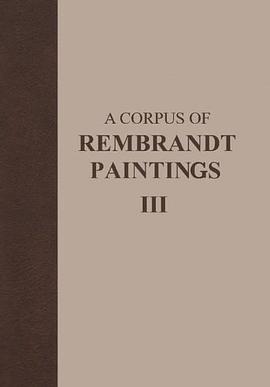
The result of this meticulous research is laid down chronologically in the following Volumes: A Corpus of Rembrandt Paintings, Volume I, which deals with works from Rembrandta (TM)s early years in Leiden(1629-1631), published in 1982. A Corpus of Rembrandt Paintings, Volume II, covering his first years in Amsterdam (1631-1634), published in 1986. THIS VOLUME: A Corpus of Rembrandt Paintings, Volume III, goes into his later years of reputation (1635-1642), published in 1990.
Each Volume consists of a number of Introductory Chapters as well as the full Catalogue of all paintings from the given time period attributed to Rembrandt. In this catalogue each painting is discussed and examined in a detailed way, comprising a descriptive, an interpretative and a documentary section. For the authenticity evaluation of the paintings three different categories are used to divide the works in: A. Paintings by Rembrandt,
B. Paintings of which Rembrandta (TM)s authorship cannot be positively either accepted or rejected, and
C. Paintings of which Rembrandta (TM)s authorship cannot be accepted.
This volume (Volume III) contains 820 pages, starting of with three introductory chapters and discussing 86 paintings. In clear and accessible explanatory text all different paintings are discussed, larded with immaculate images of each painting. Details are shown where possible, as well as the results of modern day technical imaging. In this volume important paintings including the Night Watch are discussed.
作者简介
目录信息
读后感
用户评价
这本书的阅读体验,说实话,需要极大的耐心和专注力,但这绝对是一份值得的投入。它的行文风格极其古典和严谨,学术气息非常浓厚,绝非茶余饭后的消遣之作。我最喜欢它处理“争议性作品”的方式——作者从不轻易下定论,而是将所有支持和反对某个作品归属的论据并陈,让读者自己去权衡判断。这种处理方式体现了一种高度的学术诚信。在对比不同版本或仿作时,书中提供的细节图示非常关键,通过放大镜般的视觉引导,我们可以清晰地看到笔触上的细微差异,这对于鉴别真伪和理解演变过程至关重要。比如,对某些早期草图与最终定稿的对比分析,展现了创作者思维的跳跃性和修正性。这本书的结构组织得如同一个精心规划的博物馆之旅,引导你从一个主题过渡到另一个主题,逻辑链条清晰而又密不透风,让人不得不佩服其作者在梳理海量信息时的卓越能力。
评分这本书最大的价值在于其资料的广度与深度构筑的立体网络。它不仅仅是一部绘画史的研究,更像是一部关于艺术赞助、商业流通乃至文化接受史的侧面记录。我曾被其中一个关于画作在欧洲不同国家间流转的考据深深吸引,作者通过海关记录、私人信件乃至遗嘱中对画作的描述,重建了某一批作品的完整“流亡史”。这使得原本静态的艺术品突然拥有了时间维度上的流动性。此外,书中对不同画室内部师徒关系的探讨也相当精彩,通过对一些模糊归属作品的分析,揭示了当时创作中“集体劳动”的可能性,挑战了我们对于“天才的孤独创作”的传统想象。阅读过程中,我时常需要查阅附录中的专业术语表,这反过来也促使我去深入理解那些晦涩的荷兰语或拉丁语的艺术史文献。总而言之,这本书的阅读过程更像是一场需要不断“激活”知识储备的智力探险,它提供了一个坚实的基础,让所有关于该领域的研究和讨论都有了更可靠的参照系。
评分说实话,这本书的重量和厚度本身就预示了其内容的密度。我个人认为,对于刚入门的艺术爱好者来说,一开始可能会觉得门槛稍高,因为它假设读者已经对文艺复兴晚期到巴洛克早期的艺术语境有所了解。但一旦跨过了初期的适应期,它将为你打开一个全新的、极其精微的世界。我尤其欣赏它在章节布局上所展现出的那种宏大叙事与微观分析的完美平衡。比如,某一整章可能聚焦于“阴影的运用与心理暗示”,然后在该章内部,会穿插引用数十个具体的作品案例进行佐证,每种案例的选取都极具代表性。它不是那种单纯的“名作展示”,而是在“论证”一个核心观点。每次我合上书本,都感觉自己的“视觉词汇量”得到了极大的扩充,我学会了用更精确的语言去描述那些原本模糊的感受,比如“动态平衡”、“空间张力”等等,这些术语在书中得到了非常清晰的定义和实例支撑。
评分这本书简直是艺术史研究的宝藏,尤其是对于那些醉心于十六、十七世纪荷兰黄金时代绘画的学者和爱好者来说。我花费了大量时间沉浸其中,被那种对细节的极致追求深深震撼。书中的排版设计非常考究,无论是对画作高清复制品的呈现,还是对辅助性图表和索引的编排,都体现了出版方严谨的态度。我尤其欣赏它在每一幅作品分析时所采用的跨学科视角,不仅仅局限于笔触和色彩的分析,还深入探讨了当时的社会背景、赞助人制度乃至伦理观念对创作的影响。例如,在讨论一幅肖像画时,作者细致入微地剖析了光影处理如何服务于人物心理的刻画,这远远超出了传统画册的范畴。它不仅仅是提供了一堆图像资料,更像是一部活生生的、关于“如何观看”的教科书。读完后,我感觉自己对那个时代的艺术精神有了更深层次的理解,那种沉甸甸的历史厚重感,通过这本书的文本和图像得到了完美的传达。它强迫你去慢下来,去审视那些你过去可能匆匆略过的微妙之处,每一次重读都能发现新的层次。
评分初次接触这本书时,我主要被它那近乎百科全书式的全面性所吸引。它不仅仅罗列了作品,更像是一个详尽的、编年式的档案库,梳理了大量一手资料,很多内容是以前在其他地方难以查阅的。我特别关注了其中关于材料科学的部分,作者对于颜料的化学构成、底层的准备工作,乃至画布的年代测定所付出的努力,令人赞叹。这使得本书的价值超越了单纯的艺术鉴赏,而上升到了文物保护和修复科学的层面。每当介绍到一幅作品的修复历史,那种对艺术品“生命历程”的追踪,让我感同身受。我记得有段文字详细描述了某一特定时期湿画法和干画法的交替使用对作品耐久性的影响,这种技术层面的深度分析,对于希望了解画家创作过程的读者来说,是极其宝贵的。它不是那种轻飘飘的赞美之词堆砌而成的读物,而是充满了扎实的、可被验证的学术支撑,让人读起来非常踏实,也极具启发性。
评分 评分 评分 评分 评分