
具体描述
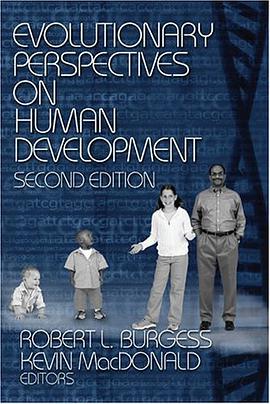
'This new edition of "Evolutionary Perspectives on Human Development" is obligatory reading for anyone interested in the integration of evolutionary theory into developmental psychology...It provides a valuable corrective to recent narrow approaches which argue that the human mind is constructed exclusively of domain-specific mechanisms and which deemphasize the importance of human psychological and behavioral plasticity...Anyone who reads this book will come away with a richer understanding of our shared human nature' - Bill Irons, Northwestern University.'In this volume, Burgess and MacDonald have brought together a distinguished group of psychologists and anthropologists to investigate how - given our evolutionary heritage, genetic make-up and salient environment - behavior, cognition, and emotion unfold from the human organism. They make clear that both evolutionary functional and proximate behavioral perspectives are essential to understanding the human mind and its products. Many of these essays should be required reading for sociobiologists, evolutionary psychologists, and evolutionary anthropologists and their ilk' - Jeffrey Kurland, Penn State.' Its clear that evolutionary biology has a tremendous amount to offer when it comes to our understanding of human development, and yet, many experts in developmental psychology have remained impervious to these insights. At last, this may change: Burgess and MacDonald have compiled a rich array of theory and data, much of it contributed by the leading lights of evolutionary psychology (or, if you prefer, sociobiology). A very valuable collection and one that might help define a new and important field' - David P. Barash, University of Washington. "Evolutionary Perspectives on Human Development, Second Edition" considers the role of evolutionary theory in the field of developmental psychology to examine important topics of individual human development. This unique book fills an important gap in the literature, applying evolutionary models to human development by focusing on central development issues.The book emphasizes the importance of both domain-general evolved psychological mechanisms and domain-specific processes. The text also integrates behavior-genetic research with evolutionary and developmental principles. In this contributed volume, editors Robert L. Burgess and Kevin MacDonald have brought together a distinguished group of social and behavioral scientists employing multiple levels of analysis drawn from a variety of academic disciplines. This diverse group of contributors illustrates the enormous power of evolutionary theory by elucidating human behavior and its development and the various ways it is manifested in different environments. "Evolutionary Perspectives on Human Development" applies evolutionary theory to such topics as parent-child relationships, the maltreatment of children, psychopathology, cooperation and competition among siblings, and the acquisition of vital resources in different cultural settings from an evolutionary point of view.This title includes key features such as: comprehensive coverage of the impact of evolutionary theory on human development that provides students with the most thorough foundation available in this area; contributions by leading scholars and researchers that expose readers to the exciting research and developments that have been occurring in the field; and, an introductory chapter written by the volume editors that provides an accessible overview of the book. "Evolutionary Perspectives on Human Development" provides state-of-the-art groundwork in evolutionary theory as viewed by leading thinkers in the field.
作者简介
目录信息
读后感
用户评价
我必须承认,这本书的参考书目部分本身就是一份宝藏。它并非简单地罗列引用来源,而是经过了作者的精选和编排,形成了一条清晰的知识传承链。对于那些想进一步钻研特定领域的读者来说,这无疑是极大的便利。我发现自己时不时会跳到附录去查阅几篇经典论文的摘要,这种“主动学习”的体验非常棒。尤其在探讨人类语言的起源时,书中对“社会脑假说”的论述,结合了神经科学的最新发现,展现了一种跨学科合作的典范。它没有将语言仅仅视为交流工具,而是将其视为一种对群体内部复杂社会关系进行建模的认知能力。作者通过对灵长类动物信息传递机制的对比,清晰地勾勒出了人类语言的独特性所在——那是一种能够处理高度虚构情境和非直接信息的能力。这种对“独特性”的深挖,让我对人类自身的潜能和局限性有了更深层次的敬畏。整本书读下来,我感觉自己不仅仅是获取了知识,更像是参与了一场关于人类存在的深刻对话。
评分我不得不说,作者的语言风格带有一种迷人的古典美学,尽管主题是前沿的科学探讨,但行文间却充满了人文主义的光辉。它不像某些严肃的学术专著那样冷硬枯燥,反而像是与一位学识渊博的老者进行的深夜对谈。这种风格在阐述那些高度抽象的理论时尤其有效,比如关于“互惠利他主义”的起源部分。他没有直接给出数学模型,而是通过讲述古代部落间的资源共享故事,将理论具象化。这种叙事技巧极大地降低了理解门槛,让即便是对进化心理学不甚熟悉的读者也能迅速进入状态。更令人称道的是,书中对伦理困境的探讨也毫不回避。当进化论的解释似乎与现代社会的道德标准产生冲突时,作者没有选择回避或简单地打圆场,而是坦诚地展示了这种内在的矛盾,并引导读者思考人类心智的“滞后性”——即我们的大脑仍带着远古的印记,却被抛入了一个指数级变化的新世界。这种坦诚的姿态,是任何肤浅的读物所不具备的深度。
评分这部巨著的封面设计着实引人注目,那种沉稳的色调和精妙的排版,透露出一种学术的厚重感,让人在书店里一眼就能被它捕获。我原本是抱着了解人类“从哪里来,到哪里去”的宏大叙事目的去翻阅的,期待着能在其中找到关于我们物种演化历程的清晰脉络。然而,当我深入阅读后,发现它更像是一部将哲学思辨与生物学观察巧妙糅合的文本。作者的笔触极为细腻,尤其在探讨“适应性”这个核心概念时,没有停留在教科书式的简单定义上,而是深入挖掘了环境压力如何塑造了人类行为的底层逻辑。比如说,书中对狩猎采集社会中性别分工的讨论,就远超出了生物本能的范畴,而是着重分析了社会结构和资源分配如何反过来强化或修正了这些生物倾向。阅读过程中,我时不时会停下来,思考书中那些看似平常的现象背后,究竟隐藏着多少代代相传的进化残留。它迫使我跳出现有的文化框架,从一个更深、更本源的角度去审视我们习以为常的生活方式。这种宏大叙事下对个体经验的不断拉扯和对照,让人在享受阅读的同时,也感到思维被不断挑战和拓宽。
评分这本书的结构安排堪称教科书级别的典范。它采用了清晰的递进逻辑,从最基础的分子生物学基础开始,逐步扩展到种群遗传学,再过渡到行为生态学,最后聚焦于人类特有的社会认知复杂性。这种层层递进的方式,让读者仿佛在攀登一座知识的高峰,每登上一层,视野就开阔一分。我特别关注了其中关于“依恋理论”在跨文化研究中的应用章节。作者没有把依恋模式视为固定不变的“程序”,而是强调了环境不确定性如何调节依恋行为的表达强度。举例来说,在资源极度匮乏的地区,母亲对后代的过度保护可能是一种适应性策略,而在富足的社会中,这种保护则可能演变为过度干预。这种细致入微的比较分析,展示了理论解释的强大灵活性和边界条件。阅读体验是极其充实且富有条理性的,每读完一章,我都会有一种豁然开朗的感觉,仿佛被授予了一套新的、解析世界的“工具箱”,能更精确地理解周遭的人和事。
评分这本书的叙事节奏把握得相当老练,几乎没有一处显得拖沓或多余。作者似乎深谙如何通过精心挑选的案例来烘托主题。我特别欣赏它对“文化演化”与“基因演化”之间复杂互动的处理方式。很多同类书籍往往会过度强调基因决定论,但在这里,文化被描绘成一个独立且强大的选择力量,它与基因信息并行不悖,甚至在某些快速变化的社会情境中,扮演着更主要的驱动角色。书中通过对不同文明历史中工具制造、语言复杂性提升的案例分析,生动地展示了这种“双重演化”的张力。比如,对早期农业革命后人类认知能力的结构性转变的描述,就极其到位,它不仅仅是关于营养的改善,更是关于新的社会组织形式对大脑功能需求的反向塑造。这种多层次的分析,使得整部作品的层次感陡然提升,不再是扁平的科普读物,而更接近于一部深入探讨人类心智如何应对环境变迁的深度报告。读完后,我感到自己对“进步”这个概念有了全新的认识——它不是一条直线,而是无数次适应与反思的复杂叠加。
评分 评分 评分 评分 评分