
具体描述
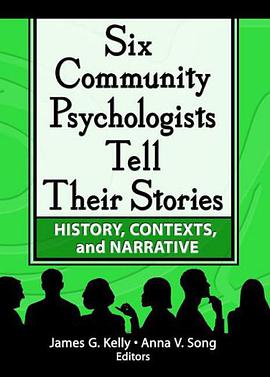
Six Community Psychologists Tell Their Stories: History, Contexts, and Narrative presents the unique opportunity to examine how culture and social norms have combined with chance, coincidence, and serendipity to form the professional identities of men and women who were among the first generation trained to work in the field of community psychology. The book’s contributorsdisciples of those who founded the sub-fieldprovide insights into the factors (social status, family history, education, social environment, cultural events, important ideas) that furthered their professional development in an emerging field. Their storiesstill works in progressgo far beyond facts, figures, dates and details to document what they’ve done with their livesand why.
Six esteemed community psychologiststhree men who began their careers as the field was established in the mid-1960s and three women who took part in the increased opportunities available in the 1970srecall how important events and social movements affected them as they fulfilled their personal and professional goals. They discuss the effects of family values and styles, class, ethnic status, gender, racism, anti-Semitism, the power of social settings, supportive education and work settings, and the impact of post-World War II government programs on their education, including the G.I. Bill, and the establishment of United States Public Health Service fellowships. Their stories touch on many common themes, including social marginality and sex discrimination, making personal discoveries in response to educational experiences, the significance of fate, and the experience of gaining a new or renewed sense of self through meaningful events, occasions, and people.
These Six Community Psychologists Tell Their Stories:
Dr. Jean Ann Linney (University of South Carolina), whose experiences involve a combination of idealism, supportive contexts, and good fortune
Dr. Julian Rappaport (University of Illinois at Urbana-Champaign), who views himself as an insider/outsider, whose personal and professional identity crosses traditional boundaries
Dr. N. Dickon Reppucci (University of Virginia), who became a community psychologist by accident, an outgrowth of his involvement with social protest in the 1960s
Dr. Marybeth Shinn (New York University), whose story reflects her interest in the social contexts of neighborhoods and community settings
Dr. Edison J. Trickett (University of Illinois at Chicago), who writes of the life experiences that have influenced both his work and his longtime involvement in folk music
Dr. Rhona S. Weinstein (University of California at Berkeley), whose work in the dynamics of self-fulfilling prophecies in educational settings developed early in her career Insightful commentary on their recollections is provided by two distinguished scholarsHenrika Kuklick, Science Historian at the University of Pennsylvania, and Dan McAdams, Professor of Psychology at Northwestern University.
Six Community Psychologists Tell Their Stories: History, Contexts, and Narrative is a unique resource for community psychologists, autobiographical researchers, and anyone interested in the history of psychology.
作者简介
目录信息
读后感
用户评价
我发现这本书在结构安排上非常巧妙,它没有按照时间线或主题强行划分,而是通过几位心理学家不同的人生转折点来串联起整个叙事,使得阅读过程充满了一种探索的乐趣。比如,从一位刚毕业的理想主义者,到一位在政府部门努力推动政策改革的务实派,再到一位专注于培训下一代工作者的导师,他们的视角提供了多维度的观察窗口。这种多视角的呈现,使得读者能够清晰地看到“社区心理学”这个专业领域是如何在不同历史时期和不同机构背景下,不断自我修正和进化的。它不是一个固定的公式,而是一条不断流动的河流,需要从业者根据水流的形态随时调整航向。我甚至忍不住在阅读过程中,想象如果我能和他们坐在一起喝杯咖啡,他们会给我哪些截然不同的建议。
评分最让我印象深刻的,是这本书所蕴含的那种深厚的人文关怀,它超越了专业术语的限制,直抵人性的核心。每一位讲述者都反复强调,技术和理论只是工具,真正起作用的是建立在信任基础上的连接。他们讲述了如何通过看似微不足道的举动,比如仅仅是按时参加社区会议、记住一个家庭的宠物名字,来慢慢瓦解居民的防备心。这种对“非正式权力”和“日常互动价值”的肯定,非常具有颠覆性。它让我重新审视了自己过去过于注重量化评估的倾向,开始反思那些无法被量表捕捉的、但却是社区康复的关键因素——比如社区的“凝聚力”和“被看见的感觉”。这是一部关于如何真正“融入”而非仅仅“服务”的实战指南,充满了温暖而坚定的力量。
评分这本书的叙事节奏把握得相当到位,它没有一味地强调成功学,反而将大量的篇幅放在了“职业倦怠”与“个人边界”的维护上。这在心理健康领域尤其重要,因为服务他人往往意味着无休止地吸收他人的痛苦和负面情绪。其中一位讲述者坦言,她曾一度因为过度投入而几乎崩溃,是另一位同行的提醒,让她开始有意识地为自己的情绪建立“防火墙”。这种关于自我关怀的探讨,是许多职业培训中常常被轻描淡写或完全忽略的部分。对我而言,这部分内容是及时雨,它提醒着我,要成为一个有效的助人者,首先必须确保自己这座“容器”是满盈且稳定的。作者们毫不避讳地分享了他们如何平衡家庭责任与高强度工作,这种坦诚让人感到被理解和支持。
评分阅读体验中,最让我感到震撼的是那些关于文化敏感性和本土化实践的讨论。不同于标准化的干预手册,这几位心理学家的故事清晰地展示了,每一个社区都有其独特的“基因”和运行逻辑。有位专家分享了她在少数族裔社区进行心理健康推广时的经历,她提到,最初尝试直接套用主流的CBT框架完全失败了,直到她开始学习倾听当地的民间叙事和传统信仰体系,才找到了真正的突破口。这种从“自上而下”到“自下而上”的范式转变,对我当前正在进行的研究具有极大的启发价值。它不再是冰冷的理论应用,而是一种需要极高情商和同理心的“在地智慧”的培养过程。感觉自己仿佛完成了一次跨越地域和文化的田野考察,收获远超预期的深度认知。
评分这本书的包装设计实在太吸引人了,封面那带着复古感的排版和略显斑驳的纹理,一下子就把我的思绪带回了上世纪七八十年代,那种朴素却充满力量的时代感。我本来以为这会是一本纯粹的学术专著,但翻开后发现,它更像是一部精心编排的个人回忆录合集,那种娓娓道来的叙事方式,让人感觉仿佛是坐在一个温暖的壁炉边,听着几位资深前辈分享他们的人生智慧。作者们显然没有把重点放在那些晦涩难懂的理论模型上,而是聚焦于“人”本身——那些在社区服务一线摸爬滚打的真实经历。我尤其欣赏他们对挫折和困惑的坦诚记录,比如面对社区抗拒时的那种无力感,以及在资源极度匮乏的情况下如何坚持理想。这种真实感,远比教科书上的完美案例更有感染力,它让我深刻体会到,社会心理学的工作从来都不是在象牙塔里完成的,而是渗透在柴米油盐和邻里纠纷之中的。
评分 评分 评分 评分 评分