
具体描述
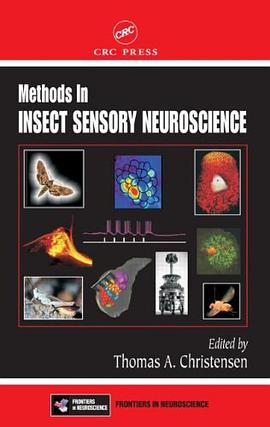
Insects are among the most diverse and adaptable organisms on Earth. They have long been our chief competitors for food and are responsible for spreading devastating afflictions such as malaria and encephalitis. The insects' ability to thrive is due in large part to their well-developed sensory systems, which present a host of novel physiological, biochemical, and behavioral attributes that underlie their remarkable feats of sensory performance. "Methods in Insect Neuroscience" is the first text to showcase the tremendous variety of methods that are available to study the sensory capabilities of insects. It covers the complete spectrum of sensory modalities in insects, from vision and audition, to chemoreception and multimodal processing.The book is designed to serve as a how to guide for putting into practice a wide range of techniques, including behavioral observation, brain imaging, single- and multi-unit electrophysiology, computer modeling/signal processing, and robotics to address innumerable questions. A truly multidisciplinary synthesis of neurobiological, behavioral, and computational approaches to sensory-information processing is most likely to yield our richest understanding of the mechanisms that underlie sensation and perception. In that spirit, this book contains chapters by leading neuroethologists, comparative biologists, neuroscientists, computational biologists, geneticists, and bioengineers who have adopted insects as their models. Their hard work and dedication is evident in the quality of detail contained in every chapter.This book is intended for seasoned neuroscientists looking for state-of-the-art information, as well as discussions on the open-ended questions facing sensory neuroscience today. It is also intended as a primer for newcomers utilizing insects to embark on a study of sensory mechanisms. The opening section provides background information and references about the basic organization of the insect brain and the behavioral strategies used by insects to navigate their complex and varied environments. The latter sections are designed to provide more detailed information about specific sensory modalities and the tools that are used to study them.
作者简介
目录信息
读后感
用户评价
这本书的装帧质量非常高,纸张厚实,印刷清晰锐利,这对于一本需要反复查阅的专业书籍来说至关重要。我一直认为,一本好的工具书,除了内容本身,它的物理存在感和耐用性同样重要。我通常习惯在实验台边阅读,频繁翻阅和做笔记是常态,所以书本的耐用性直接影响使用体验。这本书的装订看起来非常结实,即使是频繁翻开到某个特定章节,也不用担心书脊会轻易损坏。此外,字体选择和行距也考虑到了长时间阅读的舒适度,没有那种刺眼的廉价感。这种对物理细节的打磨,往往暗示了作者和出版商对内容的尊重和对读者的负责态度,让人在使用时心情愉悦。
评分我正在研究跨物种信息传递的机制,特别是那些依赖非语言或化学信号的交流方式。我希望找到一本涵盖了从宏观行为观察到微观受体层面的综合性读物。这类书籍不应该仅仅罗列现象,更重要的是提供一套系统的分析框架,用以解析复杂生态系统中信息是如何编码、传输和解码的。我特别关注那些描述不同感官模态之间如何相互作用、整合信息来驱动决策过程的论述。如果书中能提供关于信号处理的数学模型或者计算生物学的视角,那就更完美了。那种能将基础的分子生物学知识与复杂生态适应性行为联系起来的深度解析,才是我真正寻求的知识宝藏。
评分这本书的封面设计挺吸引人的,色彩搭配很有现代感,尽管我完全不了解昆虫神经科学这个领域,但它给我一种很专业、很严谨的感觉。内页的排版也十分清晰,图表和文字的比例把握得很好,看得出来编辑团队在细节上花了不少心思。从目录来看,内容似乎涵盖了从基础的神经结构到复杂的行为调控,对于一个外行来说,光是看着这些章节标题就觉得信息量巨大,充满了探索的欲望。我特别注意到其中有一部分提到了“信号转导的分子机制”,这听起来就充满了高深的技术含量,让人不禁好奇作者是如何将如此复杂的科学概念用易于理解的方式呈现出来的。整体来说,这本书给人的第一印象是制作精良、内容扎实,非常适合那些希望深入了解特定科学领域的读者,即使只是作为一个参考资料,它也显得非常可靠。
评分作为一名热衷于探索生命适应性策略的爱好者,我总是对那些展示生物如何以最小的能量消耗完成最复杂任务的案例着迷。我尤其想了解那些在极端条件下(比如完全黑暗或高压深海)进化的感官系统,它们在物理学原理的限制下,是如何演化出令人惊叹的解决方案的。我寻找的不是教科书式的概念堆砌,而是那种充满了案例研究和前沿发现的“探险故事”。我希望书中能详细阐述特定感官通道的独特生物化学反应路径,并将其置于其所处的生态位进行深入剖析。那种能够激发读者对自然界精妙设计的敬畏之心的叙述方式,对我有着巨大的吸引力。
评分我最近对生物物理学中关于感觉器官的感知极限产生了浓厚的兴趣,尤其是对极端环境下的生物如何维持其感官灵敏度感到好奇。我希望找到一本能够深入探讨这些物理限制的书籍。市面上大部分关于神经科学的书籍往往侧重于哺乳动物或人类的视觉、听觉系统,这方面的内容虽然也很精彩,但总感觉缺少了从更古老、更基础的生命形式中寻找答案的角度。我一直在寻找那种能够将生物学原理与物理学定律紧密结合,并且能够提供大量实证数据的著作。理想中的那本书,应该能展示出不同的生物如何通过特化的结构来优化其对环境刺激的捕获效率,从而揭示出生命在进化压力下的智慧。
评分 评分 评分 评分 评分