
具体描述
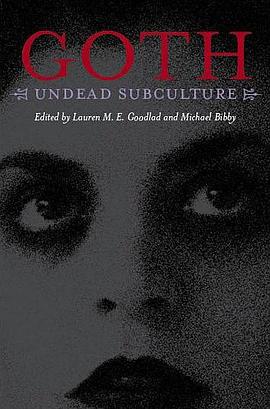
Since it first emerged from Britain’s punk-rock scene in the late 1970s, goth subculture has haunted postmodern culture and society, reinventing itself inside and against the mainstream. Goth: Undead Subculture is the first collection of scholarly essays devoted to this enduring yet little examined cultural phenomenon. Twenty-three essays from various disciplines explore the music, cinema, television, fashion, literature, aesthetics, and fandoms associated with the subculture. They examine goth’s many dimensions—including its melancholy, androgyny, spirituality, and perversity—and take readers inside locations in Los Angeles, Austin, Leeds, London, Buffalo, New York City, and Sydney. A number of the contributors are or have been participants in the subculture, and several draw on their own experiences.
The volume’s editors provide a rich history of goth, describing its play of resistance and consumerism; its impact on class, race, and gender; and its distinctive features as an “undead” subculture in light of post-subculture studies and other critical approaches. The essays include an interview with the distinguished fashion historian Valerie Steele; analyses of novels by Anne Rice, Poppy Z. Brite, and Nick Cave; discussions of goths on the Internet; and readings of iconic goth texts from Bram Stoker’s Dracula to James O’Barr’s graphic novel The Crow. Other essays focus on gothic music, including seminal precursors such as Joy Division and David Bowie, and goth-influenced performers such as the Cure, Nine Inch Nails, and Marilyn Manson. Gothic sexuality is explored in multiple ways, the subjects ranging from the San Francisco queercore scene of the 1980s to the increasing influence of fetishism and fetish play. Together these essays demonstrate that while its participants are often middle-class suburbanites, goth blurs normalizing boundaries even as it appears as an everlasting shadow of late capitalism.
Contributors: Heather Arnet, Michael Bibby, Jessica Burstein, Angel M. Butts, Michael du Plessis, Jason Friedman, Nancy Gagnier, Ken Gelder, Lauren M. E. Goodlad, Joshua Gunn, Trevor Holmes, Paul Hodkinson, David Lenson, Robert Markley, Mark Nowak, Anna Powell, Kristen Schilt, Rebecca Schraffenberger, David Shumway, Carol Siegel, Catherine Spooner, Lauren Stasiak, Jeffrey Andrew Weinstock
“Goth: Undead Subculture is a very engaging read—a nice mélange of ethnographic anecdote, cultural criticism, and historical analysis—in which a multidisciplinary crew of contributors analyzes an important and complex subculture through its fashions, music, dancing, literature, sexual practices, aesthetic ideals, theatrical displays, historical precedents, and ideologies.”—Robert Walser, author of Running with the Devil: Power, Gender, and Madness in Heavy Metal Music
“Goth creates its distinctive way of life by appropriating materials from a vast array of cultural phenomena—post-punk music, gothic literary tradition, pre-Christian mythology, sexual nonconformity, aesthetic avant-gardes—all of which it adopts primarily as style. Goth style is thus both dizzyingly heterogeneous and instantly recognizable. It is hard to imagine a single book that could do this subculture justice; yet by assembling contributors from a range of disciplines and judiciously including many voices of subcultural participants themselves, Goth: Undead Subculture manages to depict, while also reflecting critically on, this subculture’s enduring appeal. This collection will be the definitive work on its topic.”—Tim Dean, author of Beyond Sexuality
作者简介
Lauren M. E. Goodlad is Associate Professor of English and a member of the Unit for Criticism and Interpretive Theory at the University of Illinois, Urbana-Champaign. She is the author of Victorian Literature and the Victorian State: Character and Governance in a Liberal Society. Michael Bibby is Professor of English at Shippensburg University. He is the author of Hearts and Minds: Bodies, Poetry, and Resistance in the Vietnam Era and the editor of The Vietnam War and Postmodernity.
“Goth: Undead Subculture provides an exceptional read on the Goth subculture, which itself proves a unique subject for any subcultural study. This book is for those who want to delve into the dark waters of the Goth subculture or for anyone who just wants to learn a little more about the origins and orientations of an often misunderstood and misrepresented subculture.”
Maryanne Mangano, M/C Reviews
--------------
“Goth: Undead Subculture is an incisive book on the subject. The editors have struck a perfect balance that both engages and entertains, and that’s no small feat. The very idea of trying to encompass everything from musical tastes, to the spiritual practices of Goth without exhausting potential readers is what makes this book a great read. Not only will it grace the shelves of many Goths’ private collections, but stands to become a definitive text. Naturally, it’s beautifully designed and would be a handsome complement to any coffee table and is sure to spark lively conversations at house parties, cafés, clubs and classes alike! Five out of five coffins!”
Kit McAllister, Morbid Outlook
--------------
“Goth:Undead Subculture, Lauren M. E. Goodlad and Michael Bibby's collection of scholarly essays (the first such book devoted solely to the scrutiny of all things goth, the editors claim), succeeds when its contributors take clearly delineated topics and time frames (Tim Burton's nostalgia for 1950s and '60s monster movies, or Buffalo's nightclub scene from 1982 to 1984) as their objects of inquiry. The pièce de résistance in this mode is Bibby's stunningly precise reading of Joy Division's history.”
Andrea Walker, Bookforum
--------------
“Dust off those whips and chains! Editors Goodlad and Bibby manage to take a marginalized area of popular culture and turn it into something everyone can and will relate to. Using international experts from the academy, as well as the ‘real world,’ Goth: Undead Subculture speaks to a broad, though educated, audience. From masochistic fashion to Buffy the Vampire Slayer, this powerful text illuminates the historical and theoretical impact of the Gothic subculture, taking readers on a ride through Tim Burton films, Poppy Z. Brite novels and everything in between. No stone is left unturned as the text offers a multitude of visual examples throughout, my favorite being a CD cover of Gen from the Genitorturers clad in leather biker-gear while piercing her tongue with some kind of skewer. Ouch.”
Rebecca Housel, Journal of Popular Culture
--------------
“Here are 22 essays that will appeal to the pop-culture critic, academic or general reader who’s always been curious about those mysterious, often mushroom pale individuals who wear head-to-toe black in the summer time. . . . [A] reader who picks and chooses at this book’s dark buffet . . . will find much to enjoy.”
Theresa Starkey, Paste
--------------
“Like most of the subcultures to which people make allegiance in youth, but maintain to some degree in adulthood, Goth is a confluence off hobbyism and a passionate sense of the constructed self. This is well understood by those pieces in this intelligent collection of writings that are primarily documentary accounts of the authors’ involvement in, and self-identification with, Goth, or those which celebrate the fashion, the music, and the books.”
Roz Kaveny, Times Literary Supplement
--------------
“The book’s strength lies in both its multiplicity of voices and rich modes of analysis . . . This book helps to strategically place goth within a nexus of music, fashion, literary, and related subcultural phenomena. An extensive bibliography facilitates further research. Recommended.”
G. R. Innes, Choice
--------------
“The essays in this collection discuss all the traditional areas of cultural studies—performance, community, self-representation, gender relations—but also consider some of goth’s more oblique elements, such as literary styles, song lyrics, nostalgia, fetishism, and its connections with religion and apostasy. . . . [R]efreshingly free of the kind of heavy theoretical jargon that would make even the palest goth blanch in dismay.”
Mikita Brottman, The Chronicle Review
--------------
“This academic-minded book is best suited to cultural studies aficionados and Goths themselves, but may be useful to anyone seeking to understand the ideologies and lifestyles of the black-eyeliner set. It exhumes the roots of goth in punk rock, vampire lore, Renaissance fashions, and other sources; probes identity and community; and traces goth’s arc in pop culture, from David Bowie and Siouxie Sioux to Edward Scissorhands and Buffy the Vampire Slayer.”
Keith Goetzman, Utne Reader
--------------
“This collection of essays, focusing heavily on goth and gender, demonstrates the complexity of an often misunderstood subculture.”
Jenna Humphrey, Curve
--------------
“[A]s the first anthology of its kind, it offers a timely and welcome contribution to scholarship in this field.”
Michelle Phillipov, Media International Australia
--------------
目录信息
读后感
用户评价
人物塑造方面,这本书走的是一条极度内省和高度风格化的道路。主角的心理活动占据了叙事的大部分篇幅,但作者处理这种内心独白的方式非常高明,他没有采用传统的心理解剖,而是将角色的恐惧、欲望和矛盾通过一系列象征性的行为和梦境来侧面展现。你很难用简单的“好人”或“坏人”来定义他们,他们更像是某种哲学命题的具象化,被困在自己的逻辑怪圈里无法自拔。特别是几个配角的出现,虽然戏份不多,但每一个都像是一块破碎的镜子,反射出主角性格中不同面向的扭曲。他们的对话充满了试探、双关和未尽之意,每一次交流都像是两个孤独的灵魂在黑暗中摸索彼此的边界。我对这种拒绝直白表达、转而依赖隐晦暗示的人物互动模式感到非常着迷,它要求读者必须积极地参与到解读的过程中,去填补那些被留白的空白之处。
评分这本小说的封面设计简直是视觉盛宴,那种深沉的暗色调与某种古典的、近乎病态的优雅交织在一起,一下子就抓住了我的眼球。我拿到手的时候,就有一种强烈的预感,这不会是一部轻松愉快的读物。装帧的质感非常考究,拿在手里沉甸甸的,仿佛握住了一段被尘封的秘密。我特别喜欢扉页上的那段引文,虽然我当时对正文内容一无所知,但那几行字就奠定了一种阴郁而又充满诗意的基调。它暗示着故事会涉及某种宏大的、或许是宿命般的冲突,而且叙事风格绝不会是直白的白描,更像是用油彩层层叠加出来的画面,充满了象征和隐喻。翻开第一页,那种墨水的味道混合着纸张的陈旧感,让我立刻感觉自己被拉进了一个完全不同的时空。我期待着一个关于美学、颓废与某种深刻人性探讨的故事,一个能让我沉浸其中,思考良久的文本。这本书的外部包装,可以说已经成功地完成了它作为“门槛”的使命,它筛选出了那些真正对“暗黑美学”有所追求的读者。
评分故事的氛围营造是这部作品最令人称道之处,它成功地构建了一个近乎令人窒息的、具有强烈空间感的背景。我可以清晰地“看到”那些潮湿的走廊、高耸的拱顶和永远无法完全散去的薄雾。作者似乎对环境的描绘有着近乎病态的痴迷,每一个场景的描绘都充满了细节,但这些细节不是用来交代背景的,而是用来烘托人物内心的焦灼与孤立的。例如,某处描写古老宅邸的雕花木饰时,那种腐朽感几乎能透过纸面渗透出来,让人联想到时间的无情侵蚀。这种对“场所”的深度挖掘,使得环境本身成为了一个有生命的、不断施压的角色。我常常觉得,书中的人物与其说是活在故事里,不如说是被困在了这个由阴影和历史构筑的迷宫之中。读完某一章,我甚至会下意识地环顾四周,确认自己是否真的处于一个阳光明媚的房间。
评分总的来说,这本书带给我的是一种深刻的、近乎形而上的震撼,而非简单的情节满足感。它不是那种读完会让你感到“痛快”或“解气”的作品,而更像是一次精神上的“朝圣”或“受难”。它探讨的主题似乎围绕着禁忌、记忆的不可靠性以及美与毁灭的共生关系。我感觉自己像是在一个巨大的、巴洛克式的图书馆里迷失了方向,每一扇门后面似乎都有一个更深奥的谜题在等待着。这本书的后劲非常足,读完很久之后,某些特定的意象和氛围依旧会时不时地跳出来困扰我。它挑战了我对叙事清晰度的传统期待,反而用其模糊性、其深邃的黑暗美学,提供了一种近乎冥想的阅读体验。这是一部绝对不会被大众市场所理解的作品,但对于那些寻求文学深度和风格极致的读者而言,它无疑是一次不容错过的、值得反复品味的旅程。
评分阅读体验上,作者的语言功力简直可以用“鬼斧神工”来形容。他的句法结构非常复杂,经常使用长到几乎需要喘息才能读完的长句,但奇怪的是,这种繁复感非但没有造成阅读障碍,反而形成了一种催眠般、仪式性的节奏感。你会感觉自己不是在“阅读”文字,而是在跟随一条蜿蜒曲折的河流漂流,时而平静,时而急流险滩。我注意到他非常偏爱使用罕见且极富画面感的词汇,比如描述光线时,他不用“微弱”,而是会用一些更具宗教色彩的词语来形容光线如何“挣扎”或“被吞噬”。这种对语言的近乎苛求的打磨,让每一个段落都像是一件精心雕琢的艺术品。读到一些关键情节时,我甚至会停下来,反复咀嚼那些词语的排列组合,思考作者为何选择这个特定的动词而非另一个。这无疑是一本需要慢读、细品的书,它不适合在通勤的嘈杂环境中匆忙翻阅,它需要一个安静的角落,和一盏昏黄的灯光来配合。
评分装帧……
评分装帧……
评分装帧……
评分装帧……
评分装帧……