
具体描述
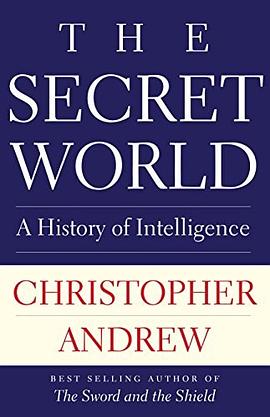
The history of espionage is far older than any of today’s intelligence agencies, yet the long history of intelligence operations has been largely forgotten. The codebreakers at Bletchley Park, the most successful World War II intelligence agency, were completely unaware that their predecessors in earlier moments of national crisis had broken the codes of Napoleon during the Napoleonic wars and those of Spain before the Spanish Armada.
Those who do not understand past mistakes are likely to repeat them. Intelligence is a prime example. At the outbreak of World War I, the grasp of intelligence shown by U.S. President Woodrow Wilson and British Prime Minister Herbert Asquith was not in the same class as that of George Washington during the Revolutionary War and leading eighteenth-century British statesmen.
In this book, the first global history of espionage ever written, distinguished historian Christopher Andrew recovers much of the lost intelligence history of the past three millennia—and shows us its relevance.
作者简介
Andrew is Professor of Modern and Contemporary History, former Chair of the History Faculty at Cambridge University, Official Historian of the Security Service (MI5), Honorary Air Commodore of 7006 (VR) Intelligence Squadron in the Royal Auxiliary Air Force, Chairman of the Cambridge Intelligence Seminar, and former Visiting Professor at Harvard, Toronto and Canberra. Andrew is also co-editor of Intelligence and National Security, and a presenter of BBC Radio and TV documentaries, including the Radio Four series What If?. His twelve previous books include a number of studies on the use and abuse of secret intelligence in modern history. He is currently a governor of Norwich School where in the 1950s he was a pupil, and has recently retired from his post as President of Corpus Christi College, Cambridge.
Andrew studied under the historian and wartime cryptanalyst Sir Harry Hinsley, in common with fellow historian Peter Hennessy.Former students of Andrew - including Peter Jackson, Richard Aldrich, Tim Edwards, David Gioe, Larry Valero, and Wesley Wark - now staff the intelligence studies and intelligence history posts in universities around the English-speaking world, while many others - such as Thomas Maguire and Christian Schlaepfer - continue to work in intelligence related positions in both government and private industry.
Andrew produced two studies in collaboration with two defectors and former KGB officers, Oleg Gordievsky and Vasili Mitrokhin. The first of these works, KGB: The Inside Story was a scholarly work on the history of KGB actions against Western governments produced from archival and open sources, with the critical addition of information from the KGB defector Gordievsky. His two most detailed works about the KGB were produced in collaboration with KGB defector and archivist Vassili Mitrokhin, who over the course of several years recopied vast numbers of KGB archive documents as they were being moved for long storage. Exfiltrated by the Secret Intelligence Service in 1992, Mitrokhin and his documents were made available to Andrew after an initial and thorough review by the security services. Both volumes, 1999's The Sword and the Shield: The Mitrokhin Archive and the Secret History of the KGB and the 2005 edition The World Was Going Our Way: The KGB and the Battle for the Third World (both volumes simply titled The Mitrokhin Archive in UK publication) resulted in some public scandal as they revealed the names of former KGB agents and collaborators in government, industry and private life around the world.Most famous amongst these was the revelation in 1999 of the "Grandmother Spy", 87-year-old Melita Norwood, who had passed industrial information and other intelligence to the KGB for more than 50 years.
The Cambridge Intelligence Seminar
The Cambridge Intelligence Seminar, chaired by Andrew (and founded by his late mentor Harry Hinsley), convenes regularly at Corpus Christi College, Cambridge. Active and former senior members of various intelligence services around the world participate in the discussions, with most participants made up of Andrew's graduate students, fellow historians and other academics. At these meetings, detailed analysis of various past and present intelligence affairs is discussed under the Chatham House Rule, with the confidence that it will not be attributed to a person or organisation.Professor Andrew is on the Editorial Board of Journal of Intelligence and Terrorism Studies
目录信息
读后感
用户评价
这部作品的社会批判力度是其最尖锐的一面,尽管它披着一层厚厚的奇幻外衣。故事背景设定在一个科技高度发达,但精神世界却极度贫瘠的反乌托邦社会。这个社会通过一种名为“和谐频率”的技术,系统性地压制了个体所有可能引发冲突或焦虑的强烈情感,美其名曰“社会稳定”。主角偶然发现了一种“失调”的音乐,这种音乐能够短暂地撕开“和谐频率”的伪装,让人们重新体验到愤怒、悲伤、甚至狂喜。我特别关注了其中对“记忆存储”的描述,人们不再依赖生物大脑记忆,而是将所有数据上传到中央云端,但这却导致了人们失去了构建个人身份的能力。作者通过一个地下抵抗组织的故事线,探讨了“拥有痛苦记忆的权利”与“虚假而永恒的幸福”之间的伦理困境。读到最后,我久久不能平静,它迫使我反思我们这个时代对便捷和无痛体验的无限追求,究竟是以牺牲多少人性中本质的、复杂的美好为代价。这本书不仅仅是一个故事,它更像是一份对未来沉睡的我们,发出的振聋发聩的警报。
评分我必须承认,这本书的叙事结构非常大胆,近乎于一种后现代的碎片化尝试。它不是那种让你一气呵成的流畅读物,更像是一堆精美打磨过的、带有强烈个人印记的日记片段、被截断的信件、以及一些看起来像是警方审讯记录的文本集合。这种不连贯性起初让人感到挫败,但我很快意识到,这正是作者想要营造的氛围——一种被强权或某种不可名状的灾难打碎的记忆。全书没有一个绝对可靠的叙述者,我们只能从这些零碎的线索中去拼凑出一个宏大的、关于权力更迭和集体遗忘的历史图景。其中有几章,作者完全摒弃了对话,仅用一组组高度风格化的物品清单来推进情节,比如“十二件必须在午夜前销毁的物件”、“一篮子被禁止的种子”。这种极简主义的表达方式,反而激发出读者内心最强烈的想象力,你不得不去追问:这些物件代表什么?这些种子为何如此危险?它考验了读者的耐心,但回报是丰厚的,因为它强迫你从一个被动的接受者,转变为一个主动的意义建构者。
评分这部作品简直是一场味觉与想象力的狂欢,作者以一种近乎催眠的细腻笔触,描绘了一个充斥着古老香料和失落文明遗迹的异域国度。我仿佛能闻到空气中弥漫的丁香、肉桂混合着海盐的气息。故事的主线围绕着一位年轻的制图师展开,他受雇于一个神秘的东方商会,任务是绘制一片被认为是神话的“无光之海”的地图。然而,随着他的旅程深入,地图上的符号开始变得有生命,现实与他听到的民间传说之间的界限也日益模糊。尤其让我印象深刻的是他对当地市集场景的刻画,那里的喧嚣、欺诈、以及转瞬即逝的美丽,都被捕捉得淋漓尽致。我特别喜欢作者对“时间流逝”这一概念的处理,它不是线性的,而是像旋转的陀螺,在某些关键节点会突然加速或停滞,让人体验到一种抽离的迷失感。书中的每一个角色,即使是出场不过几页的船夫或酒馆老板,都带着一种沉甸甸的、未被完全揭示的过去,这使得阅读过程充满了探索的乐趣。我读完合上书本时,感觉自己像是刚刚从一场漫长而绚烂的梦中醒来,耳边似乎还残留着异域乐器的悠扬旋律。
评分从文学技巧上来说,这部作品无疑是高度实验性的,特别是其对“空间”的解构手法,令人叹为观止。书中的场景似乎是在不断地自我吞噬和重塑。举个例子,主角穿越一个被称为“灰烬迷宫”的地方,这个迷宫的出口不是通过方向感或地图来定位,而是取决于你对“遗憾”的程度。每当主角的内心活动发生一次重大的情感转折,迷宫的布局就会随之改变。这种将心理状态与物理环境完全耦合的写法,在当代文学中并不多见。此外,作者对色彩的运用达到了近乎强迫症的程度,他似乎对“靛蓝”、“赭石”和“病态的黄绿”情有独钟,并在不同的章节里赋予它们截然不同的情感象征意义。这本书读起来更像是在经历一次精心设计的、充满潜意识暗示的梦游体验,视觉冲击力极强,但同时也要求读者保持高度的警觉,因为一个不经意的词语,可能就是通往下一重迷幻境地的钥匙。
评分这本书的哲学深度令人咋舌,它探讨的核心似乎是“真实”的相对性,以及人类如何通过叙事来定义自身的存在。作者似乎对西方理性主义抱持着一种深沉的怀疑,转而颂扬那些被主流社会边缘化的、充满神秘主义色彩的信仰体系。我尤其欣赏其中对“声音”的描绘,书中有一个神秘的群体,他们相信宇宙的本源不是光,而是某种特定的振动频率,而人类的语言和音乐,都是对这种原初之声的扭曲模仿。有一段描写,主角试图“聆听”一座古老图书馆的墙壁,试图捕捉到被尘封的知识发出的“共鸣”,那段文字的密度和意境之高,让我不得不停下来,反复阅读,试图理解那种“无声中的喧哗”。这本书并不提供简单的答案,它更像是一面棱镜,将你固有的认知结构折射得五光十色。如果你期待一个明确的“英雄战胜邪恶”的结局,你可能会失望,因为它提供的是一种更接近于存在的禅意——接受混沌,并在混沌中寻找秩序的影子。
评分 评分 评分 评分 评分