
具体描述
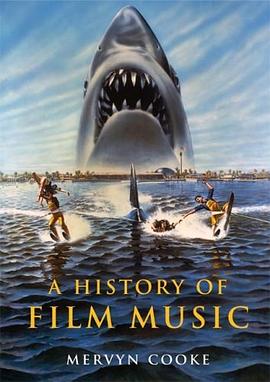
Mervyn Cooke provides a comprehensive and lively introduction to the major trends in film scoring from the silent era to the present day, focussing not only on dominant Hollywood practices but also offering an international perspective by including case studies of the national cinemas of the UK, France, India, Italy, Japan and the early Soviet Union. The book balances wide-ranging overviews of film genres, modes of production and critical reception with detailed non-technical descriptions of the interaction between image track and soundtrack in representative individual films. In addition to the central focus on narrative cinema, separate sections are also devoted to music in documentary and animated films, film musicals and the uses of popular and classical music in the cinema. The author analyses the varying technological and aesthetic issues that have shaped the history of film music, and concludes with an account of the modern film composer’s working practices.
Contents
List of illustrations page xi
Preface and acknowledgements xv
1 The ‘silent’ cinema 1
Why sound? 1
Why music? 4
The birth of film music 7
Categories of film music 9
Camille Saint-Saëns and film d’art 14
Cue sheets and anthologies 15
Venues and ensembles 18
Photoplayers and cinema organs 21
Music for silent epics 23
Charlie Chaplin and music for comedies 27
Early film music in Europe and the Soviet Union 30
Postlude: the silent-film revival 37
2 Sound on track 42
A sound debate 43
New technology 47
Photographing sound 52
Animated sound 58
Creative possibilities 59
3 Hollywood’s Golden Age: narrative cinema and the classical film score 67
The studio system 69
Practicalities 73
Style 78
Wagner and the filmic leitmotif 80
Structure 83
Max Steiner 87
Erich Wolfgang Korngold 93
Franz Waxman: horror and sophistication 98
Alfred Newman 103
Miklós Rózsa, Roy Webb and David Raksin: film noir and the music of psychological drama 108
Dimitri Tiomkin and others 119
Aaron Copland and the sounds of America 123
4 Stage and screen 131
Opera on film 132
Film in opera; opera in film 141
The film musical 145
Scoring Shakespeare 166
5 The mainstream divides: post-war horizons in Hollywood 183
The epic and the intimate 187
Modernism 194
Bernard Herrmann: the composer as auteur 201
Jazz and its influence 212
6 ‘Never let it be mediocre’: film music in the United Kingdom 226
Visitors from abroad 231
Ralph Vaughan Williams 234
Brian Easdale, William Alwyn and Benjamin Frankel 237
William Walton and Malcolm Arnold 248
Generic (re)takes: horror and comedy 253
End of an era 258
7 Defectors to television 265
THE DOCUMENTARY FILM 266
Hanns Eisler 268
Documentaries in the United States 271
Information films in the United Kingdom 273
The movies at war: reportage and propaganda 278
Theatrical documentaries for the modern age 283
ANIMATION 287
Cartoon music in the silent era 288
Walt Disney and the animated musical 290
Warner Bros. and MGM: comic shorts 294
Classical music 298
Migration to the small screen 301
Experimental animation 303
Animation in Europe 306
8 Film music in France 309
Symphony and song 310
The 1930s: Maurice Jaubert and Joseph Kosma 312
Georges Auric and others 316
Nouvelle vague 319
Jean-Luc Godard 321
François Truffaut 326
French modernism 328
At home and abroad 332
Poles apart: Krzysztof Kieślowski and Zbigniew Preisner 338
9 Global highlights 342
EARLY SOUND F ILMS IN THE SOVIET UNION 342
Dmitri Shostakovich 342
Vsevolod Pudovkin and Yuri Shaporin 345
Sergei Eisenstein and Sergei Prokofiev 347
INDIA: BOLLYWOOD AND BEYOND 353
Early Indian cinema 354
Successes abroad: Ravi Shankar and Satyajit Ray 356
Modern commercial cinema 361
FROM ITALY TO LITTLE ITALY 365
Federico Fellini, Nino Rota and the circus of life 366
Ennio Morricone and the spaghetti western: eccentricity and populism 371
Italians abroad 376
JAPAN 382
Traditional elements in silent and early sound films 382
The films of Yasujiro Ozu and Akira Kurosawa 384
Tōru Takemitsu 389
Modern composers, modern genres 392
10 Popular music in the cinema 396
Music of youth and race 398
Title songs and interpolated songs 405
Compilation scores and original song scores 408
Synergistic marketing 415
Pop (stars) in performance 418
11 Classical music in the cinema 422
Romantic concerto and war film 425
Classical biopics and milieu films 429
Period, nationality, class 437
Stanley Kubrick 440
Back to Bach 448
12 State of the art: film music since the New Hollywood 454
John Williams and the new symphonism 456
Electronics, sound technology and recording 467
Pop scoring, dual tracking and the modern soundtrack album 474
Minimalism 478
Modern auteurs: Martin Scorsese, Quentin Tarantino and David Lynch 483
The modern mainstream 489
The global and the glocal 503
Bibliography 511
Index of film titles 530
General index 547
作者简介
Mervyn Cooke是英国诺丁汉大学音乐学教授。这本电影音乐史视野较为广阔,从美国,到英国、意大利、法国、苏联等国电影音乐都有述及
目录信息
读后感
用户评价
这部关于电影音乐史的著作,着实让我对这一领域产生了更深层次的理解与敬畏。我原本以为,电影配乐不过是为画面增添情绪烘托的背景音,看完这本书后才明白,它是一门独立的艺术,与影像叙事紧密交织、互相成就的复杂学科。作者的行文如同一位经验丰富的策展人,他并没有简单地罗列史实,而是将不同时代、不同地域的电影配乐发展脉络梳理得井井有条。比如,书中对早期默片时代管风琴和现场乐队的依赖,以及如何过渡到有声电影初期那种略显笨拙但充满探索精神的配乐实践,描绘得栩栩如生。我尤其欣赏作者对技术变革如何驱动音乐风格演变的洞察力,从单轨录音到立体声环绕,每一个技术飞跃都伴随着作曲家们在艺术表达上的大胆尝试。读到关于魏玛时期德国表现主义电影音乐的章节时,那种阴郁、扭曲的旋律如何完美契合光影的破碎感,让我忍不住想立刻重温那些经典影片,带着新的耳朵去聆听。这本书的深度,在于它不仅分析了“声音是什么”,更探讨了“声音如何塑造意义”,对任何一位电影爱好者来说,都是一本不可或缺的工具书,它将你对电影的欣赏层次提升到了一个全新的维度。
评分这本书的结构安排十分巧妙,它并非简单地按照时间顺序推进,而是将不同的主题和地域进行了有机的串联和对比,这种非线性的叙事反而带来了更强的启发性。它更像是一本思想的导览图,而不是一份死板的编年史。我特别欣赏作者对非好莱坞电影配乐的关注,书中对欧洲独立电影、亚洲电影(尤其是日本电影配乐)的探讨,拓宽了我原本狭隘的视野。这些章节展示了不同文化背景下,音乐如何与视觉符号产生独特的化学反应,比如某些民族乐器的引入如何瞬间拉近观众与异域文化的距离。在阅读关于现代电影配乐电子化和采样技术的部分时,作者的讨论非常富有前瞻性,他没有简单地批判技术对“原创性”的侵蚀,而是探讨了作曲家如何将这些新工具融入到个人风格之中,创造出新的听觉景观。这本书在平衡历史回顾与前沿探索方面做得极其到位,内容丰富到我感觉手头的笔记远远不够记录下来。
评分翻开这本书,我立刻被作者那种近乎学术的严谨和对细节的偏执所吸引。它不是那种可以随便翻阅的消遣读物,而是一部需要你全神贯注去研读的教科书级别的作品。内容密度之高,让我每读完一章都需要停下来消化好一阵子。书中对具体配乐家的分析,绝非流于表面的赞美,而是深入到他们的创作方法论。例如,书中花了大量篇幅剖析某位大师是如何运用特定的和声语言来暗示角色的内心冲突,或是如何通过对位法来构建宏大的史诗氛围。我发现作者对于不同流派的划分极其精准,从后浪漫主义到序列主义在电影中的运用,再到九十年代电子音乐的强势介入,每一种风格的转换都被置于其对应的文化和社会背景下进行解读。对我而言,最震撼的是作者对“沉默”的讨论,他巧妙地论证了在电影中,什么时候选择不使用音乐,往往比使用宏大交响乐更能击中人心。这本书的论证过程逻辑清晰,引用的文献资料扎实可靠,对于想要深入了解电影配乐理论基础和历史演变的读者来说,它提供了无与伦比的广度和深度。
评分老实说,一开始我担心这本书会过于“高冷”,充斥着晦涩的音乐术语,但读下来发现,作者的叙事功力远超我的预期。他成功地将复杂的音乐理论语言,转化成了一种引人入胜的故事。这本书更像是一部精彩的“幕后传记”,讲述了那些幕后的音乐英雄们如何与导演们进行拉锯战,如何在高压的制作周期内完成杰作。阅读体验非常流畅,尤其是一些关于好莱坞黄金时代作曲家们之间竞争与合作的轶事,读起来津津有味,仿佛置身于那个充满创造力的年代。我印象最深的是作者对“主导动机”(Leitmotif)在不同电影类型中应用演变的考察,从瓦格纳式的固定符号到现代电影中更灵活、更流动的音乐主题建构,这种跨越百年的对比分析,让我对旋律的叙事力量有了全新的认识。这本书的价值在于,它不仅让你知道“谁写了什么”,更让你理解了“他们为什么要那样写”,充满了人情味和戏剧性,非常适合作为入门到进阶的桥梁读物。
评分这是一部极具思辨性的作品,它挑战了许多关于电影配乐的既有观念。作者不断引导读者去质疑:音乐在电影中究竟是辅助还是主导?他通过深入剖析几部具有里程碑意义的电影案例,层层递进地展示了配乐是如何从单纯的“伴奏”角色,进化为与导演意图并驾齐驱的叙事伙伴。我被书中对音乐心理学层面的分析所吸引,比如某些音程或节奏型是如何绕过理性思维,直接作用于观众的潜意识情绪。这种对潜意识层面影响力的探讨,极大地丰富了我对电影情感传达机制的理解。此外,书中对电影配乐版权、商业化以及独立作曲家生态的讨论,也触及了行业现实的一面,使得整本书的视野更加全面和立体,避免了纯粹的艺术空谈。对于那些寻求对电影艺术进行更深层次、更具批判性反思的读者而言,这本书无疑提供了坚实而富有洞察力的理论基础和历史参照。
评分Max Steiner、Erich Korngold、Franz Waxman、Alfred Newman、Miklós Rózsa、Dimitri Tiomkin、Bernard Herrmann、Ralph Williams……所以80s之前都是有清晰的时间线的,80s之后音乐流派也井喷世界电影也井喷,无声电影刷一本就够了TV出来黄金年代之后的电影理论不知道刷几本才能有清晰的脉络感。这么想的话,下个世纪学电影的孩纸们怎么办呀……
评分Max Steiner、Erich Korngold、Franz Waxman、Alfred Newman、Miklós Rózsa、Dimitri Tiomkin、Bernard Herrmann、Ralph Williams……所以80s之前都是有清晰的时间线的,80s之后音乐流派也井喷世界电影也井喷,无声电影刷一本就够了TV出来黄金年代之后的电影理论不知道刷几本才能有清晰的脉络感。这么想的话,下个世纪学电影的孩纸们怎么办呀……
评分读完1/3已死
评分Max Steiner、Erich Korngold、Franz Waxman、Alfred Newman、Miklós Rózsa、Dimitri Tiomkin、Bernard Herrmann、Ralph Williams……所以80s之前都是有清晰的时间线的,80s之后音乐流派也井喷世界电影也井喷,无声电影刷一本就够了TV出来黄金年代之后的电影理论不知道刷几本才能有清晰的脉络感。这么想的话,下个世纪学电影的孩纸们怎么办呀……
评分Max Steiner、Erich Korngold、Franz Waxman、Alfred Newman、Miklós Rózsa、Dimitri Tiomkin、Bernard Herrmann、Ralph Williams……所以80s之前都是有清晰的时间线的,80s之后音乐流派也井喷世界电影也井喷,无声电影刷一本就够了TV出来黄金年代之后的电影理论不知道刷几本才能有清晰的脉络感。这么想的话,下个世纪学电影的孩纸们怎么办呀……