具体描述
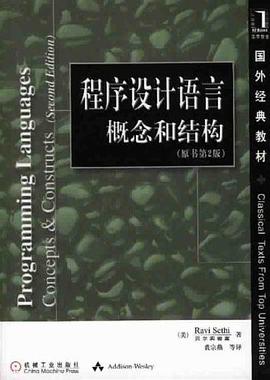
Hundreds of programming languages are in use today--scripting languages for Internet commerce, user interface programming tools, spreadsheet macros, page format specification languages, and many others. Designing a programming language is a metaprogramming activity that bears certain similarities to programming in a regular language, with clarity and simplicity even more important than in ordinary programming. This comprehensive text uses a simple and concise framework to teach key ideas in programming language design and implementation. The book's unique approach is based on a family of syntactically simple pedagogical languages that allow students to explore programming language concepts systematically. It takes as premise and starting point the idea that when language behaviors become incredibly complex, the description of the behaviors must be incredibly simple. The book presents a set of tools (a mathematical metalanguage, abstract syntax, operational and denotational semantics) and uses it to explore a comprehensive set of programming language design dimensions, including dynamic semantics (naming, state, control, data), static semantics (types, type reconstruction, polymporphism, effects), and pragmatics (compilation, garbage collection). The many examples and exercises offer students opportunities to apply the foundational ideas explained in the text. Specialized topics and code that implements many of the algorithms and compilation methods in the book can be found on the book's Web site, along with such additional material as a section on concurrency and proofs of the theorems in the text. The book is suitable as a text for an introductory graduate or advanced undergraduate programming languages course; it can also serve as a reference for researchers and practitioners.
作者简介
Hundreds of programming languages are in use today—scripting languages for Internet commerce, user interface programming tools, spreadsheet macros, page format specification languages, and many others. Designing a programming language is a metaprogramming activity that bears certain similarities to programming in a regular language, with clarity and simplicity even more important than in ordinary programming. This comprehensive text uses a simple and concise framework to teach key ideas in programming language design and implementation. The book's unique approach is based on a family of syntactically simple pedagogical languages that allow students to explore programming language concepts systematically. It takes as its premise and starting point the idea that when language behaviors become incredibly complex, the description of the behaviors must be incredibly simple.
The book presents a set of tools (a mathematical metalanguage, abstract syntax, operational and denotational semantics) and uses it to explore a comprehensive set of programming language design dimensions, including dynamic semantics (naming, state, control, data), static semantics (types, type reconstruction, polymporphism, effects), and pragmatics (compilation, garbage collection). The many examples and exercises offer students opportunities to apply the foundational ideas explained in the text. Specialized topics and code that implements many of the algorithms and compilation methods in the book can be found on the book's Web site, along with such additional material as a section on concurrency and proofs of the theorems in the text. The book is suitable as a text for an introductory graduate or advanced undergraduate programming languages course; it can also serve as a reference for researchers and practitioners.
目录信息
读后感
用户评价
我通常认为,一本优秀的编程语言设计书籍,其价值往往体现在它对“为什么”的解释上,而非仅仅是“如何做”。而这本,则完美地平衡了这两者,甚至在“为什么”的维度上做到了极致的拓展。它没有满足于介绍主流语言的功能集,而是深挖了不同设计选择背后的历史背景、工程权衡以及哲学倾向。读到关于“并发模型演变”的那一章时,我仿佛参加了一场跨越数十年的技术辩论会,清晰地看到了早期设计者们在资源有限和性能压力下的挣扎与抉择。这种对历史脉络的梳理,极大地拓宽了我对“当前最佳实践”的认知边界,让我明白,我们今天习以为常的语法糖,其背后沉淀了多少前人的智慧和妥协。它教会我的,是如何站在更高的维度上去审视和评估未来的技术趋势。
评分我是在一个朋友的强烈推荐下购入这本“大部头”的,老实说,一开始我对它是否能真正解决我工作中遇到的那些棘手的设计难题持保留态度。然而,仅仅阅读了前几章关于抽象层次和类型系统的论述后,我的疑虑便烟消云散了。作者没有采用那种高高在上、晦涩难懂的学院派说教方式,而是通过一系列精心设计的、极具现实意义的案例,将那些原本抽象到令人头疼的理论,具象化为可以触摸、可以操作的编程范式。例如,书中对“状态管理”的阐述,其深度远超我以往接触过的任何资料,它不仅仅停留在语法层面,而是深入到了设计哲学层面,让人开始反思自己过去在项目设计中是如何“偷懒”的。这种由表及里、层层递进的讲解结构,真正体现了“概念”的重量,读完后感觉自己的“内功”得到了显著提升。
评分这本书最让我印象深刻的,是它那种近乎苛刻的逻辑自洽性。我习惯在阅读技术书籍时,随时准备好红笔和便签纸,标注那些我认为可以商榷或者需要进一步推敲的地方。但在这本书里,我的红笔几乎是闲置的。作者似乎已经预料到了读者在每个关键节点可能产生的疑问,并在紧随其后的段落中,用更为精妙的论证将其一一化解。这种无缝衔接的论证链条,给我带来了一种罕见的阅读体验——一种完全被信服和引导的感觉。它不像是在被动地接受信息,更像是在跟随一位技艺精湛的向导,穿越一片充满陷阱的知识密林,每一步都踏在了最坚实可靠的逻辑基石上。对于追求严谨性的资深开发者来说,这种阅读体验无疑是至高无上的享受。
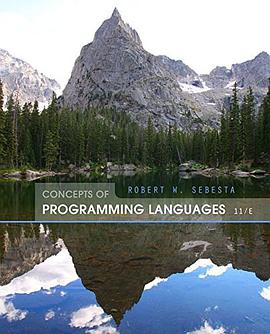
评分这本书的封面设计简直是视觉的享受,那种深邃的蓝色调,搭配着简洁有力的银色字体,透露出一种严谨而又富有创造力的气息。初次翻开它,我几乎立刻被那种精心的排版所吸引,文字与图表之间的留白处理得恰到好处,读起来毫不费力,仿佛引导着读者进入一个精心构建的逻辑迷宫。我可以清晰地感受到作者在细节上的极致追求,每一个章节的过渡都如同丝绸般顺滑,让人愿意一页接一页地沉浸下去,探索每一个概念的深层含义。它的装帧质量也相当出色,拿在手里沉甸甸的,纸张的触感细腻而富有质感,这使得即便是长时间的阅读,也不会产生疲劳感,反而更像是与一本珍贵的艺术品进行对话。整体而言,这本书在美学和工艺上的投入,无疑为即将到来的知识探索之旅定下了高雅的基调。
评分购买这本书时,我其实期待的是一本能立刻应用到我当前项目中的手册。但事实是,它更像是一剂长效的“内力培养药”。它的内容并非那种可以直接复制粘贴到代码编辑器中的即时解决方案,而是更偏向于一种思维范式的重塑。读完之后,虽然我可能无法立刻说出某个具体语言的某个特性叫什么名字,但我却能更清晰地洞察到不同架构风格的内在联系与根本差异。这种由内而外的变化,是缓慢而深刻的,它改变了我提问的方式——从“这个功能怎么实现?”转变为“这个问题的本质是什么?哪种抽象层次能最优雅地解决它?”。对于那些已经掌握了基础编程技能,渴望在技术生涯中迈向设计和架构层面的读者而言,这本书提供的知识结构,是无价的基石。
评分MIT的研究生课程,看了第一章,感觉是我想了解的知识,有时间就看看。
评分怪异的FL语言。。。而且主要是谈程序语义的,没兴趣
评分MIT的研究生课程,看了第一章,感觉是我想了解的知识,有时间就看看。
评分MIT的研究生课程,看了第一章,感觉是我想了解的知识,有时间就看看。
评分怪异的FL语言。。。而且主要是谈程序语义的,没兴趣