
具体描述
Product Description
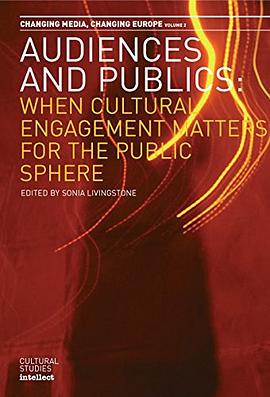
In today's thoroughly mass-mediated world, audiences and publics are, of course, composed of the same people. Yet social science traditionally treats them quite differently. Indeed, it is commonplace to define audiences in opposition to the public: in both popular and elite discourses, audiences are denigrated as trivial, passive, individualised, while publics are valued as active, critically engaged and politically significant. This volume rejects this view and asks instead when and how the activities of audiences overlap with, or contribute to those of publics, and vice versa. It locates the analysis in relation to as fast-changing media environment, which in turn poses theoretical, empirical and policy questions, which are explored in a European context. The chapters each examine one of a series of intriguing empirical cases to explore these intersections - the television talk show, the minority ethnic news audience, children's use of the internet at home, audiences for live and public events - both high and popular culture, the rapid adoption of the mobile phone, and so forth. It argues not only that publics are increasingly mediated, moving ever closer to audiences, but also that audiences are increasingly diffused and diverse, not to be contained within the private sphere: hence they must be examined together.
作者简介
About the Author
Sonia Livingstone is Professor of Social Psychology at the London
School of Economics and Political Science.
Biography
Sonia Livingstone (BSc Psychology, UCL; DPhil Social Psychology, Oxford) joined the LSE in 1990 and is Professor of Social Psychology in the Department of Media and Communications. She is author of eleven books, and has published widely on the subject of media audiences, focusing on audience reception of diverse television genres. Her recent work concerns children, young people and the internet, as part of a broader interest in the domestic, familial and educational contexts of new media access and use
Books include Making Sense of Television (2nd edition, Routledge, 1998), Mass Consumption and Personal Identity (with Peter Lunt; Open University Press, 1992), Talk on Television (with Peter Lunt; Routledge, 1994), Children and Their Changing Media Environment (edited with Moira Bovill, Erlbaum, 2001), The Handbook of New Media (edited with Leah Lievrouw; Sage, 2002, updated edition 2006), Young People and New Media (Sage, 2002), Audiences and Publics (edited; Intellect, 2005), Harm and Offence in Media Content (with Andrea Millwood Hargrave; Intellect, 2006), Media Consumption and Public Engagement (with Nick Couldry; Palgrave, 2007), and The International Handbook of Children, Media and Culture (edited with Kirsten Drotner; Sage, 2008).
Sonia Livingstone was President of the International Communication Association (2007/08) and was Conference Chair for the ICA conference held in San Francisco in May 2007. She continues to serve as a member of the Executive Committee of ICA.
Sonia Livingstone has been awarded research funding from the Economic and Social Research Council, the European Science Foundation, the European Commission, the European Parliament, British Telecom, the BBC, Ofcom, the Independent Television Commission, the Broadcasting Standards Commission, the Advertising Association, the ITVA, the Leverhulme Trust, and Yorkshire/Tyne-Tees Television.
She has held visiting professor positions at the Universities of Copenhagen, Stockholm, Bergen, Illinois and Milan, and is on the editorial board of several leading journals in the field, including New Media and Society, The Communication Review, Journal of Communication, Journal of Broadcasting and Electronic Media, European Journal of Communication and Journal of Children and Media.
She is a member of the new UK Council for Child Internet Safety and serves on the Board of the Voice of the Listner and Viewer. In recent years she was Vice Chair and Board Member of the Internet Watch Foundation, a member of the Home Secretary’s Task Force for Child Protection on the Internet, and a member of the Ministerial Taskforce for Home Access to Technology for Children, DfES. She has advised the Office of Communications, the Department for Children, Schools and Families, the Home Office, the Economic and Social Research Council, the BBC, and the Higher Education Funding Council, among others.
Her research expertise includes: social contexts and uses of ICT, especially domestic/family uses of the internet; children, young people and the internet; media literacy and critical media audiences/users; mediated publics, media for citizenship and the public sphere; television audiences, especially history, media uses, audience reception, media effects; internet use and policy, including the public understanding of communications regulation; research methods in media and communications.
目录信息
读后感
用户评价
坦白说,我花了比预期更长的时间来消化这本书的后半部分,并非因为它写得不好,而是因为它所探讨的议题的复杂性,迫使我不得不放慢脚步,反复咀渎。作者在深入探讨数字时代“公共领域”的重塑时,展现了惊人的洞察力与敏锐度。他们并没有盲目地拥抱技术乌托邦主义,而是冷静地分析了算法推荐、信息茧房对传统公共意见形成机制的侵蚀。这里的论述逻辑之严密,结构之精巧,让人不得不拍案叫绝。尤其让我印象深刻的是,作者引入了一种跨学科的分析工具,融合了社会学中的场域理论和符号学中的意义生成机制,来解释在去中心化的网络环境中,新的“群体性”是如何偶然生成和快速消亡的。我特别喜欢他们对“圈层文化”的细致剖析,书中描绘的那些小众但高度互动的社群,其内部的规范、语言和身份构建过程,提供了理解当代社会碎片化特征的绝佳切口。对于希望理解网络舆论形成机制的任何研究者或从业者来说,这本书提供的理论工具箱是极其宝贵和实用的,它远超出了对新闻传播学基础的简单复述,达到了对社会文化动态深刻剖析的层次。
评分这本书真是让人眼前一亮,完全颠覆了我对传播学经典著作的刻板印象。我本以为会是那种晦涩难懂、充满理论术语的学术堆砌,结果拿到手才发现,它的叙事方式极其流畅,仿佛一位经验丰富的导师在与你进行深入的对话。作者在开篇就构建了一个极具说服力的论证框架,清晰地梳理了“受众”概念在不同历史阶段的演变脉络。特别是他们对20世纪中叶大众传播理论的批判性回顾,简直是教科书级别的梳理,深入浅出地剖析了早期研究的局限性,为后续更复杂的社会现象分析打下了坚实的基础。阅读过程中,我能清晰地感受到作者试图打破传统二元对立的努力,他们没有满足于简单的“发送者-信息-接收者”模型,而是引入了诸如“能动性”、“情境嵌入”等更具动态性的视角。书中引用的案例研究丰富多样,横跨了政治宣传、广告营销乃至新兴的社交媒体互动,每一个案例都像一面镜子,映照出理论如何具体地作用于现实世界。读完第一部分,我立刻有种豁然开朗的感觉,之前在其他地方读到的零散知识点,在这里被整合成了一个宏大而有机的知识体系。这本书的价值不仅在于传授知识,更在于训练读者批判性思考的能力,引导我们去质疑那些看似理所当然的“公众”假设。
评分这本书的排版和装帧设计也值得一提,它的细节处理体现了出版方的专业与用心。纸张的选择很有质感,即便是长时间阅读,眼睛也不会感到过度疲劳,这对于一本需要反复翻阅和做笔记的学术著作来说至关重要。更令人赞赏的是,每章末尾的“关键概念回顾”和“延伸阅读推荐”部分,设计得极其巧妙。它不是简单的列表,而是用简短的评注解释了这些概念或文献与本章核心论点的内在关联,有效地帮助读者巩固了学习成果,并指明了进一步深挖的方向。我发现自己经常在读完一个复杂的段落后,会立即翻到章节末尾对照,这种“前瞻性引导”的学习设计极大地提升了我的阅读效率。此外,书中大量使用的图表和模型示意图,并非那些了无生趣的教科书式流程图,而是经过精心设计的视觉辅助工具,它们用最简洁的图形语言,将复杂的社会互动关系可视化,极大地降低了概念理解的门槛。总而言之,这不仅仅是一本知识载体,更是一件精心打磨的学习工具,阅读体验本身就是一种享受和学习的延伸。
评分作为一名长期关注媒介伦理和权力结构的实践者,我最欣赏这本书中对权力与知识关系的处理方式。作者没有将“受众”视为被动的接收者或纯粹的市场目标,而是将其置于一个复杂的权力场域中进行审视。书中对于“数字主体性”的讨论尤其尖锐和必要,它揭示了在数据收集和用户画像的时代,我们所认为的“个人选择”究竟有多少是算法设计的结果。这种对技术中立性的强力祛魅,是当下媒介研究中亟需的声音。我特别喜欢作者没有停留在批判层面,而是试图勾勒出新的、更具抵抗性的“公众”身份的可能性。他们探讨了在信息过载的背景下,个体如何通过主动的“注意力分配”和“意义筛选”来重新夺回部分能动性,这为我们思考如何在商业和政治压力下维护公共讨论的纯粹性,提供了坚实的理论支撑。读完这部分,我对自己日常的媒介消费习惯产生了深刻的反思,也更清楚地认识到,理解结构性限制,是争取有效表达的前提。
评分这本书的学术品味极高,它成功地跨越了英美分析传统和欧洲批判传统的鸿沟。在讨论当代社会“关系性”的构建时,作者的行文风格时而展现出严谨的实证推导,时而又流露出对人文关怀的深切关注,这种罕见的平衡感令人赞叹。我注意到作者在引用文献时,其广度令人咋舌,从经典哲学到最新的媒体人类学研究,都能被精准地纳入其论证体系中,丝毫没有牵强附会之感。这种跨学科的视野,使得这本书的内容极具生命力和前瞻性,它不只是对既有理论的总结,更像是为未来十年媒介社会学的发展方向投下的一枚探针。对于那些期望在现有学科框架内看到新鲜视角的研究生或学者而言,这本书无疑是一座富矿。它提供的不是现成的答案,而是一套精密的思维工具,教导读者如何像一个真正的社会科学家那样,去捕捉那些转瞬即逝、却又决定性的社会互动瞬间。这本书,绝对是近年来领域内值得反复阅读和深入研究的里程碑式著作。
评分课程和写essay的要求书目,没想到还能有个词条,打个卡😂
评分课程和写essay的要求书目,没想到还能有个词条,打个卡😂
评分课程和写essay的要求书目,没想到还能有个词条,打个卡😂
评分课程和写essay的要求书目,没想到还能有个词条,打个卡😂
评分课程和写essay的要求书目,没想到还能有个词条,打个卡😂