
具体描述
Secrecy is a staple of world politics and a pervasive feature of political life. Leaders keep secrets as they conduct sensitive diplomatic missions, convince reluctant publics to throw their support behind costly wars, and collect sensitive intelligence about sworn enemies.
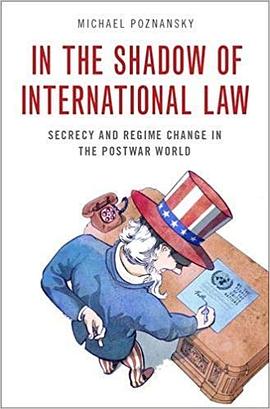
In the Shadow of International Law explores one of the most controversial forms of secret statecraft: the use of covert action to change or overthrow foreign regimes. Drawing from a broad range of cases of US-backed regime change during the Cold War, Michael Poznansky develops a legal theory of covert action to explain why leaders sometimes turn to covert action when conducting regime change, rather than using force to accomplish the same objective. He highlights the surprising role international law plays in these decisions and finds that once the nonintervention principle-which proscribes unwanted violations of another state's sovereignty-was codified in international law in the mid-twentieth century, states became more reluctant to pursue overt regime change without proper cause. Further, absent a legal exemption to nonintervention such as a credible self-defense claim or authorization from an international body, states were more likely to pursue regime change covertly and concealing brazen violations of international law.
Shining a light on the secret underpinnings of the liberal international order, the conduct of foreign-imposed regime change, and the impact of international law on state behavior, Poznansky speaks to the potential consequences of America abandoning its role as the steward of the postwar order, as well as the promise and peril of promoting new rules and norms in cyberspace.
作者简介
Michael Poznansky is Assistant Professor of International Affairs and Intelligence Studies in the Graduate School of Public and International Affairs at the University of Pittsburgh with a secondary appointment in the Department of Political Science. He is also a Non-Resident Fellow with the Modern War Institute at the United States Military Academy at West Point during the 2019-2020 academic year. Before arriving at the University of Pittsburgh, Dr. Poznansky was a predoctoral research fellow with the Belfer Center for Science and International Affairs at the Harvard Kennedy School. He received his Ph.D. in Foreign Affairs from the University of Virginia. Dr. Poznansky has published in a wide range of scholarly journals, including American Journal of Political Science, European Journal of International Relations, International Studies Quarterly, Journal of Global Security Studies, and Journal of Peace Research. He has also published in a variety of policy-oriented outlets, including the Council on Foreign Relations' Net Politics Blog, Political Violence at a Glance, War on the Rocks, and The Washington Post.
目录信息
PART I: Background and Theory
Chapter 2. The Evolution of Nonintervention
Chapter 3. The Politics of Secret Interventions
PART II: Covert Regime Change
Chapter 4. Operation ZAPATA: Cuba
Chapter 5. Project FUBELT and Track II: Chile
PART III: Overt Regime Change
Chapter 6. Operation Power Pack: Dominican Republic
Chapter 7. Operation Urgent Fury: Grenada
PART IV: Conclusions and Implications
Chapter 8. The Future of Covert Regime Change
· · · · · · (收起)
读后感
用户评价
从结构上讲,这本书的组织逻辑堪称教科书级别,但其内容远超任何一本死板的教材。它巧妙地采用了“宏观背景铺陈”与“微观案例解剖”相结合的叙事路径。在探讨某个国际公约的适用范围时,作者不会仅仅停留在条款的逐字解读,而是会立刻跳跃到最近几年发生的某个具体事件中,用那个事件的真实脉络来检验和打磨理论的锋芒。这种“理论—实践—再理论化”的循环往复,使得全书充满了张力,绝无冗余之处。对我个人而言,最受启发的部分是作者对于“历史惯性”在当代国际法解释中的作用的分析。我们习惯于用二战后的范式来看待一切,但作者极其有力地指出,那些看似永恒不变的基石,其实正在被新的技术革命和地缘政治的板块移动悄然侵蚀。这本书读完,感觉自己像是一个刚刚完成了一次高强度的思维体能训练,虽然疲惫,但视野无疑被拉升到了一个前所未有的高度。
评分这部作品的叙事节奏把握得极为精妙,仿佛一列高速列车,在错综复杂的历史与现实的轨道上疾驰,却总能在关键的转折点上,让读者有片刻喘息,去消化那扑面而来的信息洪流。作者对于国际体系中权力动态的刻画,细致入微,绝非简单的“强权即公理”的肤浅论断。相反,它深入挖掘了法律条文背后那些无形的张力——规范的脆弱性与执行的刚性之间那条细微的界限。阅读过程中,我反复停下来思考,那些被誉为“国际共识”的原则,在面对国家利益的铁壁时,究竟是以何种形态存在?是如空中楼阁般虚幻,还是在某些特定的、难以察觉的时刻,发挥着决定性的锚定作用?作者没有提供简单的答案,而是将一整套复杂的博弈场景呈现在眼前,迫使读者亲自去权衡每一方行动背后的动机与后果。尤其是关于非国家行为体在现有国际法框架下的角色定位,书中展现的洞察力,远超我预期的学术探讨范畴,更像是一场对未来治理形态的深刻预演,让人读完后,对“秩序”这个词汇有了全新的、更加审慎的理解。
评分这本书的语言风格,与其说是在阐述理论,不如说是在进行一场密集的、充满思辨性的对话。它并不刻意使用晦涩难懂的术语来构建壁垒,而是以一种近乎文学性的精准度来描摹那些法律文本的冰冷与人性的复杂之间的摩擦。我尤其欣赏作者处理案例时的那种冷静的“去道德化”倾向——他将那些常被公众情绪裹挟的事件,剥离成纯粹的结构性问题,让我们得以窥见隐藏在外交辞令之下的真正运作逻辑。然而,这种冷静并不等同于冷漠。恰恰相反,正是因为抽离了情绪的干扰,那些规范的失效或成功,才显得更加触目惊心。它迫使我反思,我们日常所依赖的那些安全感和可预测性,有多少是建立在实质性的约束之上,又有多少,仅仅是建立在一种集体性的“愿景”之上?每一次翻页,都像是在走过一条布满地雷的通道,你清楚地知道危险在哪里,但又必须向前,因为那里隐藏着理解我们所处时代困境的关键。
评分这本书的独特价值,在于它成功地避开了主流学术圈那种为了保持“中立”而导致的论述平庸化。作者敢于提出一些极具争议性的论断,但这些论断的根基,却是建立在对海量一手资料和复杂法律判例的扎实掌握之上的。它像是一面高倍放大镜,聚焦于那些国际法典中那些最容易被忽略的、位于边缘地带的灰色地带。我特别留意了其中关于条约解释方法论的论述,作者提出了一种动态的、情境依赖的解释模型,这彻底颠覆了我过去对“文本至上”的理解。阅读此书,与其说是获取知识,不如说是在进行一场关于“合理性”的辩论。你不断地与书中的观点交锋,质疑,然后在被更有力的证据说服后,重新构建自己的认知地图。这绝对不是一本可以轻松放在床头阅读的消遣之作,它要求读者全神贯注,如同参与一场严肃的国际谈判,需要时刻保持警惕,捕捉每一个细微的语义转变,因为在那里,可能就藏着下一场全球性危机的引爆点。
评分我必须承认,这本书的阅读体验是具有挑战性的,但绝非徒劳。它没有试图迎合那些寻求快速结论的读者,相反,它更像是一张邀请函,邀请那些真正愿意深入迷宫的求索者,一同去探寻国际关系这门学科中最黑暗、也最核心的区域。作者在多个章节中展现出对法律渊源与哲学基础的深厚底蕴,尤其是在论述主权概念的演变时,他引用了那些鲜为人知但极具穿透力的早期思想家的观点,构建了一个极具层次感的分析框架。最让我感到震撼的是,这本书并非在批判现行体系的失败,而是在描绘体系“如何试图不失败”的过程中的挣扎与妥协。它剥开了理想主义的外衣,直面现实主义的骨架,但并未陷入彻底的虚无。相反,它暗示了,即便在规则模糊不清的阴影地带,人类对秩序的追求本身,依然具有一种近乎本能的、持续不断的驱动力。
评分 评分 评分 评分 评分