
具体描述
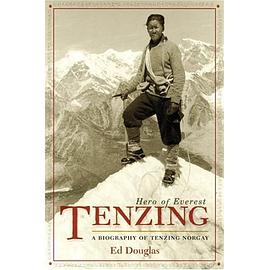
Fifty years after the first ascent of Everest, the heroism and determination of the climbers who pioneered the route still captures the imagination of people around the world. In an age before commercialism and adventure tourism made ascents of Everest commonplace, the courage and sense of adventure shown by an earlier generation of mountaineers remains an inspiration. Drawing on in-depth interviews with key family members, friends, and climbing partners, this volume throws new light on Tenzing Norgay's childhood and early years as a young climbing porter and how he overcame huge odds to reach the top of the world. The role of Tenzing Norgay in the success of the 1953 expedition wasn't just confined to standing atop the summit. He was at the center of the expedition's organization too, making sure that his team of Sherpas delivered enough loads to high camps on the mountain. Despite his fame and popularity, there is still a great deal to learn about the life of Tenzing Norgay, about his origins, his childhood, and how he managed to become one of the best climbing Sherpas of his era.Only the full story of his life shows the true scale of his achievement and the problems and difficulties behind his bright smile. His story is intertwined with the story of the people he worked alongside, a unique and unrepeatable story in the history of exploration. Part ethnography, part biography, and full of the excitement of early Himalayan climbing, Tenzing: Hero of Everest tells the story of mountaineering's most famous day, 29 May, 1953: Perhaps Tenzing's greatest gift to the story was the human face he put on their success. He took the keepsakes his daughter had given him, the little red-and-blue pencil and some small offerings of biscuits and candy for the deity Miyolangsangma, and scraped away a hollow in the snow in which to place them. He posed for Hillary's camera, holding aloft his ice axe with the flags he had carried with him of the United Nations, Britain, Nepal, and India but these grander messages seem lost in comparison to his thoughts of his family and his god. "All I can say is that on Everest," he wrote, "I was not thinking about politics."
作者简介
The writer, traveler and mountaineer Ed Douglas, 32, has been climbing for seventeen years, starting on the gritstone edges of Derbyshire while still at school. He studied English at Manchester University and in his final year there launched the British rock climbing magazine On The Edge.
After running OTE for three years, he worked in Istanbul on the English language daily the Turkish Times �arriving as an Editorial Assistant and leaving after a year as Managing Editor �before returning to work as a freelance journalist specializing in adventure, mountain areas and their people, and environmental issues.
In the last seven years he has written features and news for The Guardian, The Observer, The Daily Telegraph, The Independent and the Independent on Sunday and a range of national and specialist magazines both in Britain and abroad, including Men's Health, Arena, New Scientist and Focus.
In 1993 he launched the international mountaineering journal Mountain Review and ghosted Leo Dickinson's account of his ballooning trip over Everest, published by Jonathan Cape. He has interviewed many well-known adventurers around the world and won the 1994 Outdoor Writer's Guild Award for his profile of top rock climber Ron Fawcett.
Currently Associate Editor of Climber magazine and Editor of the Alpine Journal, he is a member of the Alpine Club and Climbers' Club, and continues to climb to a reasonable standard, in 1995 reaching the summit of Shivling, a 21,500ft mountain in India close to the source of the Ganges. Other recent ascents include the North Face of Les Droites in winter and the Gervasutti Pillar on Mont Blanc du Tacul. In 1997 he climbed on La Main de Fatma, the sandstone towers of Mali, on the fringes of the Sahara. In the last year he has traveled to Austria to interview Heinrich Harrer and to New York to interview David Breashears, both for The Guardian. His most recent assignments were traveling in Kazakstan for The Observer and interviewing the Dalai Lama in India for The Guardian.
Ed Douglas was awarded a Winston Churchill Memorial Trust Fellowship in 1995 to travel around Everest in Nepal and Tibet and his account of that journey, Chomolungma Sings The Blues, was published in November 1997 by Constable. Widely praised in the national and specialist press, Katherine Whitehorn in The Observer called Douglas "a sparkling writer with a great turn of phrase." In the Literary Review, David Craig described him as a "first-class journalist whose interest in the Himalaya and its people enable him to get in close." His biography of the mountaineer Alison Hargreaves, co-authored with David Rose, will be published by Granta next year.
Ed Douglas lives in Sheffield with his wife, Katie, a science journalist, and their two children, Rosa, 4, and Joe, 1. More on Ed and his new book Chomolungma Sings the Blues Soon !
目录信息
读后感
用户评价
这本书的魅力在于它对“英雄”这一概念的解构与重塑。它并未将主角塑造成一个不食人间烟火的完美雕像,相反,作者非常坦诚地展现了其作为普通人的挣扎、矛盾与局限。我能从中感受到,真正的伟大并非来源于天赋异禀,而是源于日复一日的坚持和在关键时刻做出的艰难选择。阅读过程中,我一直在思考,究竟是什么样的信念,能支撑一个人在面对自然伟力时,选择迎难而上,而不是选择退缩。这种对内在驱动力的探寻,是这本书带给我最深刻的哲学思考。它迫使读者反思自身面对困难时的逃避倾向,并从中汲取力量,明白每一步微小的进步,都值得被铭记和珍视。整本书读下来,留下的不仅是故事的轮廓,更是一种对生命意义的重新校准。
评分这本关于登山英雄的传记,读来让人心潮澎湃,仿佛亲身站在那令人敬畏的雪峰脚下。作者对于历史背景的描摹极为细致,对于二十世纪中叶探险精神的刻画入木三分,让人能够深刻理解那个时代攀登者所面临的无形与有形的巨大压力。书中对于早期探险队伍的组织、后勤准备,乃至那些关乎生死的决策过程,都进行了详尽的剖析。我特别欣赏作者对于人物内心世界的挖掘,那种在极限环境下,理性与恐惧、决心与疲惫的激烈交锋,被描绘得淋漓尽致。虽然我从未接触过原著提及的任何具体攀登细节,但那种对未知领域的探索欲,对挑战极限的执着,以及在困境中展现出的人性光辉,是跨越时代和具体事件都能感受到的强烈情感共鸣。它不仅仅是一本关于个人奋斗史的书,更是一部关于人类精神韧性的史诗,读完后,会让人重新审视自己生活中所面对的那些“小山丘”,并激发起一股想要超越自我的内在力量。
评分翻开这本书,我立刻被那种浓郁的、近乎胶片的画面感所吸引。叙事节奏的把握堪称一流,它没有那种平铺直叙的枯燥,而是如同高山上的气流般,时而平缓,时而急转直下,总能在最恰当的时机抛出一个引人入胜的悬念或转折。文字的运用精炼而不失温度,尤其在描述环境的严酷时,那些词汇的选择,仿佛带着寒意和稀薄空气的味道,直击读者的感官。我常常在阅读时感到呼吸一滞,仿佛自己也一同经历着高原反应带来的不适。这种沉浸式的体验,足见作者深厚的文学功底和对题材的敬畏之心。尽管书中可能涉及了许多专业的地理或技术名词,但作者巧妙地将其融入到流畅的叙述中,使得即便是对登山活动知之甚少的读者,也能轻松跟上故事的脉络,并为每一次小小的胜利而欢呼,为每一次挫折而扼腕叹息。
评分坦白说,这类题材的书籍往往容易陷入对壮丽景观的过度渲染,而忽略了人物情感的细腻刻画。但这本书成功地平衡了宏大叙事与微观情感。作者仿佛是一位技艺高超的雕塑家,在雕琢山脉的同时,也极其温柔地打磨着人物的心灵纹理。我仿佛能听到角色之间那些低沉的、在寒风中几近消散的对话,感受到他们在孤独中所蕴含的力量。即便不谈论任何具体的高海拔挑战,书中探讨的关于信任、责任以及团队合作的主题,在任何现代职场或人际关系中都具有极强的借鉴意义。这本书超越了探险文学的范畴,成为了一本关于如何与自己、与他人、与世界相处的教科书,读完后,感觉心胸都被那片广阔的天地所洗涤,获得了前所未有的宁静与力量。
评分从文学批评的角度来看,这本书的结构设计非常巧妙,采用了多视角的叙事策略,使得故事的层次感极其丰富。我们不仅能从主角的视角体验冒险的刺激,还能通过侧面的描述,了解其家庭、社群以及国际社会对这些探险活动的复杂反应。这种多维度的信息交织,极大地丰富了故事的背景深度,避免了将主题局限于单纯的个人英雄主义。我特别欣赏作者对细节的关注,那些看似微不足道的侧面描写——比如一个眼神,一句不经意的对话,甚至是当时的天气报告——都巧妙地为后续的重大事件埋下了伏笔,使得整个叙事链条浑然一体,逻辑严密。这种精心的布局,让读者在阅读后期产生一种“原来如此”的豁然开朗感,体现了高超的写作技巧。
评分 评分 评分 评分 评分