
具体描述
在线阅读本书
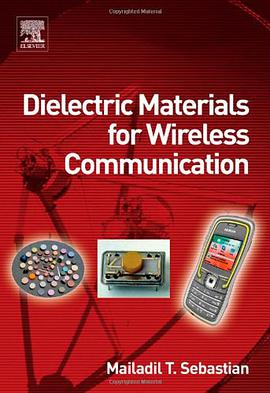
Microwave dielectric materials play a key role in our global society with a wide range of applications, from terrestrial and satellite communication including software radio, GPS, and DBS TV to environmental monitoring via satellite.
A small ceramic component made from a dielectric material is fundamental to the operation of filters and oscillators in several microwave systems. In microwave communications, dielectric resonator filters are used to discriminate between wanted and unwanted signal frequencies in the transmitted and received signal. When the wanted frequency is extracted and detected, it is necessary to maintain a strong signal. For clarity it is also critical that the wanted signal frequencies are not affected by seasonal temperature changes. In order to meet the specifications of current and future systems, improved or new microwave components based on dedicated dielectric materials and new designs are required. The recent progress in microwave telecommunication, satellite broadcasting and intelligent transport systems (ITS) has resulted in an increased demand for Dielectric Resonators (DRs). With the recent revolution in mobile phone and satellite communication systems using microwaves as the propagation media, the research and development in the field of device miniaturization has been a major challenge in contemporary Materials Science. In a mobile phone communication, the message is sent from a phone to the nearest base station, and then on via a series of base stations to the other phone. At the heart of each base station is the combiner/filter unit which has the job of receiving the messages, keeping them separate, amplifying the signals and sending then onto the next base station. For such a microwave circuit to work, part of it needs to resonate at the specific working frequency. The frequency determining component (resonator) used in such a high frequency device must satisfy certain criteria. The three important characteristics required for a dielectric resonator are (a) a high dielectric constant which facilitates miniaturization (b) a high quality factor (Qxf) which improves the signal-to-noise ratio, (c) a low temperature coefficient of the resonant frequency which determines the stability of the transmitted frequency.
During the past 25 years scientists the world over have developed a large number of new materials (about 3000) or improved the properties of known materials. About 5000 papers have been published and more than 1000 patents filed in the area of dielectric resonators and related technologies. This book brings the data and science of these several useful materials together, which will be of immense benefit to researchers and engineers the world over.
The topics covered in the book includes factors affecting the dielectric properties, measurement of dielectric properties, important low loss dielectric material systems such as perovskites, tungsten bronze type materials, materials in BaO-TiO 2 system, (Zr,Sn)TiO 4 , alumina, rutile, A n B n-1 O 3n type materials, LTCC, ceramic-polymer composites etc. The book also has a data table listing all reported low loss dielectric materials with properties and references arranged in the order of increasing dielectric constant.
Key Features:
- collects together in one source data on all new materials used in wireless communication - includes tabulated properties of all reported low loss dielectric materials - in-depth treatment of dielectric resonator materials
作者简介
目录信息
读后感
用户评价
说实话,刚拿到这本书的时候,我有点担心它会过于学院派而脱离实际应用。毕竟,很多专业书籍要么是纯理论的“天书”,要么是面向初学者的“速成指南”。这本书却奇妙地找到了一个完美的平衡点。它在讲解基本介电常数和损耗机制时,用的是非常直观的类比,比如用水分子偶极子的转动来解释高频下的介电损耗,这种入门级的比喻非常友好。但紧接着,它会无缝切换到介绍诸如超材料(Metamaterials)中的有效介电常数建模,这部分内容足以让最挑剔的射频设计师感到满足。我特别喜欢它在介绍特定通信标准(如5G/6G对材料的要求)时,是如何倒推出对材料性能的苛刻指标的。这种“需求驱动设计”的逻辑链条非常清晰,让读者能立刻明白自己手头的材料研究工作在整个行业生态链中的价值所在,让人感觉阅读过程充满了目标感和即时反馈。
评分这是一本写得非常“扎实”的书,一点水分都没有,读起来感觉像是在啃一块上好的陈年硬糖,需要时间和专注力,但回味无穷。我发现它在处理电磁波在复杂介质中传播的数学模型时,采用了非常现代和优雅的符号系统,这对于习惯了先进数值方法和场论的读者来说,是一种享受。例如,书中对表面波在非均匀介质层上传播模式的分析,所采用的矩阵方法,比我过去接触的任何一种都要简洁明了。更值得称赞的是,它对“制造工艺对电性能的影响”这一环节的重视。作者没有将材料视为一个理想化的抽象实体,而是细致地讨论了沉积速率、退火温度甚至衬底粗糙度这些“工程师的烦恼”如何最终体现在S参数的微小变化上。每次当我遇到一个实际测试结果与仿真模型不符的难题时,这本书总能提供一个潜在的、与制程相关的解释,极大地拓宽了我的故障排除思路。
评分我必须强调这本书在图表和数据呈现方面的专业性。它不是那种只有黑白文字的沉闷读物。书中包含了大量高质量的实验数据对比图,尤其是在分析不同温度、湿度和频率对材料性能影响的“三维”图谱时,其细节之丰富令人惊叹。我记得其中有一张关于高Q值谐振腔材料的性能对比图,清晰地展示了即使是极其微小的介电损耗差异,在数GHz的频率上也会导致Q值产生数量级的差异。这种对精度近乎偏执的追求,体现了作者严谨的科学态度。对我个人而言,这本书最宝贵的地方在于它提供了一个系统性的框架,让我能够构建自己的材料筛选标准,而不再是依赖供应商提供的不透明的技术规格单。它教会了我如何去“质疑”数据背后的物理意义,如何通过材料选择策略来规避潜在的系统级瓶颈。这是一本真正意义上的工具书和思想催化剂。
评分这本书简直是为射频工程师量身定制的宝典!我记得我刚接触到这个领域时,对介电材料的各种复杂参数简直是一头雾水,特别是那些关于损耗角正切和相对介电常数在不同频率下的变化曲线,看得我头晕眼花。然而,这本书的叙述方式非常清晰和直观,它并没有仅仅停留在枯燥的理论推导上,而是紧密结合了实际的无线通信应用场景。比如,书中关于PCB基板材料如何影响信号完整性的讨论,简直是教科书级别的深度解析。作者似乎深谙读者的痛点,总是能在关键概念出现时,用一个精妙的类比或者一个实际的案例来帮助理解。我特别欣赏它对新型低介电损耗材料的介绍,这对于设计高频毫米波系统至关重要,书里不仅描述了材料的化学结构,还深入分析了微观机制如何影响宏观性能。读完后,我感觉自己对如何从材料层面优化天线和滤波器性能有了脱胎换骨的认识,不再是生搬硬套公式,而是真正理解了“料”的重要性。
评分对于那些寻求将理论物理知识转化为实际工程解决方案的研究人员来说,这本书无疑打开了一扇新的大门。它的深度远超市面上大多数停留在材料特性介绍层面的书籍。我尤其被其中关于介电弛豫和色散现象的章节所吸引。作者没有回避那些复杂的动力学模型,反而将其系统地分解,用一种既严谨又易于理解的方式呈现出来。让我印象深刻的是,书中对界面效应和体效应在复合介质中的耦合作用进行了详尽的论述,这对于理解那些掺杂了纳米颗粒的先进材料体系至关重要。我曾经花费数周时间试图理解为什么某些涂层在特定温度下性能会急剧下降,书中的热力学分析部分,特别是结合了非平衡态统计力学的讨论,直接点亮了我心中的迷雾。它不仅告诉你“是什么”,更告诉你“为什么是这样”,这种追根溯源的写作风格,极大地提升了读者的科研思维深度,非常适合博士生和资深工程师用于构建扎实的理论框架。
评分 评分 评分 评分 评分