
具体描述
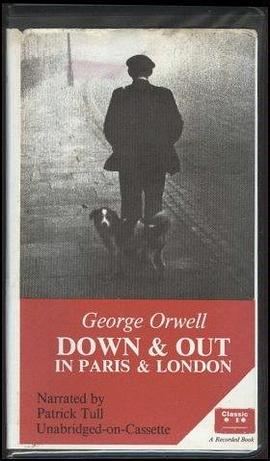
This fictional account of Orwell's salad days as a penniless British writer in the early 1930s contains a good deal of autobiography, no self-pity, and much humor. It has become famous for its exposé of working conditions inside the kitchens of posh French restaurants, where the book's narrator works at the bottom of the echelon as a dishwasher. Very funny, oftentimes bleak, and styled by the recognized master of 20th century prose, Orwell's behind-the-scenes restaurant tales will have you screaming for the check and eating at home forever.
Amazon.com Review
What was a nice Eton boy like Eric Blair doing in scummy slums instead of being upwardly mobile at Oxford or Cambridge? Living Down and Out in Paris and London, repudiating respectable imperialist society, and reinventing himself as George Orwell. His 1933 debut book (ostensibly a novel, but overwhelmingly autobiographical) was rejected by that elitist publisher T.S. Eliot, perhaps because its close-up portrait of lowlife was too pungent for comfort.
In Paris, Orwell lived in verminous rooms and washed dishes at the overpriced "Hotel X," in a remarkably filthy, 110-degree kitchen. He met "eccentric people--people who have fallen into solitary, half-mad grooves of life and given up trying to be normal or decent." Though Orwell's tone is that of an outraged reformer, it's surprising how entertaining many of his adventures are: gnawing poverty only enlivens the imagination, and the wild characters he met often swindled each other and themselves. The wackiest tale involves a miser who ate cats, wore newspapers for underwear, invested 6,000 francs in cocaine, and hid it in a face-powder tin when the cops raided. They had to free him, because the apparently controlled substance turned out to be face powder instead of cocaine.
In London, Orwell studied begging with a crippled expert named Bozo, a great storyteller and philosopher. Orwell devotes a chapter to the fine points of London guttersnipe slang. Years later, he would put his lexical bent to work by inventing Newspeak, and draw on his down-and-out experience to evoke the plight of the Proles in 1984. Though marred by hints of unexamined anti-Semitism, Orwell's debut remains, as The Nation put it, "the most lucid portrait of poverty in the English language." --Tim Appelo
Review
Autobiographical work by George Orwell, published in 1933. Orwell's first published book, it contains essays in which actual events are recounted in a fictionalized form. The book recounts that to atone for the guilt he feels about the conditions under which the disenfranchised and downtrodden peoples of the world exist, Orwell decides to live and work as one of them. Dressed as a beggar, he takes whatever employment might be available to a poverty-stricken outcast of Europe. In Paris he lives in a slum and works as a dishwasher. The essay "How the Poor Die" describes conditions at a charity hospital there. In London's East End, he dresses and lives like his neighbors, who are paupers and the poorest of working-class laborers. Dressed as a tramp, he travels throughout England with hoboes and migrant laborers. -- The Merriam-Webster Encyclopedia of Literature
作者简介
目录信息
读后感
用户评价
这本书的语言风格简直像是一场华丽的、却又带着一丝颓废的探戈。它的句子结构变化多端,时而长篇大论,如同思绪的洪流一泻千里,将读者的心智完全裹挟其中;时而又戛然而止,用极短、极富冲击力的短句,像匕首一样刺破平静的表象,留下久久不散的痛感。我尤其欣赏作者在描写人物心理活动时所展现出的那种近乎神经质的精确性。每一个微小的自我怀疑,每一次对“得体”的拙劣模仿,都被细致入微地剖析开来,仿佛是进行了一场精密的心理手术。这不仅仅是一部关于生存的记录,更是一部关于“如何假装存在”的哲学探讨。那些在边缘游走的灵魂,他们为了维持一丝体面付出的巨大心力,这本书都毫不留情地展现了。阅读过程像是在剥洋葱,每揭开一层,都能看到更深层的、关于身份认同和阶级焦虑的真相。它要求读者全神贯注,因为任何一丝走神都可能让你错过一个至关重要的情感转折点。
评分这是一部关于“饥饿的文学”。但这里的“饥饿”绝不仅仅指胃袋的空虚,它是一种更深层、更具渗透性的匮乏感。它关乎体面、关乎归属感、关乎被世界承认的最低限度的权利。作者对于食物——或者说“缺乏食物”的描写,简直达到了令人发指的地步。那些对一块面包、一勺汤的渴望和描绘,细腻到让人产生生理上的不适感。通过对物质匮乏的极端描写,作者成功地将社会评论提升到了一个更高的维度:当我们失去了维持基本生存的资源时,我们身上剩下的是什么?是人性中最原始的本能,还是在文明重压下畸形演变出的生存策略?这本书以近乎冷酷的笔触,揭示了上流社会精致背后的虚伪,以及底层人民在为了生存而进行的“道德妥协”。它迫使我们直面那些被主流叙事所回避的、关于贫困的残酷真相。
评分这本书的行文节奏把握得实在是妙极了,仿佛一艘在生活的暗流中颠簸的小船,时而随着命运的浪涛猛烈摇晃,时而又在某个不经意的角落里捕捉到一丝微弱的光亮。作者对细节的捕捉能力令人叹为观止,那些巴黎和伦敦街头巷尾的气味、声音、光影,都被他用近乎偏执的笔触描摹得淋漓尽致。你几乎能感受到那种底层生活的粗粝与冰冷,空气中弥漫着廉价烟草和不易察觉的绝望气息。叙事者并非高高在上地审视这一切,而是深深地陷在泥泞之中,每一次挣扎、每一次喘息都带着真实的痛感。他对于社会阶层的敏锐观察,那种穿透表象直达核心的洞察力,让人在阅读时产生一种强烈的代入感,仿佛自己也在经历那段在饥饿与尊严之间徘徊的煎熬岁月。这本书的伟大之处,或许就在于它没有试图美化苦难,而是以一种近乎残酷的坦诚,记录了人类在极端环境下所展现出的韧性与复杂人性。读完合上书本,那种挥之不去的沉重感,是对那个特定时代和特定人群最深刻的致敬。
评分我必须承认,这本书的叙事结构非常具有实验性,它毫不遵循传统的时间线索,而是采用了一种近乎意识流的碎片化组合。这并非是作者叙事能力的缺失,恰恰相反,这是一种高明的艺术手法,完美地呼应了主角那种漂泊不定、缺乏根基的生活状态。章节之间的跳跃感极强,一会儿是伦敦深夜阴冷的街道,下一秒可能就闪回到了巴黎某个嘈杂的厨房内部。这种跳跃性带来的阅读体验是震撼的,它强迫你的大脑不断地重构场景,去适应那种无序中的秩序。对于习惯于线性叙事的读者来说,初读可能会感到些许迷惘,但这恰恰是作者想要营造的“迷失感”。当你适应了这种节奏后,你会发现,正是这种看似散乱的叙事,才最真实地还原了那种“漂泊者”的内在世界——记忆和现实交织,过去和现在纠缠不清。它不是在讲述一个故事,而是在构建一种存在状态的氛围。
评分这本书的魅力在于其令人不安的真实感,它拒绝提供任何廉价的慰藉或明确的道德指引。主角仿佛是一个被社会排斥在外的观察者,他的视角是如此的清醒,却又如此的无力。他记录下周遭的一切,像是进行着一项冰冷的田野调查,记录着他所接触到的那些同样被生活打磨得棱角分明的同路人。那些酒鬼、那些骗子、那些在绝望中寻找片刻欢愉的边缘人物,他们的形象栩栩如生,充满着矛盾的生命力。你会为他们的境遇感到愤慨,却又不得不承认,他们的生存法则在那种环境下是逻辑自洽的。这种不带感情色彩的记录,反而比任何慷慨激昂的控诉都更有力量。它留给读者的不是答案,而是一连串沉重的问题:我们所珍视的“稳定”和“体面”,究竟是以牺牲多少人的尊严为代价构建起来的?这本书就像一面反光的镜子,映照出我们自己与那个“Down and Out”的世界之间那条若有似无的界限。
评分以前旅行的时候经常住那种客栈,里面挤满了身无长物的租客。不知国内是否也有?
评分以前旅行的时候经常住那种客栈,里面挤满了身无长物的租客。不知国内是否也有?
评分以前旅行的时候经常住那种客栈,里面挤满了身无长物的租客。不知国内是否也有?
评分以前旅行的时候经常住那种客栈,里面挤满了身无长物的租客。不知国内是否也有?
评分以前旅行的时候经常住那种客栈,里面挤满了身无长物的租客。不知国内是否也有?