
具体描述
Shingo Research and Professional Publication Award recipient
What does it really mean to be a “learning organization”? What does it take to get the people in a nonmanufacturing environment to think of work in terms of flow? How do you build a culture based on lean principles and lead that culture as it continuously evolves?
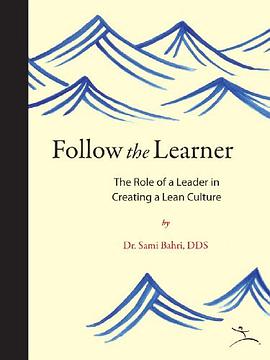
In his book, Follow the Learner: The Role of a Leader in Creating a Lean Culture, Dr. Sami Bahri describes how he and the staff in his practice tackled each of these questions. The book describes how their organization, the Bahri Dental Group, transformed their work and their thinking from a traditional batch-and-queue approach to one focused directly on the needs of the patient, not on the needs of the practitioners.
The book is organized into three sections–Creating the Practice, Leading the Transformation, and Discovering the Principles of Lean Leadership–that describe a personal and professional journey in terms that anyone, at any level, can learn from. It explains the technical changes that they made in the way that they scheduled and treated patients, as well as the understanding of the human interactions needed to make this new model succeed. Along the way, it demonstrates the universal application of lean concepts and methods in an environment with which we are all familiar, but is a long way from the traditional manufacturing roots of the Toyota Production System.
Dr. Bahri has created an honest and straightforward look at organizational transformation. He describes the experiments that led to rapid improvement and dramatic change, as well as the lessons he learned that changed his own definition of what it meant to be a leader. And he has created a leadership model of continuous improvement that lean thinkers and leaders everywhere can understand and relate to.
作者简介
Dr. Sami Bahri, DDS runs a private dental practice in Jacksonville, Florida that he started in 1990 after years working in the teaching, administrative, and private practice fields. Eager to learn from other industries how to manage resources to satisfy customers, he started searching outside dentistry, and ended up studying and trying Total Quality Management and Six Sigma, among other systems.
In 1996, Dr. Bahri read "Lean Thinking” by James Womack and Daniel Jones, and started implementing lean management principles in his dental office. He is the first dentist known to utilize lean techniques to continuously improve the delivery of quality dental care. Dr. Bahri has been called “The Leanest Dentist on the Planet.” Dr. Bahri has been a keynote speaker at the Shingo Prize Conference, where he was recognized as the “World's First Lean Dentist”. He lectures nationally and internationally, to healthcare and manufacturing groups, to share his experience on implementing lean management in the dental practice.
目录信息
读后感
用户评价
这本书在内容的选择上展现出一种令人意想不到的广博,它像是一台高功率的搜索引擎,但过滤标准却是极其挑剔的。我惊讶于作者是如何将看似风马牛不相及的领域——比如十九世纪的音乐理论、现代神经科学的最新发现,以及某些小众的民间传说——编织进同一个讨论脉络之中的。它没有聚焦于任何一个单一的专业领域,反而像是在绘制一张巨大的知识地图,展示着不同学科之间那些隐藏的、微妙的联系点。每一次翻阅,我都会发现作者引入了新的参照物,这些参照物往往是那些在主流学术界被边缘化或者尚未被充分发掘的角落。这使得全书的视野非常开阔,它没有固步自封于任何既定的理论框架,而是始终保持着一种开放的、探索性的姿态。对于那些渴望打破专业壁垒,寻求跨学科洞察的读者来说,这本书简直就是一座宝库。它不是提供答案的,而是提供更多提问的角度和观察世界的新工具。
评分这本书最让我印象深刻的,是它所蕴含的那种深沉的内在张力,那种介于确定性与不确定性之间的微妙平衡。作者似乎总是在一个极端的论断提出之后,立即用一个极其审慎的限定词或一个反例来削弱它的绝对性。这种“进两步,退一步”的写作策略,使得全书的论述充满了动态的辩证感。你不会找到那种斩钉截铁、不容置疑的结论,相反,作者一直在引导读者去体验思考过程本身的不安与魅力。这种处理方式体现了一种高度的学术谦逊,它承认了人类认知局限的边界,并尊重了复杂性本身的存在。在阅读过程中,我常常被那种“似乎已经接近真相,但又只差临门一脚”的感觉所包围。它不是一本提供“终极真理”的书,而是一本邀请你加入到永无止境的求索过程中的邀请函。正是这种对不确定性的拥抱和对边界的探索,让这本书拥有了超越时效的耐人寻味之处。
评分这本书的装帧设计简直是一场视觉盛宴,拿到手的那一刻,我就被它封面独特的纹理和内页的排版深深吸引了。纸张的选择非常考究,那种略带粗粝感却又触感温润的质地,让人忍不住想反复摩挲。我特别欣赏作者在版式设计上的匠心独运,每一个章节的起始页都像是一件精心策划的艺术品,字体搭配和留白的处理恰到好处,既保证了阅读的舒适度,又极大地提升了整体的艺术品味。翻开书页,仿佛走进了一个精心布置的画廊,文字不再是冰冷的符号,而是与空间、色彩和谐共生的元素。我尤其留意到那些细微的设计巧思,比如章节之间的过渡页,那种微妙的色彩渐变和简练的图形符号,都透露出一种沉静而深邃的美学理念。这种对细节的极致追求,让阅读体验从单纯的信息获取升华到了一种对美的享受。我常常在午后的阳光下,捧着这本书,不仅仅是阅读内容,更是在品味它作为“物体”的质感和美学表达。这无疑是一本会让人想要收藏,甚至作为家居装饰品的书,它的存在本身就是一种对生活品质的肯定。
评分这本书的语言风格充满了强烈的个人色彩,它读起来不像是在接受指导,更像是在与一位学识渊博、思绪跳跃的朋友进行一场深夜的长谈。作者的用词非常大胆且富有画面感,常常使用一些非常规的比喻和意象来描绘抽象的概念。例如,在阐述某个理论时,他会突然引入一段关于古老航海日志的描述,或者一段关于城市灯光变幻的细腻观察。这种跨领域的联想能力令人惊叹,它极大地丰富了文本的层次感。有时候,你会觉得他说话的节奏忽快忽慢,时而语速极快地抛出一连串的哲学诘问,时而又慢下来,用一个悠长的句子来描摹一种微妙的情绪状态。这种自由奔放的表达方式,虽然偶尔会让读者感到一丝喘不过气来,但正是这种毫无保留的倾诉感,使得这本书充满了生命力和感染力。我感觉自己不是在阅读“被整理好的知识”,而是在捕捉作者思想流动的原始脉络,这是一种非常私密且引人入胜的体验。
评分我必须承认,初读这本书时,我感到了一种近乎迷失的体验,它仿佛是一座结构极其复杂的迷宫,充满了岔路和不确定的指引。作者似乎刻意避开了传统叙事中那种清晰、线性的逻辑路径,而是采用了碎片化、跳跃式的结构来呈现观点。起初,我有些气馁,常常需要不断地回头查找前文的线索,试图拼凑出一个完整的认知框架。然而,当我调整心态,不再试图强行建立一个“标准”的阅读顺序时,奇妙的事情发生了。那些看似零散的段落和看似无关的引述,开始以一种非线性的方式在我脑海中碰撞、融合。这种阅读过程更像是在进行一次主动的考古发掘,你需要自己去连接那些看似断裂的历史节点和概念碎片。这本书挑战了我们习惯的线性思维定势,它要求读者投入大量的耐心和解读的努力,去重构作者构建的知识体系。最终的收获是巨大的,它逼迫你跳出固有的框架去思考问题,那种豁然开朗的感觉,是传统教科书式的表达所无法比拟的。
评分 评分 评分 评分 评分