
具体描述
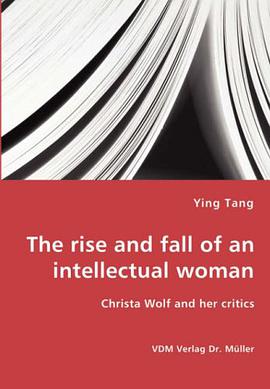
Christa Wolf, a GDR intellectual, was discredited as a writer after German Unification. How is it possible that one writer's literature is praised universally as "critical" one moment, and denigrated as banal and simply moralistic the next? As a response to the controversy around Christa Wolf, this work attempts to understand Wolf less as an isolated "writer" than as an "effect" of political and cultural discourse about the GDR in the Federal Republic of Germany prior to unification and in united Germany after 1989. However, in this book Wolf's own opinions about her role as intellectual active in the GDR, as well as her explicit pacifist and feminist positions, which she enunciated in both essays and her literature, are also taken into consideration. Thus, the author plays the writer's own 'self-reflective' texts over and against the texts that made Wolf first into the banner of an alternative socialism and second, after the 'Wende', into the target of conservative accusations. The book presents an interdisciplinary approach to a well discussed writer that will not only engage scholars of Christa Wolf, but will also appeal to those with broader interests in cultural politics, feminist theories, especially those concerned with the role of (women) public intellectuals.
作者简介
目录信息
读后感
用户评价
The title, "The Rise and Fall of an Intellectual Woman: Christa Wolf and Her Critics," immediately grabs my attention by promising a compelling narrative of intellectual prominence and the inevitable challenges that follow. My expectation is that this book will offer a thorough exploration of Christa Wolf's intellectual journey, detailing the evolution of her thought, the core tenets of her philosophy, and the literary works that cemented her reputation. The inclusion of "her critics" is particularly significant, hinting at a nuanced and perhaps even adversarial examination of the reception her work received throughout her career. I'm keen to understand the specific nature of these criticisms, whether they stemmed from literary analysis, political disagreements, or broader societal shifts. I anticipate that the book will delve into the intellectual debates surrounding Wolf's oeuvre, providing context for the controversies and highlighting the differing perspectives that shaped discourse. The idea of a "rise and fall" suggests a dynamic exploration, moving beyond a simple chronological account to examine the forces that propelled her to prominence and those that perhaps led to periods of doubt or intense scrutiny. I'm hoping for a deep dive into the complexities of intellectual legacy, particularly for a woman in a field that often presents unique challenges, and how her critical reception ultimately shaped her enduring impact.
评分From the outset, "The Rise and Fall of an Intellectual Woman: Christa Wolf and Her Critics" promises a journey into the heart of intellectual contention. The title itself speaks volumes, hinting at a powerful trajectory for a woman operating within the demanding sphere of intellect, followed by a period of scrutiny and potential retraction. My primary anticipation is to understand the nuances of this "rise and fall." What constituted Wolf's ascent? Was it the originality of her thought, the power of her prose, or her ability to tap into the zeitgeist? Conversely, what led to the "fall"? Were these critiques rooted in intellectual disagreement, political opposition, or perhaps societal resistance to a prominent female intellectual voice? The inclusion of "her critics" is the hook; it signals a scholarly and thorough examination of the reception her work garnered. I'm not just expecting a summary of her achievements, but a rigorous analysis of the arguments leveled against her, the intellectual lineages of those critiques, and the impact they had on her legacy. I envision a book that navigates complex intellectual terrain, exploring the theoretical underpinnings of both Wolf's work and the counterarguments. The promise of a detailed engagement with these critical perspectives suggests a text that will be both informative and provocative, challenging readers to consider the multifaceted nature of intellectual influence and the often volatile reactions it can provoke. It feels like a book that will illuminate the delicate balance between artistic creation and public reception, particularly for those who break molds.
评分The sheer audacity of the title, "The Rise and Fall of an Intellectual Woman: Christa Wolf and Her Critics," immediately conjures images of intellectual battlegrounds and the seismic shifts that can occur within a respected literary career. I’m intrigued by the promise of exploring not just the *what* of Wolf’s intellectual journey, but the *how* and the *why* behind its perceived trajectory. The term "rise and fall" suggests a narrative of ascension, perhaps marked by groundbreaking work and widespread acclaim, followed by a period of challenge, doubt, or even decline, often precipitated by dissenting voices. The emphasis on "her critics" is what truly sets this book apart in my mind. It hints at a comprehensive examination of the reception of Wolf’s work, delving into the specific arguments, the intellectual frameworks, and potentially the personal biases that fueled critical discourse. I’m anticipating a detailed exploration of the intellectual debates she engaged in, the literary theories she embraced or defied, and the socio-political contexts that shaped both her writing and its reception. The potential for uncovering hidden tensions, forgotten critiques, or overlooked contributions is immense. I'm hoping for a book that meticulously reconstructs these critical landscapes, offering a panoramic view of the intellectual ecosystem in which Wolf operated. This isn't just about a biography; it feels like a deep excavation of an intellectual era, with Wolf and her detractors as the central players in a fascinating drama of ideas.
评分The very title, "The Rise and Fall of an Intellectual Woman: Christa Wolf and Her Critics," resonates with a sense of intellectual drama and the inevitable scrutiny that accompanies significant contributions to thought. My immediate curiosity is piqued by the implied narrative arc – the ascent to prominence and the subsequent period of challenges or reconsideration. I anticipate that this book will delve deeply into the substance of Christa Wolf’s intellectual output, exploring the core ideas, themes, and stylistic innovations that characterized her work. Crucially, the inclusion of "her critics" suggests a balanced and perhaps even confrontational examination of the reception her work received. I'm eager to understand the nature of these critiques: were they primarily academic, political, or cultural? What were the specific points of contention, and how did they engage with or depart from Wolf's own intellectual framework? I envision a detailed analysis of the intellectual landscape in which Wolf operated, mapping out the prevailing ideologies, theoretical debates, and societal expectations that shaped both her creative process and the responses to it. This isn't just about chronicling a life; it's about dissecting the complex interplay between an individual's intellectual endeavor and the collective, often dissenting, voices that shape and redefine a legacy. The promise of exploring the "fall" suggests a candid and unflinching look at the challenges and controversies that can arise, offering a rich, multi-dimensional portrait.
评分这本书的标题《女知识分子的兴衰:克丽斯塔·沃尔夫及其批评者》 immediately piqued my interest. It suggests a deep dive into the life and work of a prominent intellectual figure, tracing her ascent and the inevitable friction that accompanies such prominence, particularly when viewed through the lens of criticism. The implied narrative arc – "rise and fall" – hints at a potentially complex and nuanced exploration, not just a simple biographical account. I'm eager to understand what specific societal, political, or intellectual currents shaped Wolf's trajectory, and more importantly, how her own writings engaged with and were perhaps influenced by these forces. The inclusion of "her critics" is particularly compelling; it promises a multi-faceted perspective, moving beyond hagiography to examine the debates, disagreements, and perhaps even controversies surrounding her. I envision a book that doesn't shy away from the messy realities of intellectual life, one that dissects her literary output alongside the reception it received. The very act of being an "intellectual woman" in any era, let alone the specific historical context I presume Wolf inhabited, is often a challenging one, and this title suggests the book will tackle those challenges head-on. I'm hoping for an insightful analysis of her literary themes, her philosophical underpinnings, and the ways in which her identity as a woman intersected with her intellectual pursuits and the critical responses they engendered. It feels like a book that will encourage reflection on the nature of intellectual legacy and the often tumultuous relationship between creators and their audiences.
评分 评分 评分 评分 评分