
具体描述
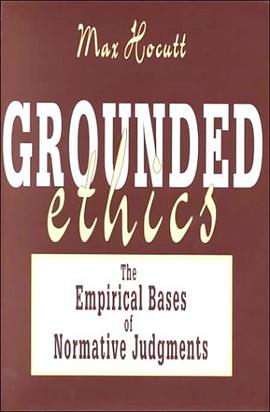
Scientific naturalism -- basing beliefs on empirical evidence -- has now triumphed in every field of inquiry except moral philosophy. There it is still thought appropriate to cite otherworldly standards known by divine revelation or moral intuition. In Grounded Ethics, Max Hocutt argues that, since there is no transcendent reality on which to base the claims of ethics, normative truth must be sought in the desires of individuals and the conventions of societies.Hocutt begins with an empiricist analysis of normative judgments. Following B.F. Skinner, he asserts that we call good what reinforces our desires, and that we call right or just what we desire to reinforce. Consequently, desire is the immediate measure of both goodness and justice. Acknowledging that goodness is relative to individual preferences, and justice is relative to social norms, Hocutt denies that goodness is a matter of personal opinion and that every society's institutions are as good as every other's. Instead, he says, the conduct of individuals and the customs of societies must ultimately be evaluated by how well they serve biologically based needs. These must be discovered empirically, because they cannot be known a priori.In support of this analysis, Hocutt challenges rationalist belief, that normative concepts cannot be defined in empirical terms because they are rooted in divine law or ideals of pure reason. Against this view, Hocutt argues that if the moral law exists only as an ideal, it is not binding in the same sense as the empirically known laws and moralities of actual societies. He also points out that rationalist intuitions are best understood as expressions of animal instinct, sociallyconditioned prejudice, and personal preference. In addition, he offers extensive critiques of major philosophers, both ancient and modern, who hold contrary views.All of this is meant to show that there is no escaping the empirical: A sensible ethics must be built on observable facts; it cannot be pulled from a vague but pious rationalist sky. Hocutt's demonstration of this thesis will interest philosophers, behavioral biologists, sociologists and ethicists.
作者简介
目录信息
读后感
用户评价
坦白说,这本书的阅读体验是一次挑战,但绝对是值得的。它对复杂人性的刻画入木三分,丝毫没有美化或回避那些灰色地带。书中那些关于“两难选择”的案例分析,真实到让人感到一丝寒意,那种既痛苦又不愿妥协的挣扎,被作者描摹得淋漓尽致。我感觉自己不是在“读”书,而是在“经历”书中的人物所经历的道德炼狱。书中的排版和字体选择也很有讲究,大段的论述中间穿插着一些留白,恰到好处地提醒我停下来消化一下那些沉重的内容。这本书迫使我直面自己的局限性,认识到“好人”这个标签背后所蕴含的沉重代价。它不是提供廉价的安慰剂,而是递给我一把锋利的手术刀,让我去解剖自己内心的矛盾。
评分这本书的语言风格可以说是独树一帜,那种老派的、略带古典韵味的表达,在当今快节奏的阅读市场中显得尤为珍贵。它不急于抛出结论,而是花了大量篇幅去构建情境,通过对历史案例的细致梳理,展现了伦理思想是如何在不同时代背景下演变的。我尤其欣赏作者在处理“公正”问题时所展现出的那种深思熟虑,他没有简单地站在任何一方,而是如同一个中立的观察者,将所有可能的视角都平等地呈现在读者面前,让读者自己去权衡利弊。这种开放式的探讨方式,极大地激发了我的批判性思维,让我开始反思自己以往许多想当然的判断。读完某个章节后,我甚至会去查阅作者引用的那些经典文献,那种探寻源头的求知欲被彻底点燃了。
评分这本书的结构设计非常精妙,它采用了螺旋上升的方式,每一部分都在前一部分的基础上进行深化和拓展,使得整体阅读脉络清晰而又富有张力。作者在引用哲学家观点时,总是能找到最精准的切入点,既尊重了原意,又巧妙地将其融入到现代语境中进行再阐释。我特别欣赏作者在最后几章对“未来伦理”的展望,那种既审慎又充满希望的基调,给予了读者一种积极的力量去面对尚未到来的挑战。这本书读完后,我感觉自己的思维框架被重新构建了一遍,看待问题的角度变得更加立体和多维。它留给我的不是一堆可以背诵的教条,而是一种持续的、探究真理的方法论,这种收获是无价的。
评分我发现这本书最引人入胜之处在于它对“公共领域伦理”的探讨。作者没有沉溺于高深的理论构建,而是将焦点迅速拉回到我们每天都在面对的社会运作机制上——比如信息透明度、权力制衡等。他提出的那些关于“系统性错误”的分析,让我大开眼界,明白了许多看似孤立的道德失范,背后其实是结构性的问题在驱动。阅读时,我的笔尖几乎没有停过,大量的批注和圈画占据了书页的边缘。这绝对不是一本可以速读的书,它需要你投入时间去细细品味那些精妙的措辞和严密的推理链条。每次合上书,我都会有一种对我们所处社会环境理解加深的感觉,仿佛被赋予了更清晰的洞察力去看待新闻报道中的各种事件。
评分这本书的封面设计简直是一场视觉盛宴,那种深邃的蓝色调搭配着烫金的字体,立刻就抓住了我的眼球。刚翻开扉页,我就被作者那严谨而又充满人文关怀的笔触深深吸引住了。它不像那种枯燥的哲学教科书,而是像一位经验丰富的人生导师,在你耳边娓娓道来,将那些看似遥不可及的道德困境,用极其贴近生活的例子一一剖析开来。我特别喜欢作者在阐述“责任”这个概念时,那种层层递进的逻辑推演,从个体良知到社会契约,每一个论断都有坚实的理论基础支撑,但读起来却毫不费力。阅读的过程中,我常常需要停下来,合上书本,在脑海里构建作者所描述的场景,思考自己会如何抉择。这让我感到非常充实,仿佛进行了一场深刻的自我对话。它成功地架设了一座桥梁,连接了晦涩的理论与我们日常生活的纷繁复杂。
评分 评分 评分 评分 评分