
具体描述
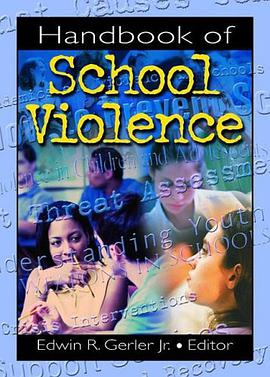
Your school must be prepared to face problems that range from name calling and bullying to extortion, rape, and homicide. Decrease the chances of tragedy and learn how to respond most effectively!
This essential handbook explores the causes of school violence, presents state-of-the-art information on preventing school violence, and arms you with practical interventions to use when violent incidents occur. You'll also learn about the best Internet sites on school violence issues. This book--prepared by the editor of the Journal of School Violence--can help you decrease the chances of tragedy. It will also show you how to respond effectively when violence does occur. Part I: Causes of School Violence focuses on the ways that connectedness and identification with academics influence school violence. This section presents a framework for creating developmental interventions as well as a chapter examining the concept of "bonding to school," with two interesting scenarios to consider. Part II: Prevention of School Violence examines the effectiveness of interventions in use today and brings you important information on threat assessment, peer mediation, and weapons reduction. You'll also find an insightful chapter on the value of developing empathy and good communication with youth who are gang members. Part III: Interventions in Cases of School Violence provides you with effective strategies to address the consequences of crisis events and takes an incisive look at crisis events themselves, what they are, how they progress, and what you may encounter in their aftermath. In addition, you get an invaluable inside look at crisis intervention and support services in the aftermath of the 2001 Santana High School shootings in San Diego, California. With your purchase of this essential handbook, you'll also be kept up to date by the author's new Internet forum--a space where scholars and practitioners from around the world come together to create new strategies for school violence prevention and intervention and develop new online and print publications that address school violence.
""When I was like 11, I was hanging out. I used to go to a middle school. It was for bad people, only bad people go there. It's a school just for bad people that had gotten kicked out of school. And I had got kicked out of my school cause they found me with a gun.""
The Handbook of School Violence brings together many voices--those of violent youngsters and the helpers who provide the care they need--those of students who feel no connection with their families or with their work at school--those of the professionals who strive to prevent these students from acting on their feelings of alienation in violent ways--and those of scholars who create theory and research, laying the foundation for prevention and intervention. Add this book to your collection, and you'll benefit from the contributions of this rich chorus of voices. And through the Internet forum, the chorus can add a new voice--yours.
Visit the Handbook of School Violence Web site at http: //genesislight.com/hsv%20files/about.html
作者简介
目录信息
读后感
用户评价
这本书最让我感到困惑的是其在“解决方案”层面的论述。它花费了巨大的篇幅来论证问题的复杂性和多因性,这在理论上无可指摘。然而,当章节接近尾声,开始触及“我们该怎么办”时,那种清晰度和确定性却仿佛消失了。与其说它提供了一套可操作的“手册”,不如说它提供了一系列相互竞争的理论视角,并让读者自行去权衡利弊。例如,关于“零容忍政策”的有效性分析,作者通过对比不同地区的执行数据,得出了一个模棱两可的结论,即其有效性高度依赖于执行环境和配套措施。我理解现实世界的复杂性不允许简单的答案,但我期望一本名为“Handbook”的书,至少能对不同情境下的最优路径给出一个更倾向性的指导。最终,我合上书本时,脑海中充满了需要进一步研究的课题和需要澄清的理论矛盾,而非一份可以立即付诸实践的行动蓝图。它更像是为研究生设计的教科书,而非面向实践者的实用指南。
评分读完这本书的头几章后,我体验到了一种强烈的认知失调。我原以为会读到关于霸凌者和受害者之间具体的互动细节,或者是一些具体学校推行的反暴力措施的案例研究。结果发现,内容的主体转向了对“权力结构”和“机构性偏见”的深度挖掘。作者花费了大量的篇幅来论证,校园暴力不仅仅是个体间的冲突,更是大型社会体系中权力不对等的一种微缩体现。这种视角无疑是具有启发性的,它迫使我跳出“好人与坏人”的简单二元对立,去审视规则、制度乃至无意识的文化规范是如何助长或至少是默许某些形式的压迫的。但是,这种过度宏观的视角也带来了一个副作用:那些活生生的、在走廊里发生的恐惧和挣扎,那些具体的、微小的日常欺凌行为,似乎被稀释在了抽象的理论概念之中。我希望看到更多扎根于一线经验的质性研究,但这本书提供的大多是基于大规模数据的量化分析,使得情感上的共鸣点相对较少,更像是在进行一场高屋建瓴的社会学考察。
评分这本书的叙事节奏掌握得非常独特,有些章节读起来像是一篇篇精雕细琢的论文集合,而另一些章节则突然转向了历史性的回顾,追溯了过去几十年间,教育政策是如何在不同思潮间摇摆的。这种不连贯性,坦白说,让阅读体验颇有些跌宕起伏。我尤其欣赏作者在比较不同文化背景下“可接受的纪律手段”与“过度惩罚”之间界限的章节。那种跨文化、跨时段的比较分析,展示了暴力界定标准的流动性和主观性。然而,这种广度也牺牲了一定的深度。在某些关键的干预策略讨论上,作者的论述显得蜻蜓点水,仿佛只是匆匆一瞥,便又跳到了下一个理论模型。例如,关于数字霸凌日益猖獗的问题,书中提及不多,似乎更侧重于传统的、面对面的冲突分析,这对于一本号称“手册”的书籍来说,在与时俱进方面略显保守。它更像是一部理论奠基之作,为后续的研究指明方向,而不是一本即学即用的操作指南。
评分这本厚重的著作,坦白说,最初吸引我的是它那极具冲击力的标题,它承诺要深入剖析一个在现代社会中无法回避的沉重议题——校园暴力。我带着一种混合着知识渴求和沉重心理预期的心情翻开了第一页。然而,我很快发现,这本书的重点似乎并不在于提供那些我们已经在新闻报道中司空见惯的、关于伤害和恐惧的直接叙事。相反,它构建了一个宏大且略显学术化的分析框架。作者似乎更热衷于追溯暴力的根源,从更深层次的社会结构、家庭教育模式乃至潜意识心理动力学中去寻找线索。书中的图表和模型数量之多,常常让我感觉自己像是在阅读一本社会学专著,而不是一本面向广泛读者的“手册”。虽然这种详尽的、去情境化的分析提供了理解现象的理论工具,但对于渴望得到立即可行干预策略的教育工作者或家长来说,可能会感到有些力不从心。它更像是一份诊断书,而非一份手术指南,详尽地描绘了病灶的复杂性,却在如何精准切割病灶上留下了许多需要读者自行填补的空白。它要求读者具备较高的耐心和一定的理论基础,才能真正领会其精妙之处。
评分阅读过程中,我注意到作者的语言风格极其严谨和克制,几乎找不到任何煽情或带有强烈主观色彩的表达。这无疑增强了文本的客观性和学术权威性,但对于我这个期待能从中获得一些温暖或鼓舞的读者而言,却显得有些冷峻。书中对风险评估工具的介绍部分,详尽地列举了各种评分标准和预测因子,其专业程度令人赞叹,每一个变量都被赋予了严格的权重。然而,这种高度的量化和客观化,使得“人”——那些在痛苦中挣扎的个体——似乎退居到了次要位置。我一直在寻找书中关于“韧性”或“恢复性司法”更具人文关怀的探讨,期望看到一些成功的修复案例,来平衡那些令人沮丧的统计数据。遗憾的是,这些内容要么被一笔带过,要么被置于极度边缘的位置,仿佛作者认为,一旦将问题纳入严密的科学模型,情感和个体体验便可以被舍弃了。这使得整本书读起来,像是在解剖一具精密的仪器,而不是在关怀一个受伤的生命。
评分 评分 评分 评分 评分