
具体描述
Description
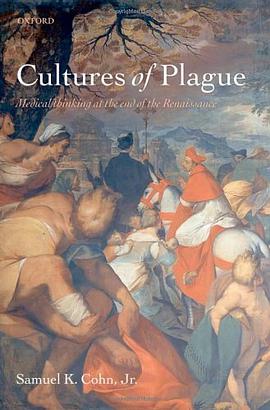
Cultures of Plague opens a new chapter in the history of medicine. Neither the plague nor the ideas it stimulated were static, fixed in a timeless Galenic vacuum over five centuries, as historians and scientists commonly assume. As plague evolved in its pathology, modes of transmission, and the social characteristics of its victims, so too did medical thinking about plague develop.
This study of plague imprints from academic medical treatises to plague poetry highlights the most feared and devastating epidemic of the sixteenth-century, one that threatened Italy top to toe from 1575 to 1578 and unleashed an avalanche of plague writing. From erudite definitions, remote causes, cures and recipes, physicians now directed their plague writings to the prince and discovered their most 'valiant remedies' in public health: strict segregation of the healthy and ill, cleaning streets and latrines, addressing the long-term causes of plague-poverty. Those outside the medical profession joined the chorus.
In the heartland of Counter-Reformation Italy, physicians along with those outside the profession questioned the foundations of Galenic and Renaissance medicine, even the role of God. Assaults on medieval and Renaissance medicine did not need to await the Protestant-Paracelsian alliance of seventeenth-century in northern Europe. Instead, creative forces planted by the pandemic of 1575-8 sowed seeds of doubt and unveiled new concerns and ideas within that supposedly most conservative form of medical writing, the plague tract.
Relying on health board statistics and dramatized with eyewitness descriptions of bizarre happenings, human misery, and suffering, these writers created the structure for plague classics of the eighteenth century, and by tracking the contagion's complex and crooked paths, they anticipated trends of nineteenth-century epidemiology.
作者简介
Saumel K. Cohn Jr. is Professor of Medieval History at the University of Glasgow. He is the author of eleven books, including Women in the Streets (Johns Hopkins University Press, 1996); Creating the Florentine State (Cambridge University Press, 1999); The Black Death Transformed (Oxford University Press, 2002); and Lust for Liberty (Harvard University Press, 2006). He is also a member of the Royal Historical Society, the selection panel for the European Research Council, the advisory boards of the OUP Online Bibliographies for the Renaissance and Reformation and "Medieval Memoria Online" (NE).
目录信息
读后感
用户评价
这本书的封面设计简直是视觉的盛宴,那种深沉的墨绿色调和烫金的古老文字,一下子就把你拉入了一个充满神秘感和历史厚重的世界。我拿到书的时候,光是翻阅那些精美的插图和地图,就花了好一阵子。作者显然在文献考据上下了极大的功夫,每一个细节都透露出一种对过去世界无尽的好奇与敬畏。特别是关于早期航海日志的引述部分,那些描述风暴、未知大陆和海上迷信的文字,读起来简直像是在亲身体验那段波澜壮阔的冒险旅程。我尤其欣赏作者对于文化符号的解读,那些看似寻常的器皿、仪式或传说,在作者的笔下,都焕发出令人惊叹的生命力,揭示出隐藏在文明表皮之下的深层逻辑。这本书的排版也做得极其优雅,字体选择和行距的把握,都充分考虑到了长时间阅读的舒适度,让人愿意沉浸其中,久久不愿离去。它不仅仅是一本讲述历史的著作,更像是一次精心策划的博物馆之旅,每翻一页都是一次对人类集体记忆的深刻挖掘。
评分这本书的震撼力在于其所构建的宏大图景。它不是零散地讲述事件,而是提供了一个理解人类社会运作底层逻辑的全新透镜。我读到后半部分时,常常会不自觉地联想到我们当下的生活,作者对古代某些社会应对危机模式的分析,竟然在很大程度上能投射到当代社会行为上。这让我深刻地反思了人类在面对不确定性时的集体反应机制。书中对于某些仪式化行为的解构,彻底颠覆了我过去对这些现象的认知,那种“原来如此”的恍然大悟,伴随着一丝对自身认知的局限性的警醒,是非常有价值的阅读体验。从头到尾,它都保持着一种持续的智力挑战,逼迫读者跳出固有的思维框架,去用更广阔的历史和文化视野来审视周遭的一切。
评分这本书的学术深度绝对是顶级的,但最难能可贵的是,它成功地避开了晦涩难懂的学术腔调。我是一个对历史有兴趣的普通读者,很多专业著作常常望而却步,但这本书的语言是如此的清晰、流畅,仿佛在与一位高明的智者进行一次深入的下午茶对话。作者在处理复杂的理论模型时,总能找到最贴切、最生动的比喻来加以阐释,这极大地降低了阅读门槛,却丝毫没有牺牲内容的严谨性。例如,他对某种社会结构演变模式的解释,我一下子就明白了,那种豁然开朗的感觉,是阅读一本优秀非虚构作品时最棒的体验。而且,作者对于一手资料的引用是如此的审慎和恰当,他引述的不是为了炫耀学问,而是为了让论点更加坚实有力,那种对事实的尊重让人肃然起敬。
评分如果用一个词来形容这本书带给我的感受,那一定是“震撼”。它不是那种读完就束之高阁的书籍,而是一本会留在你书架上,随时值得翻阅并从中汲取新意的工具书。书中的某些论述是如此的犀利和深刻,以至于我需要时不时地合上书本,在房间里踱步思考,试图完全消化其内涵。作者在构建论点时所展现出的那种无可辩驳的逻辑链条,以及对细节的苛求,让人不得不佩服其治学态度。我特别喜欢他收尾的方式,没有给出简单的结论,而是留下了一系列发人深省的问题,这使得阅读体验的余韵悠长,让人在合上书本后,仍能感受到思想的余波在脑海中回荡。这是一部真正有分量、能改变你看待世界方式的著作。
评分读完第一章,我立刻感觉自己像是被一位博学而又极富激情的大学教授带入了讲堂。他的叙事节奏把握得非常好,张弛有度,既有宏大叙事的磅礴气势,又不失对个体故事的细腻描摹。开篇就抛出了一个极具颠覆性的论点,让我不得不停下来,反复咀嚼其中的深意。接着,他娴熟地将不同地域、不同时代的文化现象编织在一起,那种跨文化比较的视角非常新颖,让我原本以为已经很熟悉的领域,又展现出了全新的侧面。作者的文笔带着一种古典的韵味,用词精准而富有画面感,尤其擅长使用排比和反问来加强论证的力量,读起来酣畅淋漓,有一种思想被不断激发的快感。这本书的结构设计也非常精巧,仿佛一条精心铺设的迷宫,每当你以为自己理解了某个分支时,作者又会巧妙地引导你走向另一个更加引人入胜的岔路口,让人欲罢不能。
评分 评分 评分 评分 评分