
具体描述
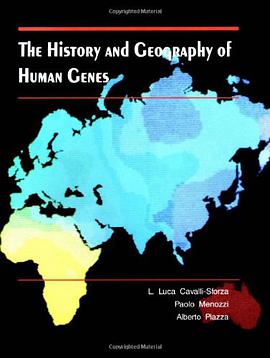
L. Luca Cavalli-Sforza and his collaborators Paolo Menozzi and Alberto Piazza have devoted fourteen years to one of the most compelling scientific projects of our time: the reconstruction of where human populations originated and the paths by which they spread throughout the world. In this volume, the culmination of their research, the authors explain their pathbreaking use of genetic data, which they integrate with insights from geography, ecology, archaeology, physical anthropology, and linguistics to create the first full-scale account of human evolution as it occurred across all continents. This interdisciplinary approach enables them to address a wide range of issues that continue to incite debate: the timing of the first appearance of our species, the problem of African origins and the significance of work recently done on mitochondrial DNA and the popular notion of an 'African Eve', the controversy pertaining to the peopling of the Americas, and the reason for the presence of non-Indo-European languages - Basque, Finnish, and Hungarian - in Europe. The authors reconstruct the history of our evolution by focusing on genetic divergence among human groups. Using genetic information accumulated over the last fifty years, they examined over 110 different inherited traits, such as blood types, HLA factors, proteins, and DNA markers, in over eighteen hundred, primarily aboriginal, populations. By mapping the worldwide geographic distribution of the genes, the scientists are now able to chart migrations and, in exploring genetic distance, devise a clock by which to date evolutionary history: the longer two populations are separated, the greater their genetic difference should be. This volume highlights the authors' contributions to genetic geography, particularly their technique for making geographic maps of gene frequencies and their synthetic method of detecting ancient migrations, as for example the migration of Neolithic farmers from the Middle East toward Europe, West Asia, and North Africa. Beginning with an explanation of their major sources of data and concepts, the authors give an interdisciplinary account of human evolution at the world level. Chapters are then devoted to evolution on single continents and include analyses of genetic data and how these data relate to geographic, ecological, archaeological, anthropological, and linguistic information. Comprising a wide range of viewpoints, a vast store of new and recent information on genetics, and a generous supply of visual elements, including 522 geographic maps, this book is a unique source of facts and a catalyst for further debate and research.
作者简介
目录信息
读后感
用户评价
这本书的封面设计简直是一场视觉盛宴,那种深邃的蓝色调混合着古老的羊皮纸纹理,立刻就能把我拉入一个探索人类起源的宏大叙事之中。我翻开扉页,那种厚重而精良的纸张质感,就让我知道这绝非泛泛之作。作者的行文风格极其老练,像一位经验丰富的导游,带着你穿梭于大陆迁移的迷雾和时间洪流之中。他并没有用那些晦涩难懂的专业术语来故作高深,而是将复杂的遗传学概念,通过一个个鲜活的地理案例巧妙地串联起来。比如,他对东非大裂谷地区不同族群的基因差异的描述,生动得仿佛我能亲眼目睹那些远古的迁徙路线。整本书的逻辑推进,层次分明,从宏观的“走出非洲”理论,到微观的特定基因标记如何揭示过去的事件,过渡得自然流畅,让人完全沉浸其中,忘记了时间的流逝。它真正做到的,是架起了一座沟通科学与人文的桥梁,让一个对人类学知之甚少的普通读者,也能领略到基因如何成为我们最可靠的历史记录者。
评分老实说,我原本以为这会是一本枯燥的学术著作,充满了图表和冷冰冰的数据,但这本书完全颠覆了我的预期。作者的叙事能力简直可以用“史诗级”来形容。他不仅仅是在陈述“什么”发生了,更是在深挖“为什么”会这样发生。阅读过程中,我多次停下来,对着地图陷入沉思。他对于特定基因“瓶颈效应”的论述,结合了冰河时期和气候变迁的背景,读起来充满了戏剧张力。比如,他对美洲原住民基因多样性降低的解释,让我对数万年前那场穿越白令海峡的伟大壮举有了全新的、更加立体的理解。文字的节奏把握得极好,时而磅礴大气,描绘数百万年的演化轨迹;时而又细腻入微,聚焦于一个单一人群在特定环境下生存的挣扎。这本书的价值远超一般的科普读物,它更像是一部用DNA写成的世界史,充满了对生命韧性的敬畏。
评分对于那些习惯了快餐式阅读的人来说,这本书可能需要一点耐心去适应,因为它要求读者真正投入心神去跟随作者的思绪。但请相信我,一旦你适应了这种沉浸式的阅读节奏,你会发现它带来的回报是惊人的。作者似乎有一种魔力,能将冰冷的DNA序列转化为鲜活的家族史诗。他对人类适应环境的精彩论述,特别是关于皮肤颜色、高海拔耐受性等性状的遗传基础,简直是一部微缩的自然选择教科书。这本书的论述结构非常宏大,它从人类共同的起源地出发,逐步扩展到我们如何在地球的每一个角落扎根,最终汇聚成一个关于我们“是谁,从哪里来”的完整图景。它不仅解答了许多我过去心中的疑问,更重要的是,它激发了更多关于未来人类进化的深层思考。这是一本值得反复阅读、时常拿出来翻阅的传世之作。
评分这本书的排版和插图处理堪称典范,这在严肃的科学书籍中并不多见。那些用精细线条勾勒出的世界地图,上面标注着复杂的等位基因频率分布图,非但没有让人感到眼花缭乱,反而成了理解文本的最佳辅助工具。我尤其喜欢作者在讨论特定族群隔离与融合时所使用的类比手法,他常常借用现代社会中的现象来解释远古的遗传流动,这种跨越时空的对比,极大地拉近了读者与历史的距离。阅读时,我感觉自己仿佛在进行一场高强度的脑力体操,但过程是令人愉悦的。它不仅仅是信息量的堆砌,更是一种思维方式的训练,教会你如何用地理和时间两个维度去审视我们共同的人类故事。这本书的深度,足以让专业人士反复咀嚼,其广度,也足够让好奇心旺盛的门外汉感到满足。
评分这本书最让我称赞的一点,是它处理信息密度和可读性之间的平衡。我发现自己可以轻松地将它放在床头,睡前随手翻开一章,即便只阅读了几页,也能收获满满的知识点,而且这些知识点不是零散的碎片,而是紧密镶嵌在一个巨大的知识网络中。作者在论证过程中展现出的严谨性令人印象深刻,他会诚实地指出目前科学界仍存在争议的领域,而不是把任何理论都包装成无可辩驳的真理,这种诚实的态度非常加分。特别是关于欧洲人种迁移和雅利安人扩散的章节,作者小心翼翼地梳理了历史记载、考古发现与遗传学证据之间的相互佐证与冲突,使得整体论述显得更加真实可信。读完后,我感觉自己对“人”这个概念的理解,从一个抽象的物种,具象化成了一场持续了数十万年的全球接力赛。
评分 评分 评分 评分 评分