
具体描述
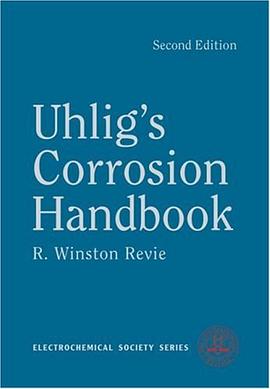
This is the definitive handbook on corrosion, in an updated version from the classic 1948 edition. This new edition: offers global coverage, providing data on corrosion rates of steel in major river systems around the world and atmospheric corrosion rates in many different parts of the world, including polar regions. It presents the corrosion behavior of many new materials such as weathering steels and newer stainless alloys. It discusses major advances since the first edition, including the development of many nonmetallic materials, their corrosion behavior, and engineering approaches to their corrosion control.
The Advanced Materials Scientist's Companion: Principles, Applications, and Future Directions in Surface Engineering A Comprehensive Volume Exploring the Cutting Edge of Material Interaction and Protection This meticulously compiled volume serves as an essential reference for materials scientists, chemical engineers, and researchers operating at the forefront of surface science and advanced materials engineering. It moves beyond conventional degradation mechanisms to provide an in-depth exploration of sophisticated material interactions, protection strategies, and the fundamental physics governing solid-state interfaces in demanding environments. The book is structured logically, beginning with a foundational review of thermodynamics and kinetics as they pertain specifically to interphase boundaries, before delving into the complex phenomena driving modern material failure and longevity. It assumes a reader already familiar with basic chemistry and metallurgy, focusing instead on high-level, specialized topics critical for next-generation technology development. --- Part I: Foundations in Interfacial Thermodynamics and Kinetics This section establishes the advanced theoretical framework necessary for understanding complex surface behavior. It diverges from basic corrosion models to focus on non-equilibrium thermodynamics as applied to reactive surfaces. Chapter 1: Statistical Mechanics of Adsorption and Chemisorption on Heterogeneous Surfaces This chapter provides a rigorous treatment of adsorption isotherms beyond the Langmuir model, incorporating coverage-dependent lateral interactions via Fowler-Guggenheim approaches adapted for metal/alloy surfaces. Detailed kinetic models are presented for dissociative chemisorption and surface reconstruction driven by thermal and electrical potentials. Emphasis is placed on the statistical interpretation of surface energy components, including the contribution of adsorbed species to the overall Gibbs free energy of the system. Case studies illustrate the sensitivity of surface bond energies to local strain fields. Chapter 2: Phase Transformations at Elevated Temperatures and Pressures A deep dive into solid-state diffusion theory, moving beyond Fick's laws to incorporate stress-driven mass transport (solutal and elastodiffusion). The focus shifts to high-temperature processing environments, examining the kinetics of intermetallic compound formation and solid-solution strengthening mechanisms at interfaces. Critical analysis is provided on the role of grain boundary character distribution (GBCD) in facilitating high-rate transport paths, particularly in polycrystalline materials subjected to thermal cycling. Modeling techniques, including finite element analysis (FEA) incorporating temperature-dependent transport coefficients, are discussed in detail. Chapter 3: Electrochemical Principles Governing Non-Aqueous Systems This chapter focuses exclusively on electrochemical behavior in environments where water is absent or significantly suppressed, such as molten salts, supercritical fluids, and advanced battery electrolytes (e.g., solid-state ion conductors). It details the challenges in establishing stable reference electrodes in these media and explores alternative kinetic measurements utilizing impedance spectroscopy (EIS) across wide frequency ranges to deconvolute charge transfer resistance from double-layer capacitance variations unique to non-aqueous interfaces. The Nernst equation modification for non-ideal solution behavior is rigorously derived. --- Part II: Advanced Degradation Mechanisms in Extreme Environments This section tackles material degradation that falls outside the scope of standard atmospheric or aqueous corrosion, focusing on synergy between multiple aggressive factors. Chapter 4: High-Temperature Oxidation and Hot Corrosion in Energy Systems Detailed analysis of scale formation kinetics on nickel- and cobalt-based superalloys used in gas turbines. The text thoroughly explores the mechanism of "hot corrosion," differentiating between Type I (sulfate-induced) and Type II (molten salt attack) regimes. Emphasis is placed on the development of protective alumina scales ($ ext{Al}_2 ext{O}_3$) and the critical role of rare-earth element (REE) additions in improving adherence and resisting spallation through enhanced interface bonding, referencing recent synchrotron-based X-ray absorption near-edge structure (XANES) studies used to characterize oxide stoichiometry in situ. Chapter 5: Erosion-Corrosion Synergy and Tribocorrosion This chapter addresses the complex interplay between mechanical wear and chemical degradation. It provides a quantitative framework for modeling material removal rates by integrating tribological parameters (load, sliding velocity, abrasive particle size) with electrochemical dissolution rates. Specific attention is given to fretting corrosion in aerospace joints and slurry erosion in mineral processing equipment. Advanced surface characterization techniques, such as atomic force microscopy (AFM) profiling of wear tracks combined with scanning Kelvin probe force microscopy (SKPFM) mapping of localized electrochemical potential shifts, are presented as essential diagnostic tools. Chapter 6: Irradiation Effects on Materials Stability Focusing on nuclear and high-energy physics applications, this chapter covers the displacement damage cascades induced by neutron, proton, or ion bombardment. It details the generation, migration, and clustering of point defects (vacancies and interstitials) and their subsequent influence on microstructural evolution, including void swelling and radiation-induced phase instability. Models are presented for predicting the swelling rate as a function of dose rate and temperature, using kinetic Monte Carlo simulations as the primary predictive tool. --- Part III: Modern Protective Strategies and Surface Modification The final section details cutting-edge technological solutions employed to engineer material surfaces for enhanced durability. Chapter 7: Physical Vapor Deposition (PVD) and Chemical Vapor Deposition (CVD) for Barrier Coatings A rigorous comparison of PVD techniques (e.g., sputtering, cathodic arc) versus CVD methodologies (e.g., ALD, MOCVD) for applying dense, high-purity ceramic or metallic coatings. The text emphasizes process control—specifically substrate bias effects in sputtering and precursor chemistry control in CVD—to manage film microstructure, residual stress, and crystallographic orientation, which are paramount for achieving crack resistance and adhesion longevity under thermal shock. Detailed analysis of columnar growth morphology in thin films is provided. Chapter 8: Electrochemical Deposition of Nanostructured Materials This chapter explores advanced electroplating and electroless deposition beyond simple metallic coatings. It focuses on the template-assisted fabrication of highly ordered nanowire arrays and porous structures for functional applications (e.g., catalysis, energy storage electrodes). The critical control parameters, such as current density pulsing, electrolyte additives (brighteners, levelers), and bath pH stability, are linked directly to the resultant nanostructure morphology and electrochemical performance metrics. Chapter 9: Biomimetics and Self-Healing Surface Architectures The concluding chapter examines the transition toward smart materials capable of autonomous repair. It reviews lessons learned from natural systems (e.g., nacre, bone) to inspire synthetic repair mechanisms. This includes intrinsic self-healing polymers, microencapsulation strategies for embedding sacrificial healing agents into protective topcoats, and extrinsic chemical triggers (e.g., thermal or pH shifts) required to initiate localized repair reactions within micro-cracks before catastrophic failure ensues. The chapter concludes with a forward look at machine learning applications in predicting the service life extension afforded by these healing capabilities. --- Target Audience: Graduate students in Materials Science and Engineering, Research and Development professionals in aerospace, energy production, microelectronics fabrication, and advanced manufacturing. Prerequisites: Familiarity with physical chemistry, diffusion kinetics, and basic electrochemistry.
作者简介
目录信息
读后感
评分
评分
评分
评分
评分
用户评价
评分
评分
评分
评分
评分