
具体描述
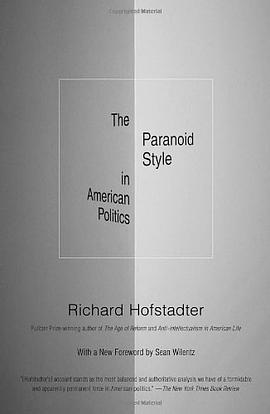
This timely reissue of Richard Hofstadter's classic work on the fringe groups that influence American electoral politics offers an invaluable perspective on contemporary domestic affairs.
In The Paranoid Style in American Politics , acclaimed historian Richard Hofstadter examines the competing forces in American political discourse and how fringe groups can influence — and derail — the larger agendas of a political party. He investigates the politics of the irrational, shedding light on how the behavior of individuals can seem out of proportion with actual political issues, and how such behavior impacts larger groups. With such other classic essays as “Free Silver and the Mind of 'Coin' Harvey” and “What Happened to the Antitrust Movement?, ” The Paranoid Style in American Politics remains both a seminal text of political history and a vital analysis of the ways in which political groups function in the United States.
作者简介
Throughout the ages the "paranoid style" has been used to arouse public indignation and to attack established institutions and/or entrenched traditions that have grown ineffectual. Usually, the darkest and most abhorrent aspects of the accuser's personality are projected onto the hated enemy. Moreover, the true menace is sometimes seen as a malaise that lurks in a nation's midst rather than as something that exists outside its borders. And these chimeras tend to be the shadow projections of the idealistic personality (that is deeply concerned with the moral decay of the society around them) rather than realistic assessments of the true dangers that exist in the objective world. It gives the paranoid the illusion of control since there is little or nothing they can do about world opinion outside his or her borders, although they often imagine this to be so. As a consequence, many foreign policy initiatives are doomed to failure because a distorted picture of the world is being refracted through what amounts to a narrow, insular prism. That is, instead of viewing startling political developments throughout the world as complex historical processes that are unfolding for entirely legitimate reasons they might be seen as betrayals or acts of deliberate defiance. Especially when the vital interests of the observer are threatened. Then too, Americans have often seen any failure as the work of people within our own government who allowed such things to happen. For if some of our own people are to blame for our weakness, then we do not have to deny "the myth of American Omnipotence." This is an ideal time to read Hofstadter's book. It was written in the 1950s and 60s, so you get an excellent feel for postwar America (after the bomb) and the advent of the Cold War. Hofstadter's account of the McCarthy Era and Barry Goldwater's presidential campaign (of 1964) is quite instructive. An astute reader will notice many parallels with today. But he also discusses earlier periods of our history when the paranoid style was in its infancy, and yet was destined to become the genesis of the "liberal-conservative" split that is with us to this day. One fascinating period was the 1890s, the era of Populist William Jennings Bryan and the "Free Silver Movement," which went down in defeat to William McKinley in the presidential election of 1896. Prior to McKinley's victory there was also public outrage over Spain's oppression of Cuba. And although McKinley did not advocate war with Spain, nor did Republican business leaders that had financed his campaign, he was swept into the Spanish-American War by the spirit of the times. Having filled up the continent with Westward expansion and the dream of "Manifest Destiny," many Americans felt a sudden lack of opportunity and purpose. But after Admiral Dewey's sudden victory in Manila Bay Americans began to grapple with their "Duty and Destiny" in an increasingly imperialistic world that they thought was filled with decadent and dangerous foreign powers. There is no way to summarize the exquisite detail in Hofstadter's book. One must read it and ponder its many lessons. For the sum of its parts are greater than the whole. Good history always makes us realize that there really is nothing new under the sun, and yet, there most certainly IS! Mark Twain said it best when he joked: "History doesn't repeat itself, but it rhymes."
目录信息
读后感
用户评价
我必须承认,这本书的深度和广度让我感到有些不知所措,但这种“不知所措”恰恰是它成功之处的体现。它成功地将历史学、社会学和政治心理学融合在一个宏伟的框架之下。作者对“叙事”在政治权力构建中的作用的探讨尤其精辟。他揭示了,很多时候,一个政治运动的真正力量不在于其口号的合理性,而在于其叙事结构是否足够具有感染力和排他性。我发现自己不得不放慢阅读速度,常常需要回头重读某一章的过渡段落,以确保完全领会作者设下的思维陷阱——或者说,思维的引导路径。这本书的结论是令人不安的,因为它暗示了,驱动政治极端化的因素并非总是外来的冲击,而可能深植于我们共同的文化基因之中,这使得它的反思价值持久且深远。
评分这本书简直是为那些对权力结构和幕后操作抱有深深怀疑态度的人量身定做的。我读完后,感觉像是被拉进了一个充满迷雾的地下室,那里灯光昏暗,空气中弥漫着陈旧羊皮纸和咖啡因的味道。作者的叙事方式极其引人入胜,他不是简单地陈述事实,而是像一个老练的侦探,层层剥开历史的表皮,展示出那些隐藏在光鲜外表之下的,令人不安的逻辑链条。我特别欣赏他对历史细节的打磨,那种对早期政治文献的精准引用和对社会心理学的深刻洞察力结合得天衣无缝。读到关于特定历史事件的分析时,我甚至会忍不住停下来,重新审视我过去对那些事件的既有认知。这本书的论证强度非常扎实,它没有停留在肤浅的阴谋论层面,而是试图构建一个连贯的、有力的历史解释框架,解释为什么某些特定的恐惧和偏执会在特定时期内占据美国政治的核心地位。它迫使读者去思考:我们所相信的“常识”,究竟是多么脆弱的构建。
评分说实话,这本书的阅读体验是极具挑战性的,但正因如此,它的价值才更加凸显。它不是那种能让你在沙滩上轻松翻阅的休闲读物;它要求你全神贯注,甚至需要你准备好接受一些可能颠覆你既有世界观的观点。作者在处理敏感议题时,展现出一种令人敬佩的学术克制力,他很少直接下判断,而是通过堆砌证据和构建场景,让读者自己得出结论。这种“引导式”的论证方式极其高明,因为它避免了说教的枯燥,转而制造了一种共享的“探寻真相”的仪式感。我尤其喜欢他如何将看似无关的文化现象——比如某种特定的艺术风格或者大众迷信——巧妙地编织进宏大的政治叙事中去,揭示出政治偏执并非孤立存在,而是社会情绪的集中爆发点。读完后,我感到一种清理过壁炉的疲惫感,但同时,视线也变得更加清晰锐利。
评分这是一部读起来让人脊背发凉的著作,其文字的张力和思想的穿透力,远远超出了普通政治学著作的范畴。作者的文笔如同冰冷的解剖刀,精准而毫不留情地剖析着美国政治文化的深层肌理。我发现自己常常因为书中的某些洞见而感到一种智力上的震撼——那种“原来如此,我怎么之前没想到”的恍然大悟感,伴随着一丝难以言喻的寒意。这本书的结构设计非常精妙,它不是线性的叙事,更像是一个复杂的多维空间,不同时代的事件和思想在其中相互映照、相互印证。尤其是在探讨媒体环境如何加速和固化这些“偏执”思维模式的部分,我感觉自己的日常信息摄入方式受到了前所未有的挑战。它成功地将严肃的学术研究与一种近乎哥特式的、对未知的恐惧感结合起来,使得阅读体验既是智力上的盛宴,也是一场精神上的冒险。
评分这本书的作者似乎拥有某种穿越时空的能力,能够精准捕捉到那些在历史长河中反复出现的、关于“我们”与“他们”的紧张关系。我阅读时的感受,更像是在听一位经验丰富、略带沧桑感的老船长讲述海上航行中的诡谲风暴。他的语言富有韵律感,充满了古典文学的厚重感,同时又精准地击中了当代政治的痛点。我被他用来描述特定社会群体的那些比喻深深吸引,它们既形象生动,又充满了讽刺的智慧。更重要的是,这本书提供了一个绝佳的透镜,用来观察身份政治是如何被历史的惯性所塑造和强化的。它不仅仅是在描述一种现象,更是在探讨这种现象赖以生存的文化土壤和心理机制。对于任何希望深入理解美国政治光谱中那些看似非理性驱动力的读者来说,这本书是必读的。
评分看了个开头就果断下单买回来读了一夜。关于potent of paranoid right-wing zealot agitation的论述让我一下子就跟现实对上了号,然鹅,这书不是1965年写的么!
评分看了个开头就果断下单买回来读了一夜。关于potent of paranoid right-wing zealot agitation的论述让我一下子就跟现实对上了号,然鹅,这书不是1965年写的么!
评分看了个开头就果断下单买回来读了一夜。关于potent of paranoid right-wing zealot agitation的论述让我一下子就跟现实对上了号,然鹅,这书不是1965年写的么!
评分看了个开头就果断下单买回来读了一夜。关于potent of paranoid right-wing zealot agitation的论述让我一下子就跟现实对上了号,然鹅,这书不是1965年写的么!
评分看了个开头就果断下单买回来读了一夜。关于potent of paranoid right-wing zealot agitation的论述让我一下子就跟现实对上了号,然鹅,这书不是1965年写的么!