
具体描述
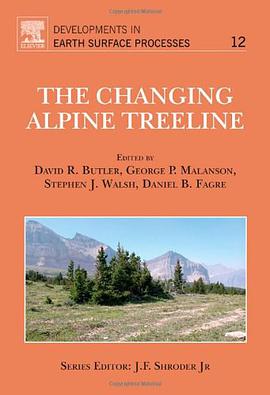
The alpine treeline ecotone (ATE) is an area of transition high on mountains where closed canopy forests from lower elevations give way to the open alpine tundra and rocky expanses above. Alpine tundra is an island biome and its ecotone with forest is subject to change, and like oceanic islands, alpine tundra is subject to invasion - or the upward advance of treeline. The invasion of tundra by trees will have consequences for the tundra biome as invasion does for other island flora and fauna. To examine the invasibility of tundra we take a plant's-eye-view, wherein the local conditions become extremely important. Among these local conditions, we find geomorphology to be exceptionally important. We concentrate on aspects of microtopography (and microgeomorphology) and microclimate because these are the factors that matter: from the plant's-eye-view, but we pay attention to multiple scales. At coarse scales, snow avalanches and debris flows are widespread and create "disturbance treelines" whose elevation is well below those controlled by climate. At medium scales, turf-banked terraces create tread-and-riser topography that is a difficult landscape for a tree seedling to survive upon because of exposure to wind, dryness, and impenetrable surfaces. At fine scales, turf exfoliation of the fronts of turf-banked risers, and boulders, offer microsites where tree seedlings may find shelter and are able to gain a foothold in the alpine tundra; conversely, however, surfaces of needle-ice pans and frost heaving associated with miniature patterned ground production are associated with sites inimical to seedling establishment or survival. We explicitly consider how local scale processes propagate across scales into landscape patterns.
The objective of this book is to examine the controls on change at alpine treeline. All the papers are focused on work done in Glacier National Park, Montana, USA. Although any one place is limiting, we are able to examine the alpine treeline here in some detail - and an advantage is that the treeline ecotone in Glacier National Park is quite variable in itself due to the underlying variability in geomorphology at multiple scales.
This book will provide insights into an important ecological phenomenon with a distinctly geomorphic perspective. The editors collectively have over 100 years of experience in working in geomorphology, biogeography, and ecology. They also have each worked on research in Glacier National Park for several decades. The book will be a reference for a variety of professionals and students, both graduate and undergraduate, with interests in Physical Geography, Geomorphology, Ecology, and Environmental Science. Because of the importance of the alpine treeline ecotone for recreation and aesthetic interests in mountain environments, wildland and park managers will also use this book.
* Subject matter: geomorphology at alpine treeline
* Expertise of contributors: each editor brings over 25 years of experience in studies of ecotones and geomorphology, and collectively over 100 years of experience in Glacier National Park
* Changing alpine treeline examines climate change
作者简介
目录信息
读后感
用户评价
这本书的装帧和排版,作为一本学术专著,可以说是做到了极致的用心。我指的是那种“阅读体验”上的舒适感,这对于长时间面对复杂图表和专业术语的读者来说至关重要。字体选择的衬线风格,在长时间阅读后对眼睛的友好程度非常高,而且大量的插图和图表,清晰度和分辨率都达到了顶级水准。让我印象深刻的是,作者在解释那些高度数学化的生态模型时,并没有直接扔给读者一堆公式,而是采用了大量的手绘示意图和流程图来辅助说明,这极大地降低了理解门槛,使得即便是非纯粹数学背景的研究者也能快速抓住核心逻辑。这种对读者的体贴,在严肃的学术出版物中并不常见,很多时候出版商只管把内容塞进去,却忽略了读者的使用感受。**《The Changing Alpine Treeline, Volume 12》**的编辑团队显然花了大量时间和精力在用户体验上,这使得原本可能枯燥的理论探讨,变成了一种享受。
评分对于那些希望从更广阔的社会人文角度理解环境变化的读者来说,这本书可能需要一些耐心的适应期,但一旦你深入进去,你会发现它隐藏的社会学维度。作者非常巧妙地将生态学发现与当地社区的生计、传统知识体系(Traditional Ecological Knowledge, TEK)的存续问题联系了起来。它不仅仅是在研究树木的位置,更是在研究“边界”——生态边界、文化边界、经济边界——是如何被气候变化重塑的。例如,书中对某个特定高山牧区居民如何调整其放牧路线和时间以适应植被带的变化的案例分析,写得极其生动,充满了田野调查的烟火气。它提醒我们,科学数据最终是要落到活生生的人身上的,科学发现如果不融入到人类的适应性行为中去讨论,其意义就会大打折扣。这种对“人与自然系统耦合”的深刻反思,使得这本书的价值超越了纯粹的自然科学范畴,具有了重要的政策参考意义。
评分亚马逊的评论区里,关于这本**《The Changing Alpine Treeline, Volume 12》**的讨论真是五花八门,我得选几个角度来聊聊我的真实感受,毕竟,光看封面介绍是体会不到这本书的精髓的。 首先,这本书在探讨“高山林线变迁”这个主题时,其深度和广度都远超我的预期。我原本以为它会更多地停留在传统的气候学和地理学范畴内,罗列一些历史数据和模型预测。然而,它真正吸引我的是那种跨学科的交织感。作者并没有仅仅满足于描述林线在上升或后退的现象,而是深入挖掘了驱动这些变化的微观生态过程。比如,对于不同物种在严酷环境下的适应性策略,书中有非常细致的描绘,涉及了树木的生物力学、根系结构如何抵抗冻融循环的压力,甚至还涉及了土壤微生物群落与树木生长之间的复杂互作。那些关于“极端气候下的生命韧性”的章节,读起来就像在看一部史诗级的生存剧本,充满了细节和张力。更别提它引入了最新的遥感技术分析方法,那种将宏观尺度变化与微观生物学解释相结合的叙事手法,让人不得不佩服作者扎实的功底和独特的视角。这本书不是一本轻松的读物,但它提供的知识密度,绝对值得反复咀嚼。
评分说实话,我是在一个非常特定的研究背景下接触到这本书的,起初是抱着“查漏补缺”的心态,结果却发现它像一把精密的瑞士军刀,能应对各种复杂的学术需求。这本书的结构安排极其巧妙,它不是那种平铺直叙的教科书式编排,而更像是一部层层递进的辩论集。每一个章节似乎都在挑战前一个章节建立的理论框架,促使读者不断地进行批判性思考。比如,它对“人为干扰”与“自然驱动力”的权重分配进行了极为审慎的探讨,并未轻易下定论,而是呈现了多方位的证据链条,迫使读者自己去构建一个更符合现实的复杂模型。尤其欣赏它对“不确定性”的处理,没有将科学探索描绘成一条笔直的康庄大道,而是坦诚地展示了当前研究的局限性和未来的研究方向。对于我们这些需要撰写综述或者申请研究基金的人来说,这本书的价值不仅仅在于它提供了多少确切的答案,更在于它指明了哪些问题尚未得到圆满解决,哪些领域正处于科学突破的前沿。它激发了我重新审视自己手头数据的动力。
评分如果让我用一个词来概括这本书带给我的感受,那可能是“敬畏”。敬畏于自然系统的复杂性,也敬畏于科学家们穷尽心力去揭示这些复杂性的过程。这本书的收尾部分,尤其让我回味良久,它没有以一个宏大的、盖棺定论的预测结束,反而留下了一个关于“适应未来”的开放性问题。它暗示,我们对林线变迁的理解永远不会是终点,而是一个持续的、动态的过程。它挑战了我们对于“稳定状态”的固有认知,迫使我们接受一个持续演化的、充满涌现现象的世界。这是一种非常高明的学术态度——承认知识的边界,并激励后学者继续前行。对于任何严肃对待地球系统科学,或者对生命在极限条件下如何运作充满好奇心的人来说,这本书绝对是年度必读的深度文献,它提供了一个坚实的基石,让我们能够以更具批判性和前瞻性的眼光去面对未来的气候挑战。
评分 评分 评分 评分 评分