
具体描述
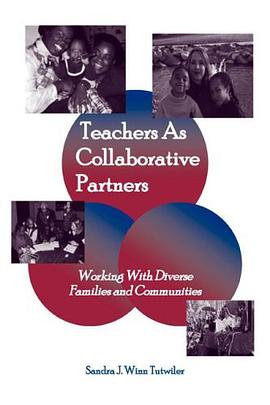
Teachers as Collaborative Partners assists future and inservice teachers in developing a research-based framework for understanding the dynamics of school, family, and community relations. It provides foundational knowledge important for understanding families and communities, while exploring conditions that influence family-school-community interactions. The text is designed to engage the critical reflective capability of teachers in ways that will support their ability to work with diverse families in a variety of teaching contexts. Part I focuses first on the social, cultural, and historical roots of the family, with specific attention to the evolution of public schools and the family as interdependent social institutions, and then on the multiple ways families conceive of and conduct family life, as well as the impact of community attributes on the work of families and schools. Part II explores the relationship among families, communities, and schools within social, political, legal, and educational contexts. Part III addresses educational practices that respond to authentic partnerships with families and communities. The goals of the text are supported by pedagogical tools that provide opportunities for readers to make connections between information in each chapter and realistic family-community-school situations. Case Studies are embedded in most chapters. These serve to complement research-based with authentic and personally articulated experiences of parents. Teachers then have the opportunity to make connections between theory and lived experiences. Each chapter includes Inquiry and Reflection questions and Guided Observations to engage readers in case study analysis, situated learning exercises, and classroom and community observations and reflections. The Family-Community-School Profile introduced in this text as a teacher-generated summary allows for evaluation of family-community-school dynamics in specific contexts, and provides teacher candidates opportunities to engage in self-introspection around family-community-school issues before becoming an interacting member of a school-family community. Inquiry and Reflection and Guided Observation activities completed throughout the text are used to generate the Profile. These exercises have been coded to align with specific Profile components. The Profile, which is also aligned with INTASC Principles and NBPTS Propositions, casily becomes a portfolio section documenting teacher skills and knowledge associated with school, family, and community dynamics. Completion of the profile is described in-depth in the text. While the text is aligned with standards and field experiences that are a part of perservice teacher education programs, the content and exercises are equally helpful for inservice teachers wanting to document skills and knowledge in this area as required for National Board Certification.
作者简介
目录信息
读后感
用户评价
**第五段** 从学术研究的角度来看,这本书的扎实之处在于它对不同合作模式的分类和评估。它清晰地勾勒出了“松散连接型合作”与“深度整合型合作”之间的区别,并提供了衡量合作质量的清晰指标。我喜欢作者在分析案例时所采用的那种批判性眼光,它不美化任何一方,而是直面合作中的摩擦点和效率瓶颈。例如,书中对于“时间投入与产出不成比例”这一问题的剖析,非常到位。它没有指责教师不努力,而是深入探究了是流程设计本身的问题。这本书不仅仅是写给想合作的老师看的,更是给所有教育管理者、课程设计师的必读书目。它提供了一套系统的框架,帮助我们理解,一个真正支持教师成长的学校文化,是如何通过精心设计的合作机制搭建起来的。这本书,是关于如何构建“知识共同体”的教科书级别的实践指南。
评分**第二段** 说实话,我对那些鼓吹“教学相长”的口号书已经有点免疫了,但这本书却成功地抓住了我的注意力。它的叙事风格非常独特,仿佛是在翻阅一本精心编辑的“教师成长日记”。我感觉作者非常了解一线教师的困境——那种面对复杂多变的学生活动和日复一日的重复工作时的疲惫感。书中大量引用的对话片段,还原了教研组内部真实、有时甚至是带着火药味的讨论,这比任何理论阐述都要来得真实有力。它探讨的合作,超越了行政安排的教研时间,深入到了教师个体对教学意义的重新构建上。有一处描述,关于两位资深教师如何就一个历史事件的教学切入点争论不休,最终融合出更具批判性思维的教学方案,我反复读了好几遍。这让我意识到,真正的协作,是需要勇气去暴露自己的不完美,并乐于接受他人的挑战的。这本书更像是一份行动指南,而不是一份冷冰冰的学术报告。
评分**第三段** 这本书的阅读体验,更像是一场沉浸式的专业发展工作坊。它的语言简洁有力,没有太多晦涩的术语,直击教育实践的核心痛点。我特别赞赏作者对于“权力动态”的探讨。在传统的教育体系中,教师之间的关系往往是不平等的,资深者可能压倒新手,学科带头人可能过于强势。但这本书旗帜鲜明地指出,健康的合作关系必须建立在相互尊重和权力共享的基础上。书中提供的那些“合作协议模板”和“冲突调解技巧”,简直是救星!它们不是高高在上的建议,而是可以立刻复制到我们下一次教研会上的实用工具。读完后,我立刻组织我们组的老师尝试了其中一种“轮流主持”的反馈模式,效果立竿见影。这本书的价值,就在于它提供了一种可操作的文化变革蓝图,而不是空洞的愿景。
评分**第四段** 我得承认,我抱着一丝怀疑的态度开始阅读这本书的,因为“伙伴关系”这个话题已经被过度消费了。然而,这本书很快扭转了我的看法。它不是在赞美合作的美好,而是在解剖合作的“技术细节”和“情感维护”。作者对“脆弱性”的强调,让我印象极其深刻——合作的深度取决于我们愿意在同事面前展现多少自己的困惑和不确定性。书中穿插的“反思日志”部分,展示了教师在合作过程中经历的心理波动,从最初的抵触、尴尬,到后期的信任、依赖,这个过程的描绘极其细腻,让读者产生强烈的共鸣。这让我反思自己过去在团队中过于追求“全能人”形象的错误。这本书成功地将“协作”从一个组织行为,提升到了一个关乎教师心理健康和专业韧性的个人课题。它让我们看到,在同伴支持下成长,远比独自摸索要高效且愉快得多。
评分**第一段** 这本书简直是教育领域的一股清流,它没有空泛地谈论宏大的理论,而是像一位经验丰富的老教师,手把手地带你走进那些真实、鲜活的课堂瞬间。我尤其欣赏作者对于“同伴协作”这一概念的细腻刻画,它不是简单地搭伙干活,而是一种深层次的、充满张力的思维碰撞。书中详述了不同学科背景的教师如何跨越专业壁垒,共同设计课程、分析学情,并在这个过程中实现个人成长的案例,让我这个刚入行的青年教师受益匪浅。特别是关于“有效反馈循环”的那一章节,作者用生动的笔触描绘了从初步尝试到最终优化的一系列曲折,展示了合作并非一帆风顺,但坚持下去的价值所在。那种相互支持、共同进步的氛围,真的让人对未来的教育工作充满了期待和信心。这本书的结构安排也非常巧妙,理论的引入恰到好处,更多的篇幅留给了实践路径的探索,读起来既有深度又不失温度。
评分 评分 评分 评分 评分