

具体描述
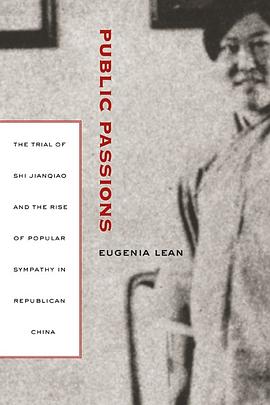
In 1935, a Chinese woman by the name of Shi Jianqiao murdered the notorious warlord Sun Chuanfang as he prayed in a Buddhist temple. This riveting work of history examines this well-publicized crime and the highly sensationalized trial of the killer. In a fascinating investigation of the media, political, and judicial records surrounding this cause célèbre, Eugenia Lean shows how Shi Jianqiao planned not only to avenge the death of her father, but also to attract media attention and galvanize public support. Lean traces the rise of a new sentiment--"public sympathy"--in early twentieth-century China, a sentiment that ultimately served to exonerate the assassin. The book sheds new light on the political significance of emotions, the powerful influence of sensational media, modern law in China, and the gendered nature of modernity.
作者简介
Eugenia Lean is Assistant Professor of History at Columbia University.
目录信息
读后感
8.5 施剑翘复仇案:民国时期公众同情的影响 本书大致讲述施剑翘(及其幕后势力)通过利用舆论 产生公众同情 公众同情影响法官 法官被迫考虑民意(“情”和“礼”是否能影响审判结果的减刑因素?)并且政府产生了关注 政府通过赦免回应了大众同情 从而规训社会并党化司法领域(并...
评分 评分8.5 施剑翘复仇案:民国时期公众同情的影响 本书大致讲述施剑翘(及其幕后势力)通过利用舆论 产生公众同情 公众同情影响法官 法官被迫考虑民意(“情”和“礼”是否能影响审判结果的减刑因素?)并且政府产生了关注 政府通过赦免回应了大众同情 从而规训社会并党化司法领域(并...
评分林郁沁的写作沿袭近代史学研究中“小切口大视角”的方式,通过一个看似单一的事件,分析当时的社会政治文化百态。孔飞力的《叫魂》、艾约博《以竹为生》、曼素恩《张门才女》都是这种方式。 这个故事本身并没有什么疑点,1935年,施剑翘(1905—1979)刺杀孙传芳,理由是施的父...
评分1935年11月13日,在天津南马路清修院居士林主持诵经仪式的下野军阀孙传芳被普通女子施剑翘枪杀。所谓“血溅佛堂”的刺孙事件,在后世以小说、戏剧、传记文学和广播影视作品的形式广泛流传,作为民国年间所谓的“奇闻异事”和“血案秘闻”之一,被几代文人墨客不厌其烦地描述得...
用户评价
见微知著,从个案入手很好地搭建理论与历史的桥梁,将性别在公共讨论中的角色、公私领域的界分与交织、个体与政权的博弈放在五四落潮期与革命酝酿期这个过渡时代中叙述,波澜壮阔呀!An exemplary work
评分not great
评分神选题,牛intro
评分看得好困啊.....
评分Good writing, organization, and deep insights. But not rich and profound enough due to the limitation of a single case.


