
具体描述
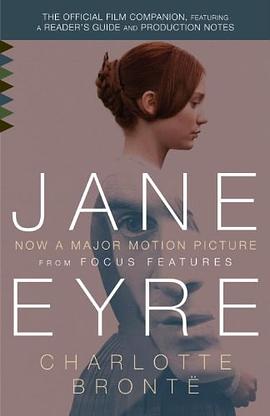
Charlotte Brontë’s most beloved novel describes the passionate love between the courageous orphan Jane Eyre and the brilliant, brooding, and domineering Rochester.
The loneliness and cruelty of Jane’s childhood strengthens her natural independence and spirit, which prove invaluable when she takes a position as a governess at Thornfield Hall. But after she falls in love with her sardonic employer, her discovery of his terrible secret forces her to make a heart-wrenching choice. Ever since its publication in 1847, Jane Eyre has enthralled every kind of reader, from the most critical and cultivated to the youngest and most unabashedly romantic. It lives as one of the great triumphs of storytelling and as a moving and unforgettable portrayal of a woman's quest for self-respect.
作者简介
Charlotte Brontë (1816-1855), a poor clergyman’s daughter from Yorkshire, England, worked as a teacher and governess before her publication of Jane Eyre won her instant fame. She went on to produce three more novels before dying at the age of thirty-eight.
Biography
Charlotte Brontë was born on April 21, 1816, in Thornton, Yorkshire, in the north of England, the third child of the Reverend Patrick Brontë and Maria Branwell Brontë. In 1820 the family moved to neighboring Haworth, where Reverend Brontë was offered a lifetime curacy. The following year Mrs. Brontë died of cancer, and her sister, Elizabeth Branwell, moved in to help raise the six children. The four eldest sisters -- Charlotte, Emily, Maria, and Elizabeth -- attended Cowan Bridge School, until Maria and Elizabeth contracted what was probably tuberculosis and died within months of each other, at which point Charlotte and Emily returned home. The four remaining siblings -- Charlotte, Branwell, Emily, and Anne -- played on the Yorkshire moors and dreamed up fanciful, fabled worlds, creating a constant stream of tales, such as the Young Men plays (1826) and Our Fellows (1827).
Reverend Brontë kept his children abreast of current events; among these were the 1829 parliamentary debates centering on the Catholic Question, in which the Duke of Wellington was a leading voice. Charlotte's awareness of politics filtered into her fictional creations, as in the siblings' saga The Islanders (1827), about an imaginary world peopled with the Brontë children's real-life heroes, in which Wellington plays a central role as Charlotte's chosen character.
Throughout her childhood, Charlotte had access to the circulating library at the nearby town of Keighley. She knew the Bible and read the works of Shakespeare, George Gordon, Lord Byron, and Sir Walter Scott, and she particularly admired William Wordsworth and Robert Southey. In 1831 and 1832, Charlotte attended Miss Wooler's school at Roe Head, and she returned there as a teacher from 1835 to 1838. After working for a couple of years as a governess, Charlotte, with her sister Emily, traveled to Brussels to study, with the goal of opening their own school, but this dream did not materialize once she returned to Haworth in 1844.
In 1846 the sisters published their collected poems under the pen names Currer (Charlotte), Ellis (Emily), and Acton (Anne) Bell. That same year Charlotte finished her first novel, The Professor, but it was not accepted for publication.
However, she began work on Jane Eyre, which was published in 1847 and met with instant success. Though some critics saw impropriety in the core of the story -- the relationship between a middle-aged man and the young, naive governess who works for him -- most reviewers praised the novel, helping to ensure its popularity. One of Charlotte's literary heroes, William Makepeace Thackeray, wrote her a letter to express his enjoyment of the novel and to praise her writing style, as did the influential literary critic G. H. Lewes.
Following the deaths of Branwell and Emily Brontë in 1848 and Anne in 1849, Charlotte made trips to London, where she began to move in literary circles that included such luminaries as Thackeray, whom she met for the first time in 1849; his daughter described Brontë as "a tiny, delicate, serious, little lady." In 1850 she met the noted British writer Elizabeth Gaskell, with whom she formed a lasting friendship and who, at the request of Reverend Brontë, later became her biographer. Charlotte's novel Villette was published in 1853.
In 1854 Charlotte married Arthur Bell Nicholls, a curate at Haworth who worked with her father. Less than a year later, however, she fell seriously ill, perhaps with tuberculosis, and she died on March 31, 1855. At the time of her death, Charlotte Brontë was a celebrated author. The 1857 publication of her first novel, The Professor, and of Gaskell's biography of her life only heightened her renown.
Author biography from the Barnes & Noble Classics edition of Jane Eyre.
Good To Know
Sadly, Brontë died during her first pregnancy. While her death certificate lists the cause of death as "phthisis" (tuberculosis), there is a school of thought that believes she may have died from excessive vomiting caused by morning sickness.
目录信息
读后感
用户评价
阅读体验的最大亮点在于作者对场景与心境的完美融合。她笔下的庄园、荒原、乃至那座充满秘密的宅邸,都不是简单的背景板,它们是角色情感的外化,是推动情节发展的无形力量。读到描写那些阴郁、弥漫着陈旧气息的房间时,我几乎能闻到空气中尘土和旧木头的味道,那种压抑感透过纸面直击胸腔。再看人物对话,简练却极富张力,每一句看似平淡的问答背后,都蕴藏着权力、地位和情感上的试探与较量。那些未尽之言、那些眼神的交汇,比大段的内心独白更具冲击力。这种高超的叙事技巧,使得整部作品读起来丝毫不觉拖沓,即使在描写日常琐事时,也充满了潜在的戏剧冲突。尤其是男女主角之间那种“交锋”式的互动,简直是文学史上最引人入胜的智力与情感的博弈之一。每次他们深入交流,我都会不自觉地屏住呼吸,生怕错过任何微妙的语调变化。
评分这部作品的语言风格,初看平实,实则暗流涌动,充满了维多利亚时代特有的含蓄与克制之美。它没有过多华丽的辞藻堆砌,但每一个形容词的选择都精准无比,直击要害。它成功地在写实主义的基调下,融入了一种近乎寓言的、象征性的深度。书中对自然景象的描摹,例如风暴的来临、黎明的微光,都被赋予了强烈的象征意义,它们不仅仅是天气变化,更是人物命运转折点的预示。这种将内在情感与外部世界紧密联系起来的表达方式,赋予了文本一种永恒的诗意。读罢合卷,脑海中留下的并非一连串的事件,而是那种幽远、深沉的情感回响——关于坚韧、关于信仰,以及关于在不完美的世界中寻找并捍卫自我灵魂的故事。它是一部需要细细品味,才能领略其全貌的经典之作。
评分这部作品的叙事节奏简直像一首精心编排的交响乐,起承转合之间,情感的张力被拿捏得恰到好处。初读时,那些关于童年孤独与寄宿学校的描写,带着一种冰冷的、近乎纪实般的笔触,让人不禁打了个寒颤。作者的语言功力非凡,她能用最简洁的词汇勾勒出人物内心最复杂的波澜。特别是对女主角内心挣扎的细腻刻画,那种渴望爱却又警惕被束缚的矛盾心理,读来令人心有戚戚焉。你仿佛能感受到她每一次呼吸间的压抑与对自由的向往。故事发展到中段,随着环境的转换,笔调陡然一转,那种哥特式的神秘氛围和潜藏的危险感开始弥漫开来,让原本的现实主义叙事增添了一层令人着迷的悬疑色彩。每一次翻页,都带着对未知的好奇和对角色命运的揪心。这不仅仅是一个简单的成长故事,它更像是一面镜子,映照出人在社会结构下,如何努力保持自我完整性的艰难历程。那种对精神独立性的坚持,即便在最绝望的时刻也未曾磨灭,实在令人敬佩。
评分我必须承认,在某些情节的处理上,我感受到了强烈的时代局限性带来的冲击感,但这反而增加了作品的真实厚度。例如,社会阶层对个人选择的巨大限制,那种无处不在的、如同枷锁般的规范,让人在为角色感到愤慨的同时,也对那个时代有了更深刻的理解。尽管如此,作品核心所探讨的女性的自我价值实现和精神觉醒的主题,即便是放在今天来看,依然具有振聋发聩的力量。作者并未提供廉价的“从此幸福快乐”的结局,而是让主人公在经历了幻灭、痛苦与自我重塑后,才终于获得了某种成熟的、来之不易的和谐。这种对“圆满”的重新定义——不是外部条件的完美,而是内在精神的安宁——是这部作品最深刻、最不易被时间磨损的价值所在。它教导我们,真正的自由,是源自内心的坚定,而非外力的解放。
评分从纯粹的文学技法角度审视,这部作品的结构堪称教科书级别。它巧妙地运用了多重叙事层次,通过主人公的回忆、当前事件的推进,以及穿插其中的信件、日记等碎片信息,构建了一个立体而又错综复杂的故事网络。这种非线性叙事虽然要求读者保持高度专注,但回报是极其丰厚的——每次解开一个谜团,都会恍然大悟地发现它如何与更宏大的主题相呼应。特别是对“秘密”这一元素的运用,处理得极为高明。秘密并非简单地隐藏起来,而是像幽灵一样游荡在场景和对话之间,影响着每一个角色的决策,直到最终以一种震撼的方式揭示真相。这种层层剥开、步步深入的写作手法,极大地增强了作品的阅读黏性,让人在尚未知晓真相前,便已深深沉浸其中,难以自拔。
评分Actually I don’t like Jane Eyre.
评分Actually I don’t like Jane Eyre.
评分Actually I don’t like Jane Eyre.
评分文学性满分,文字优美华丽,但又没有特别浮夸和造作,英文版读起来需要的词汇量还挺大;对白心理和细节特写这些都很棒,有些对白有点夸张到感觉像是戏剧或者歌剧里的对唱,不知那个背景下的人是否真的那样对话;虽然整个故事比较简单,但也适当地加了一些紧张和悬疑,前后呼应恰到好处,后期情绪渲染也感染到我了。总之不愧为世界名著。 故事本身【剧透】则没有很喜欢。贯穿全书的中心也许是简爱作为一个没钱没势而且还是女性的地位下不屈的自尊和要强,敢于以平等的姿态对待与男主之间的爱情,但是最终简爱逃离,以及最后在男主身残眼瞎和自己继承了飞来横财之后反而最终能平等地和男主在一起,其实正是完全的自卑心态吧?仿佛终究是在说,只有当对方落到比自己更卑微的地位,自己能居高临下地去施舍大义、怜悯和无私的爱时,才能真正心安理得地去爱
评分文学性满分,文字优美华丽,但又没有特别浮夸和造作,英文版读起来需要的词汇量还挺大;对白心理和细节特写这些都很棒,有些对白有点夸张到感觉像是戏剧或者歌剧里的对唱,不知那个背景下的人是否真的那样对话;虽然整个故事比较简单,但也适当地加了一些紧张和悬疑,前后呼应恰到好处,后期情绪渲染也感染到我了。总之不愧为世界名著。 故事本身【剧透】则没有很喜欢。贯穿全书的中心也许是简爱作为一个没钱没势而且还是女性的地位下不屈的自尊和要强,敢于以平等的姿态对待与男主之间的爱情,但是最终简爱逃离,以及最后在男主身残眼瞎和自己继承了飞来横财之后反而最终能平等地和男主在一起,其实正是完全的自卑心态吧?仿佛终究是在说,只有当对方落到比自己更卑微的地位,自己能居高临下地去施舍大义、怜悯和无私的爱时,才能真正心安理得地去爱