
具体描述
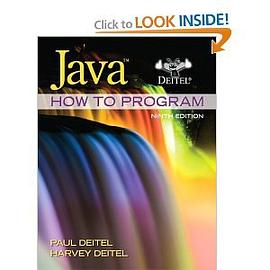
The Deitels’ groundbreaking How to Program series offers unparalleled breadth and depth of object-oriented programming concepts and intermediate-level topics for further study. Their Live Code Approach features thousands of lines of code in hundreds of complete working programs. This enables readers to confirm that programs run as expected. Java How to Program (Early Objects) 9e contains an optional extensive OOD/UML 2 case study on developing and implementing the software for an automated teller machine.This edition covers both Java SE7 and SE6.
作者简介
Paul J. Deitel, CEO and Chief Technical Officer of Deitel & Associates, Inc., is a graduate of MIT’s Sloan School of Management, where he studied Information Technology. He holds the Java Certified Programmer and Java Certified Developer certifications, and has been designated by Sun Microsystems as a Java Champion. Through Deitel & Associates, Inc., he has delivered Java, C, C++, C# and Visual Basic courses to industry clients, including IBM, Sun Microsystems, Dell, Lucent Technologies, Fidelity, NASA at the Kennedy Space Center, the National Severe Storm Laboratory, White Sands Missile Range, Rogue Wave Software, Boeing, Stratus, Cambridge Technology Partners, Open Environment Corporation, One Wave, Hyperion Software, Adra Systems, Entergy, CableData Systems, Nortel Networks, Puma, iRobot, Invensys and many more. He has also lectured on Java and C++ for the Boston Chapter of the Association for Computing Machinery. He and his father, Dr. Harvey M. Deitel, are the world’s best-selling programming language textbook authors.
Dr. Harvey M. Deitel, Chairman and Chief Strategy Officer of Deitel & Associates, Inc., has 45 years of academic and industry experience in the computer field. Dr. Deitel earned B.S. and M.S. degrees from MIT and a Ph.D. from Boston University. He has 20 years of college teaching experience, including earning tenure and serving as the Chairman of the Computer Science Department at Boston College before founding Deitel & Associates, Inc., with his son, Paul J. Deitel. He and Paul are the co-authors of several dozen books and multimedia packages and they are writing many more. With translations published in Japanese, German, Russian, Spanish, Traditional Chinese, Simplified Chinese, Korean, French, Polish, Italian, Portuguese, Greek, Urdu and Turkish, the Deitels’ texts have earned international recognition. Dr. Deitel has delivered hundreds of professional seminars to major corporations, academic institutions, government organizations and the military.
目录信息
读后感
The entirely great Java textbook I have ever read. It is not only good for Java beginners, but even for medium-level troubleshooting in Java. The readability of source codes in the book is damn good. It shows a pure great coding format while making all th...
评分The entirely great Java textbook I have ever read. It is not only good for Java beginners, but even for medium-level troubleshooting in Java. The readability of source codes in the book is damn good. It shows a pure great coding format while making all th...
评分The entirely great Java textbook I have ever read. It is not only good for Java beginners, but even for medium-level troubleshooting in Java. The readability of source codes in the book is damn good. It shows a pure great coding format while making all th...
评分The entirely great Java textbook I have ever read. It is not only good for Java beginners, but even for medium-level troubleshooting in Java. The readability of source codes in the book is damn good. It shows a pure great coding format while making all th...
评分The entirely great Java textbook I have ever read. It is not only good for Java beginners, but even for medium-level troubleshooting in Java. The readability of source codes in the book is damn good. It shows a pure great coding format while making all th...
用户评价
这本书的参考价值在于它对Java语言规范的严谨遵循。我发现,市面上很多参考书为了追求简洁和易读性,会刻意规避一些语言规范中细微但至关重要的角落,比如异常处理的检查型与非检查型之分,或者在不同JVM实现下,某些特定操作的性能差异。但这本书就像一本官方的规格说明书,对于每一个关键字、每一个API的返回值和副作用,都进行了详尽的、近乎吹毛求疵的描述。这使得它成为一个绝佳的“查漏补缺”工具。每当我遇到一些存疑的语言行为时,翻开这本书,总能找到权威的解释。它不太适合作为入门读物,但对于一个经验丰富的开发者来说,它是一个可以信赖的“真相之源”。它不提供快速的捷径,但它保证了你所学到的知识是完全准确和无懈可击的,尤其是在需要进行深度调试或者性能调优时,这种精确性是无价之宝。
评分说实话,这本书的排版和内容组织方式简直是反人类的。如果你指望通过它来快速入门,那我劝你还是另寻高明。我一开始抱着“我要成为Java大神”的雄心壮志买的,结果前三章就让我怀疑人生了。它的示例代码写得极其冗长,每一个逻辑分支都要用好几页的篇幅去解释,而且很多基础的概念,比如变量和基本数据类型,居然也要用非常学术化的语言去定义,看得我昏昏欲睡。最让我抓狂的是,书里有很多练习题,那些题目的难度和深度完全不成比例,很多时候你需要结合好几章的内容才能勉强解出来,而且答案也只是寥寥几笔,根本没有详细的思路引导。我感觉作者似乎是想把所有他知道的知识点都塞进这本书里,结果导致内容非常臃肿和分散,读起来缺乏连贯性和节奏感,更像是一本详尽的技术词典,而不是一本导读手册。对于初学者来说,这简直是一场灾难,我花了大量时间去谷歌搜索书里提到的那些术语和概念,感觉自己走了一条极其迂回的弯路。
评分这本书的实战应用价值,对于那些刚踏入IT行业的职场新人来说,可能有些过于“学术化”了。我期望它能提供更多贴近现代工业标准的项目实践案例,比如如何集成最新的Spring Boot框架进行微服务开发,或者如何利用NIO技术构建高性能的网络I/O服务器。然而,书中展示的绝大多数代码示例,停留在非常经典的、面向对象设计原则的讲解层面,很多例子都围绕着简单的控制台应用或者基础的GUI界面构建,这在如今的云原生和敏捷开发环境中,显得有些格格不入。我理解理论的重要性,但如果一本编程书不能有效地将理论与当前的行业热点和开发流程相结合,那么它的时效性和实用性就会大打折扣。我读完之后,虽然对OOP理解更深了,但当我尝试将书中学到的知识直接应用到我目前负责的RESTful API项目时,发现还需要花费额外的时间去学习如何将这些“教科书式”的代码适配到现代的依赖注入和配置管理体系中,这一点上,这本书做得远远不够。
评分这本书简直是为那些想要深入理解Java底层逻辑的硬核程序员准备的。我花了整整六个月的时间,几乎是啃完了这本书,感觉自己的编程思维都得到了重塑。它不像市面上那些浮于表面的教程,只教你如何调用API,而是真正地把Java虚拟机的工作原理、内存管理机制,乃至于垃圾回收算法的每一步都剖析得淋漓尽致。特别是关于并发编程那一章,作者居然用非常直观的类比和精心设计的代码示例,把复杂的线程安全问题讲得清清楚楚,我以前在项目中遇到的那些难以捉摸的死锁和竞态条件,现在一下子豁然开朗了。读完之后,我感觉自己看待Java代码的视角都变了,不再是简单地写代码,而是更注重效率和健壮性,简直是把我从一个“Java使用者”提升到了“Java架构师”的层次。这本书的深度绝对不是一蹴而就的,需要投入大量的时间和精力去消化那些晦涩的概念,但回报是巨大的,它为你打下了坚不可摧的理论基础,让你在面对任何复杂的企业级应用挑战时都能游刃有余。
评分不得不提的是,这本书在面向对象设计(OOD)的哲学探讨上,达到了一个令人叹为观止的高度。它不仅仅是教你“怎么做”,更深入地探讨了“为什么这么做”的根本原因。作者对于设计模式的讲解,不是简单地罗列UML图和类名,而是通过一系列精心设计的、层层递进的场景重构,展示了每一种模式诞生的历史必然性和它所解决的核心矛盾。比如,在讲解策略模式时,作者没有直接给出标准模板,而是先构建了一个有严重耦合问题的初始系统,然后通过多次迭代重构,最终自然而然地引出了策略模式的优雅解决方案。这种启发式的教学方法,极大地培养了我的抽象思维能力。我现在写任何代码模块时,都会不自觉地去思考,这个设计是否符合高内聚低耦合的原则,是否具备良好的可扩展性。这本书更像是一本关于软件工程美学的著作,它教会了我如何写出“漂亮”且易于维护的代码,而不仅仅是能跑起来的代码。
评分极适合初学者 语言略显冗长.
评分极适合初学者 语言略显冗长.
评分极适合初学者 语言略显冗长.
评分极适合初学者 语言略显冗长.
评分极适合初学者 语言略显冗长.